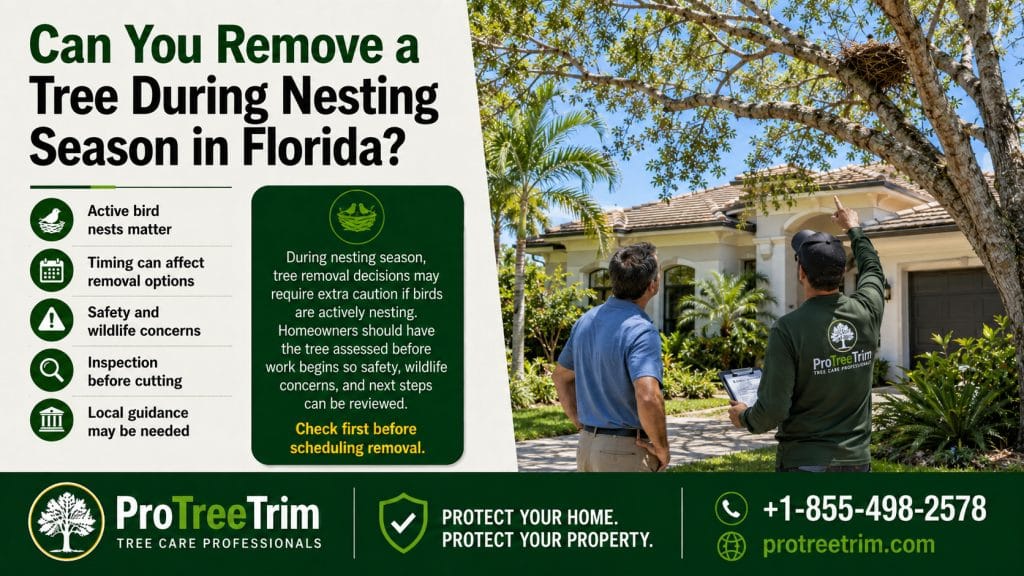
You may be able to remove a tree during nesting season in Florida, but it is not something to treat casually. If birds are actively nesting in or around the tree, removal can raise wildlife and legal concerns. The safest first step is to inspect from the ground, document what you see, and avoid disturbing nests, eggs, chicks, or dependent young.
Why Nesting Season Changes the Decision
Florida yards can stay active with wildlife for much of the year. Palms, oaks, pines, hedges, and even dead or declining trees may provide nesting spots. A homeowner may notice birds flying in and out of the canopy, hear chicks, or see nesting material tucked into a branch union or palm crown.
Under the federal Migratory Bird Treaty Act, the U.S. Fish & Wildlife Service says most bird nests are protected, and it is illegal to destroy a nest that has eggs or chicks in it, or when young birds are still dependent on the nest for survival.
That does not mean every tree with bird activity is frozen forever. It does mean the timing, species, and nest status matter. An inactive old nest is different from an active nest with eggs or young. Some situations may also involve state-listed species, raptors, shorebirds, or local environmental rules, especially near coastal areas, wetlands, mangroves, or protected habitats.
| What you notice | Better next step |
|---|---|
| Birds repeatedly entering one spot in the tree | Pause and avoid cutting that area |
| Visible nest with eggs, chicks, or adults sitting | Do not disturb; seek proper guidance |
| Old empty nest with no activity | Still confirm before removal |
| Tree is an immediate safety hazard | Document, keep distance, and ask qualified help quickly |
What Homeowners Should Check Before Scheduling Removal
Start with a ground-level look. Do not climb the tree or shake branches to “check” for nests. Watch for repeated bird traffic, defensive behavior, nesting material, or sounds from the canopy. In palms, look around the crown and old frond bases from a safe distance.
If the tree is storm-damaged, leaning, split, or threatening a roof, driveway, pool cage, fence, or power service line, take photos and explain the safety concern when asking for help. Emergency risk does not remove the need to handle wildlife carefully, but it may change how quickly the situation needs professional review.
FWC notes that active nest removal for state-listed species is handled differently from inactive nests, and federal permits may still be required in some situations involving migratory birds. For coastal properties, FWC also warns that shorebirds, seabirds, and wading birds may nest in sensitive beach and shoreline areas where people should give birds space and watch for protected areas.
If you are unsure whether a tree, palm, nest concern, stump, or root issue should be handled now or delayed, ProTreeTrim can help connect Florida homeowners with local tree service support. Call +1-855-498-2578 or visit protreetrim.com.
FAQs
Is tree removal banned during nesting season in Florida?
Not as a simple statewide rule for every yard tree. The concern is whether active protected nests, local rules, or protected species are involved.
What should I do if I see a nest in the tree?
Do not disturb it. Take photos from a safe distance and ask for proper guidance before trimming or removal.
Can an unsafe tree still be removed if birds are nesting?
Possibly, but it should be handled carefully. Document the safety issue and seek qualified guidance before disturbing an active nest.
ProTreeTrim™ can help you take the next step.
If you are dealing with a damaged tree, fallen branch, stump, root issue, palm concern, or storm cleanup question in Florida, call ProTreeTrim for tree service support.