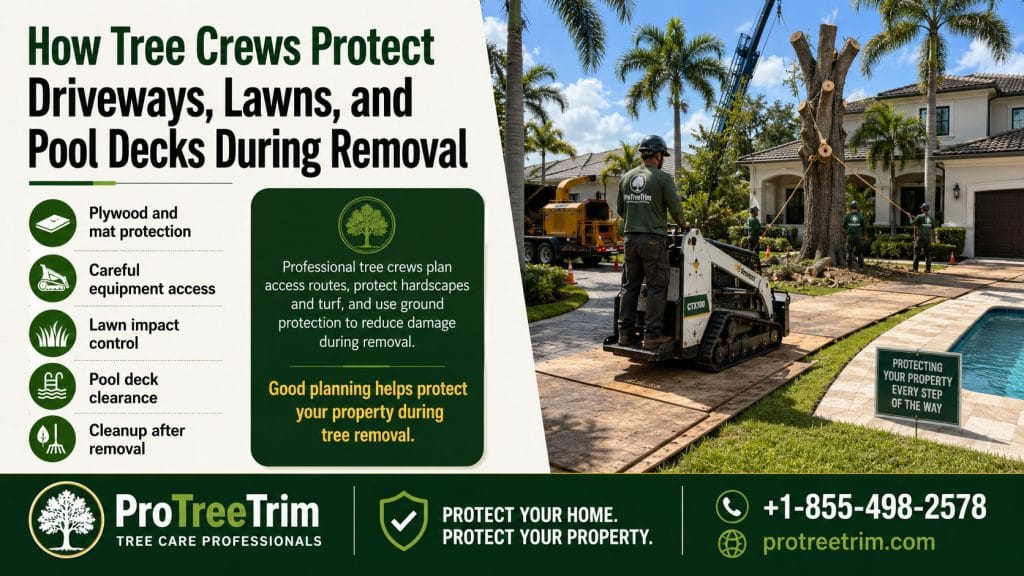
Tree removal is not only about cutting the tree. In a Florida yard, the crew also has to protect what sits around it: the driveway, lawn, pool deck, pavers, irrigation, fences, and sometimes a screened enclosure. Homeowners should ask about access, equipment, debris handling, and surface protection before the first cut is made.
The Access Route Matters Before the Tree Comes Down
A good removal plan starts with the path from the street to the tree. Crews may need to bring in equipment, carry sections of wood, move branches, or position a chipper near the driveway. If that route crosses pavers, soft grass, sprinkler heads, or a narrow side yard, the risk of damage goes up.
Driveways can usually handle normal vehicle traffic, but heavy logs, repeated turning, or equipment parked near weak edges can still cause problems. Pavers may shift if weight is concentrated in one spot. Lawns can rut when the ground is wet, especially after heavy rain or irrigation. Around pool decks, crews need to watch for coping, screen supports, drains, and nearby plumbing.
Before work begins, walk the route with the crew. Point out loose pavers, irrigation heads, valve boxes, low-voltage lighting, septic areas, soft soil, or any surface that has cracked before. If the tree is in a backyard, ask whether equipment must pass through a gate or whether material will be carried out by hand.
What Protection Can Look Like
Protection depends on the yard and the job. In some cases, crews may use mats or plywood to spread weight across grass or pavers. They may cut limbs into smaller sections instead of dragging large pieces across the lawn. They may lower branches with ropes when a tree stands near a pool cage, roofline, fence, or patio.
Cleanup planning also matters. Branches should not be piled on fragile plants, irrigation heads, or freshly repaired hardscape. Large wood should be staged where it can be removed without scraping the driveway or blocking access longer than needed.
Homeowners should not expect a yard to look untouched after a major removal, especially after storm damage. But careful planning can reduce avoidable damage and prevent surprises.
If you are unsure whether a tree, palm, stump, or root job could affect your driveway, lawn, pool deck, or pavers, ProTreeTrim can help connect Florida homeowners with local tree service support. Call +1-855-498-2578 or visit protreetrim.com.
FAQs
Can tree removal damage a lawn?
Yes, especially if the ground is wet, sandy, or soft. Equipment and heavy wood can leave ruts without careful access planning.
Should I move patio furniture before tree removal?
Yes. Clear furniture, planters, grills, hoses, pool toys, and loose décor before the crew arrives.
Can crews protect a pool deck during tree work?
Often, yes. The best approach depends on tree size, access, deck material, screen enclosure layout, and where debris must be lowered or carried.
ProTreeTrim™ can help you take the next step.
If you are dealing with a damaged tree, fallen branch, stump, root issue, palm concern, or storm cleanup question in Florida, call ProTreeTrim for tree service support.