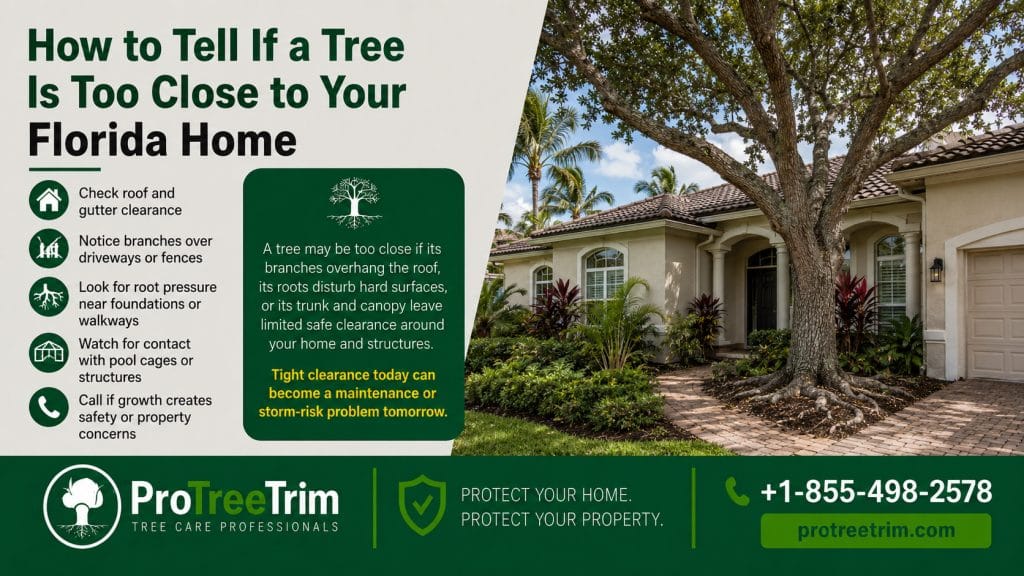
A tree may be too close to your Florida home if branches touch the roof, roots are lifting pavers or driveway edges, the trunk leans toward the structure, or the canopy crowds gutters, windows, or a pool cage. Distance alone does not tell the whole story. Tree size, species, root behavior, soil conditions, and storm exposure all matter.
Look at What the Tree Is Touching or Pressuring
Start with the obvious contact points. Are branches scraping shingles, resting on the roofline, rubbing against siding, or hanging over a screened pool enclosure? Even light contact can become more serious during wind or heavy rain. A limb that only brushes the gutter in calm weather may hit harder during a summer storm.
Check the ground next. Roots near a Florida home often show up around pavers, walkways, irrigation lines, driveway edges, or patios before they create a visible structural concern. Raised pavers, cracked concrete, soft mulch beds, or irrigation leaks near the trunk are worth noting. Do not assume every surface crack is caused by roots, but do not ignore a pattern that is spreading toward the house.
Palms deserve a different look. A palm trunk may not have broad branches, but it can still be too close if fronds hang over the roof, the trunk leans toward the home, or the crown drops debris into gutters, pool screens, or narrow side yards.
Think About Storm Access and Future Growth
A tree that fits today may become a problem as the canopy expands. This is especially true around smaller Florida lots, coastal homes, rental properties, and neighborhoods with tight side setbacks. If a crew would have trouble reaching the tree without crossing pavers, fencing, landscaping, or a pool area, waiting can make future work more complicated.
Also look at balance. Is most of the canopy leaning over the roof? Has the trunk started growing toward sunlight away from other trees? Is the root flare buried under mulch or soil near the foundation line? These are not automatic removal signs, but they are good reasons to take a closer look before storm season.
If you are unsure whether a tree, palm, stump, or root issue near your home needs professional attention, ProTreeTrim can help connect Florida homeowners with local tree service support. Call +1-855-498-2578 or visit protreetrim.com.
FAQs
Does a tree near the house always need to be removed?
No. Some trees can be managed with proper pruning or monitoring, depending on structure, location, and risk.
Are roots near pavers or driveways a warning sign?
They can be. Lifting, cracking, or spreading surface damage may suggest the tree is affecting nearby hardscape.
Should I trim roof-touching branches myself?
Avoid cutting large, overhead, or roof-adjacent limbs yourself. Poor cuts or shifting weight can create new problems.
ProTreeTrim™ can help you take the next step.
If you are dealing with a damaged tree, fallen branch, stump, root issue, palm concern, or storm cleanup question in Florida, call ProTreeTrim for tree service support.