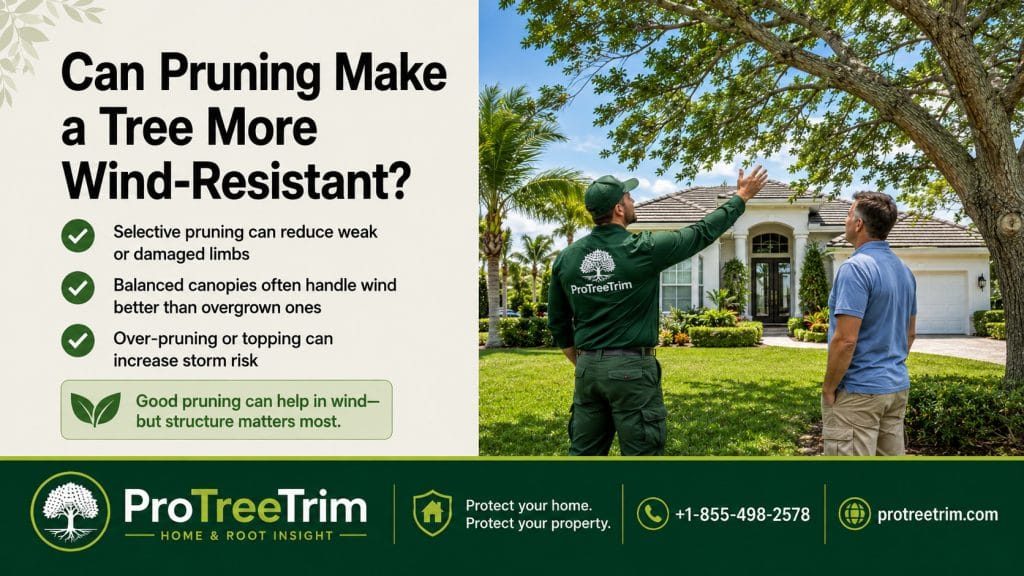
Pruning can help a tree handle wind better when it removes real problems: dead limbs, cracked branches, rubbing limbs, heavy overextended branches, or branches touching the house. But pruning does not automatically make a tree safer just because more branches are removed. Bad pruning can leave a tree weaker, more exposed, and more likely to need corrective work later.
Continue reading Can Pruning Make a Tree More Wind-Resistant?Category: Storm Prep & Hurricane Season
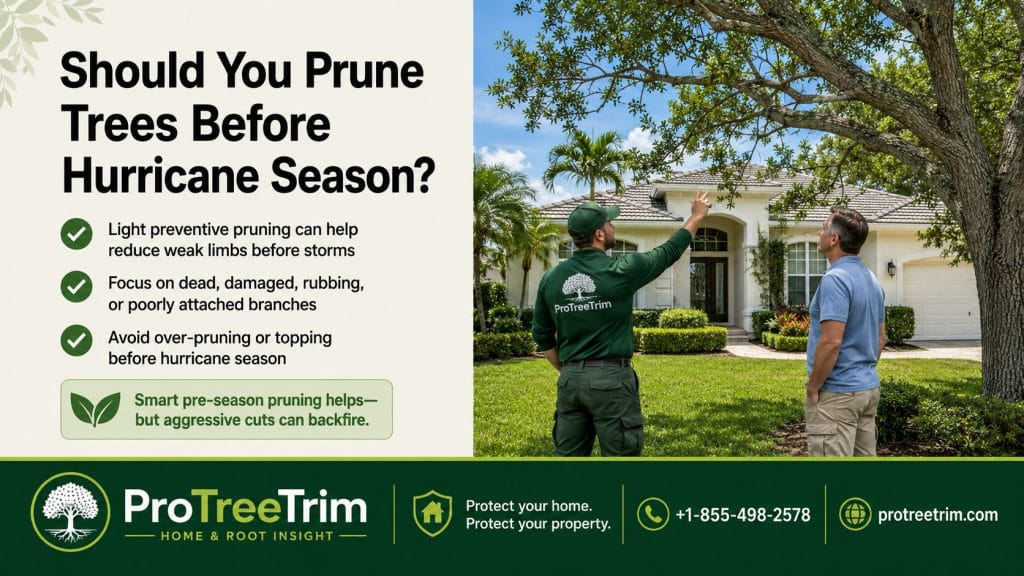
Should You Prune Trees Before Hurricane Season?
Pruning before hurricane season can be a smart move, but only when the work is targeted. Removing dead limbs, cracked branches, roof contact, and obvious defects may reduce problems around the home. Cutting too much live canopy, topping the tree, or stripping out interior branches can create a weaker tree right when you want it to be stronger.
Continue reading Should You Prune Trees Before Hurricane Season?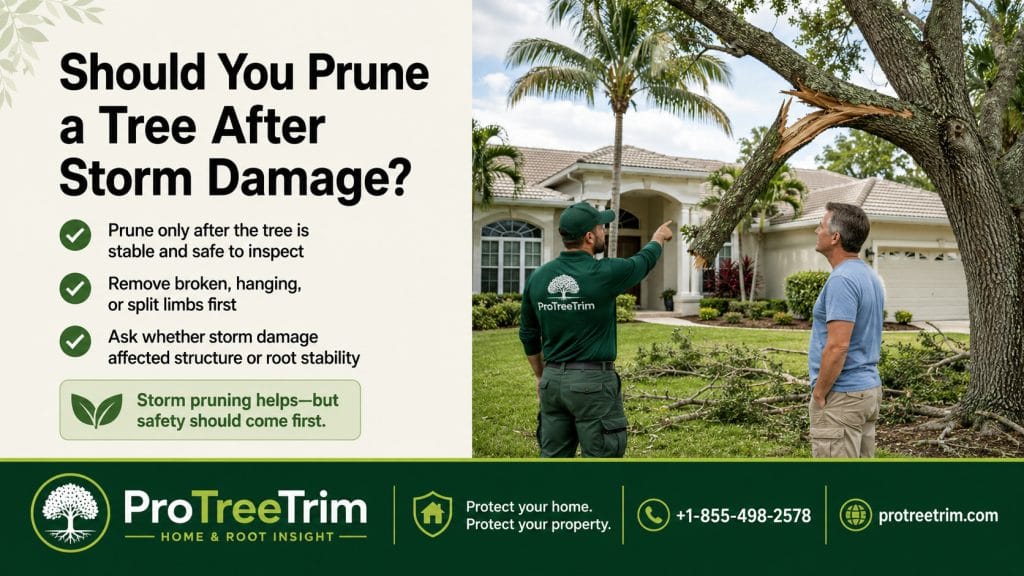
Should You Prune a Tree After Storm Damage?
Storm damage can make a tree look worse than it really is. Broken limbs, torn bark, hanging branches, and scattered debris may tempt homeowners to cut everything back quickly. But after a storm, pruning should be done carefully and specifically. The goal is to remove danger and damaged wood without adding more stress to a tree that may already be struggling.
Continue reading Should You Prune a Tree After Storm Damage?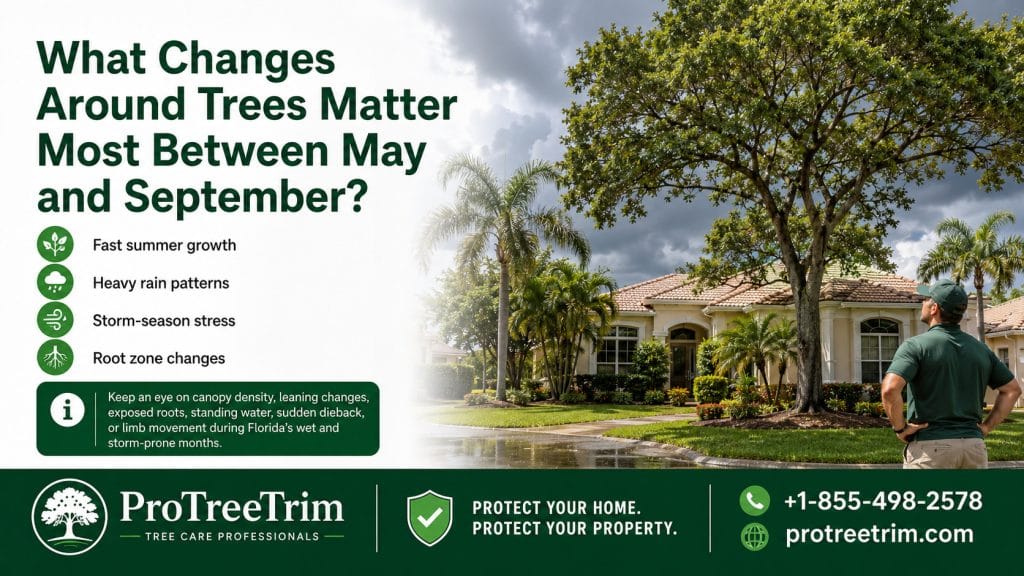
What Changes Around Trees Matter Most Between May and September?
Between May and September, trees can change quickly. A yard may move from dry soil and heat stress to heavy rain, soft ground, fast growth, and storm-season wind. Homeowners should not watch only the leaves. The most useful clues often show up around roots, drainage, limb weight, mulch beds, and nearby structures.
Continue reading What Changes Around Trees Matter Most Between May and September?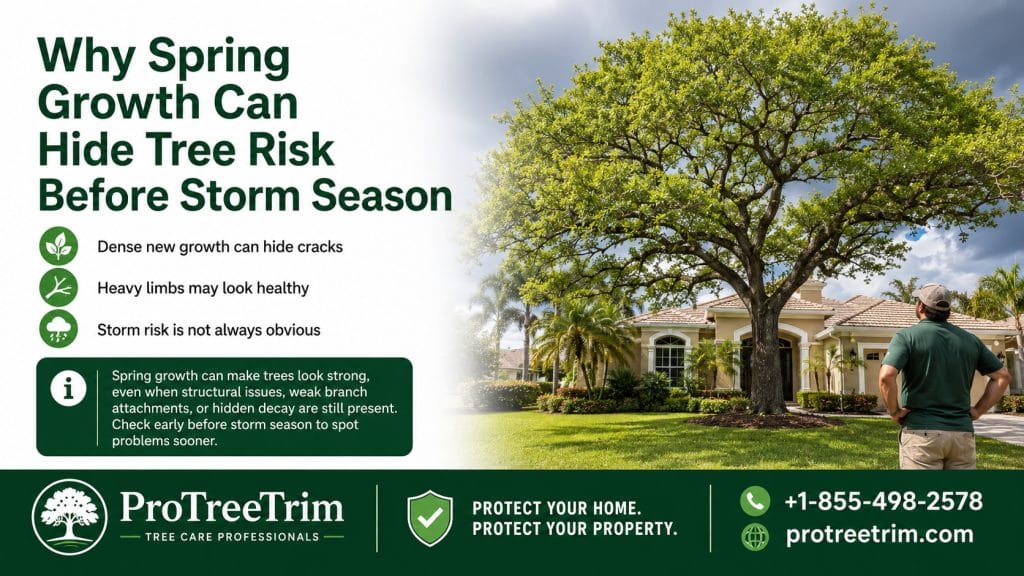
Why Spring Growth Can Hide Tree Risk Before Storm Season
Fresh spring growth can make a yard look healthy fast. New leaves, fuller shade, and bright palm crowns are reassuring, but they can also distract homeowners from older problems that did not disappear over winter: cracked limbs, weak branch unions, root stress, trunk wounds, poor drainage, or trees growing too close to the house.
Continue reading Why Spring Growth Can Hide Tree Risk Before Storm Season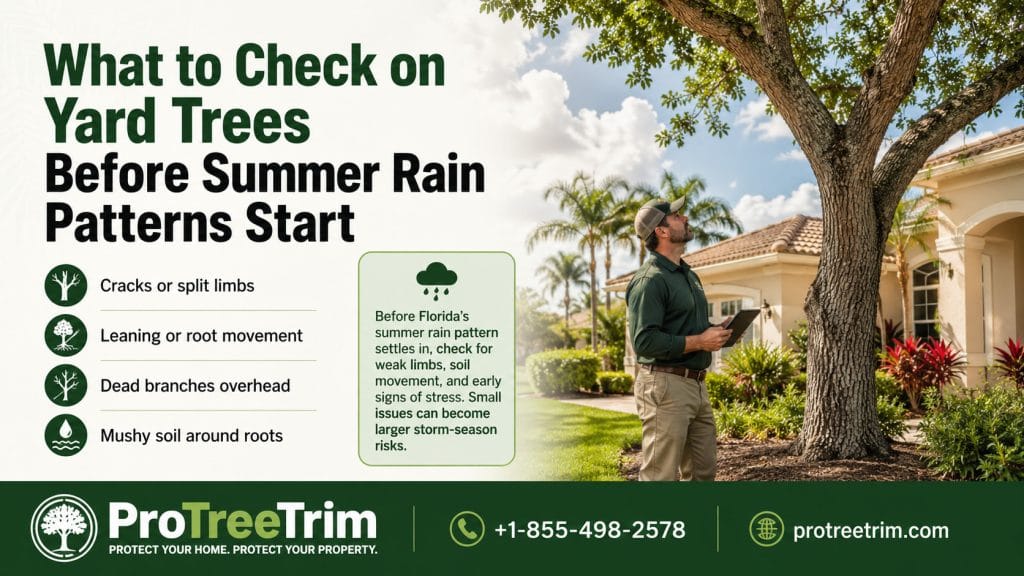
What to Check on Yard Trees Before Summer Rain Patterns Start
Summer rain can expose tree problems that looked quiet during drier weeks. Before the pattern shifts, homeowners should check the base of trees, drainage paths, heavy limbs, mulch depth, irrigation, and access routes. The goal is not to panic-prune. It is important to notice weak spots before repeated rain, wind, and saturated soil make decisions harder.
Continue reading What to Check on Yard Trees Before Summer Rain Patterns Start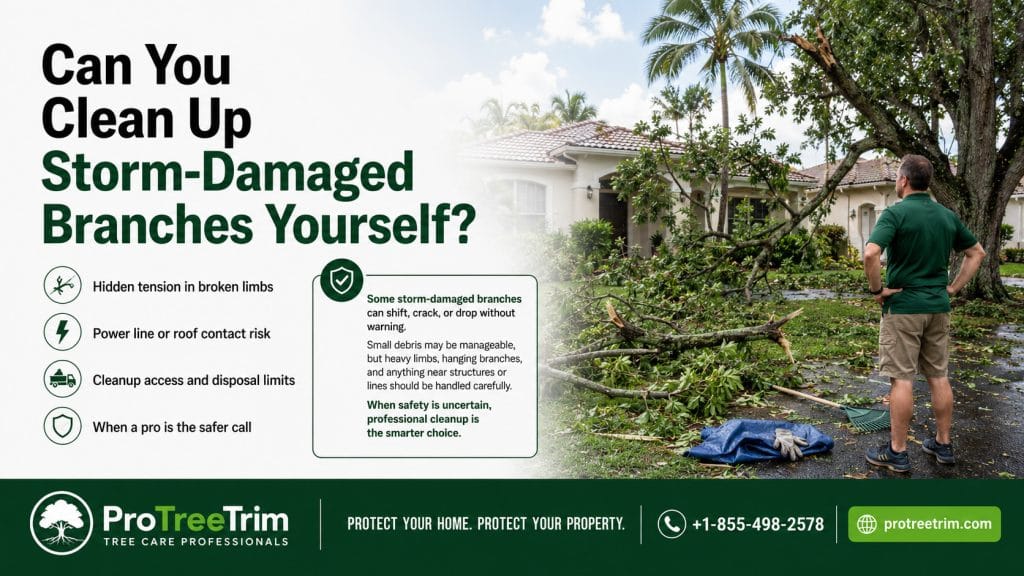
Can You Clean Up Storm-Damaged Branches Yourself?
Some storm-damaged branches can be cleaned up by a Florida homeowner, but only when they are small, loose, and already on the ground. The line changes fast when a branch is heavy, cracked, hanging, resting on a roof, tangled in another tree, or near power lines. Before grabbing a saw, look at what the branch is touching and what could move.
Continue reading Can You Clean Up Storm-Damaged Branches Yourself?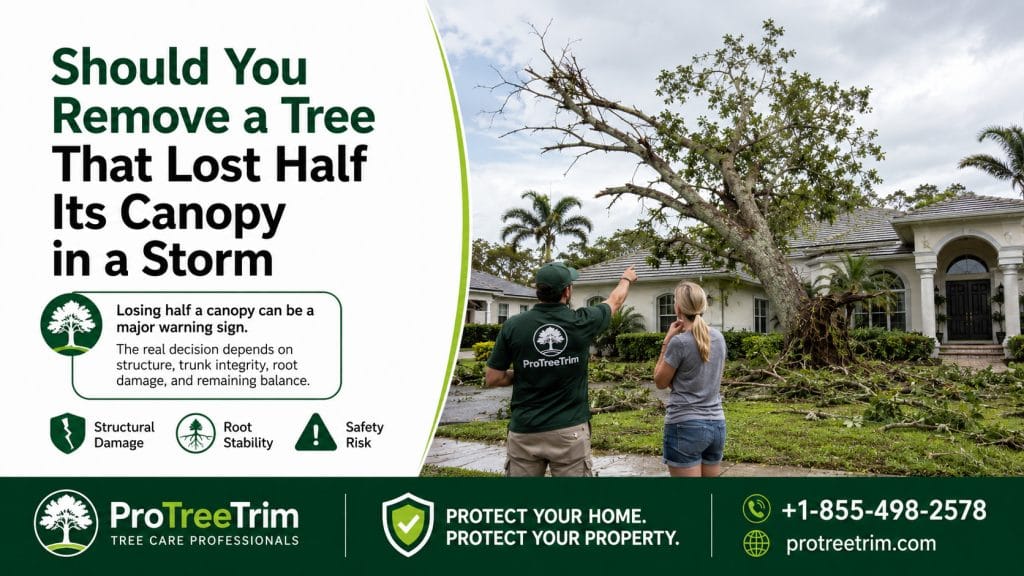
Should You Remove a Tree That Lost Half Its Canopy in a Storm?
A tree that lost half its canopy in a storm does not always need to be removed, but it should be examined carefully. The missing branches may leave the tree unbalanced, expose old wounds, or reveal trunk and root problems that were not obvious before. In a Florida yard, the decision depends on structure, location, and what remains overhead.
Continue reading Should You Remove a Tree That Lost Half Its Canopy in a Storm?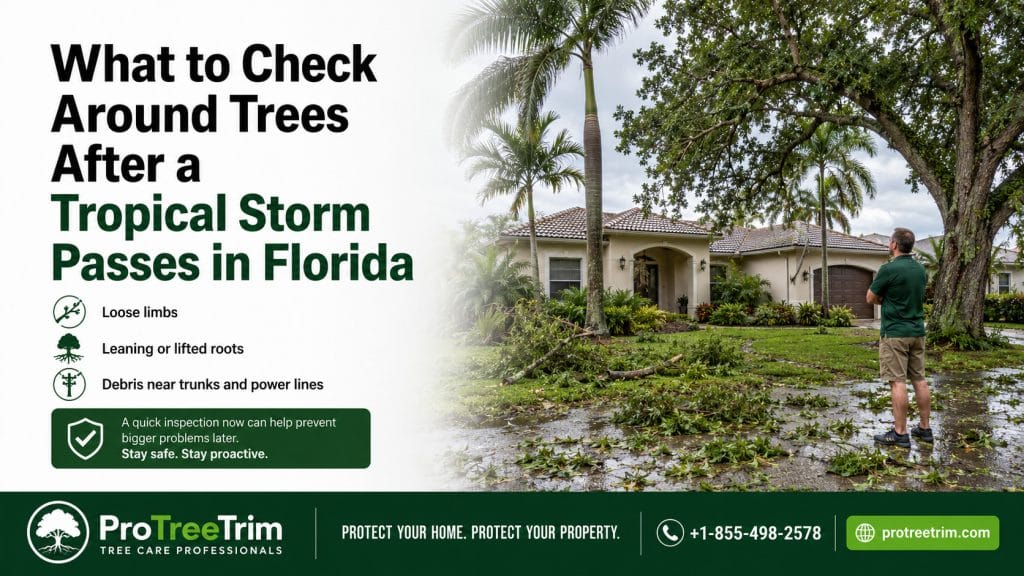
What to Check Around Trees After a Tropical Storm Passes in Florida
After a tropical storm passes, do not judge your yard only by what fell on the ground. Some of the most important tree problems are still overhead, near the trunk, or around the roots. Florida homeowners should check safely, document damage early, and avoid cutting heavy limbs or touching anything near utility lines.
Continue reading What to Check Around Trees After a Tropical Storm Passes in Florida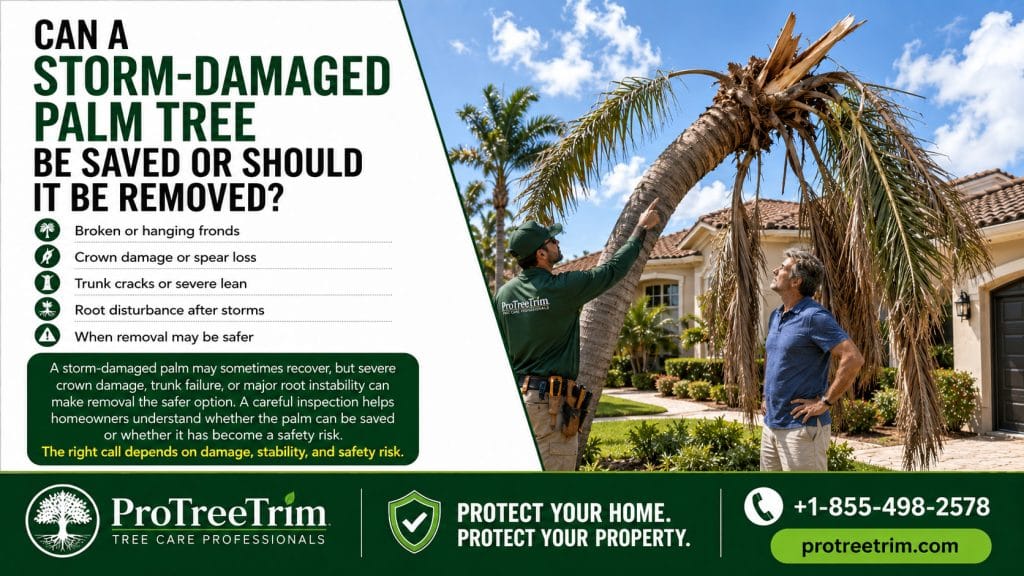
Can a Storm-Damaged Palm Tree Be Saved or Should It Be Removed?
A storm-damaged palm tree does not always need removal, but some damage is more serious than it looks from the ground. Florida homeowners should check the crown, trunk, lean, root area, and potential impacts if the palm fails later. A palm with minor frond loss is very different from one with a cracked trunk or damaged growing point.
Continue reading Can a Storm-Damaged Palm Tree Be Saved or Should It Be Removed?