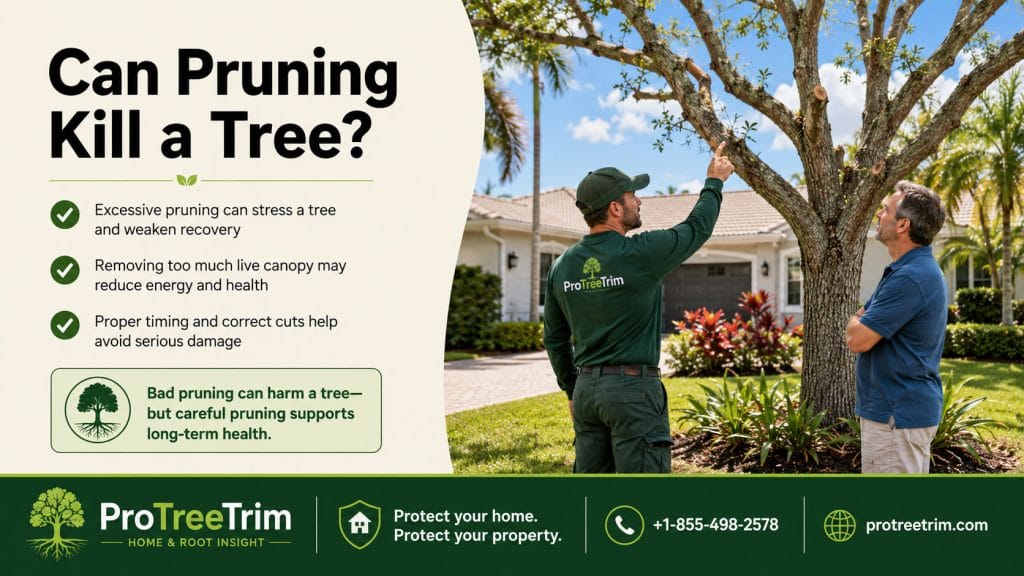
Yes, pruning can seriously damage or even help kill a tree when it is done poorly, too aggressively, at the wrong time, or for the wrong reason. Good pruning removes dead, broken, hazardous, rubbing, or poorly structured branches in a careful way. Bad pruning removes too much live canopy, creates large wounds, cuts into the trunk, tops the tree, strips palms, or stresses a tree that is already struggling.
Continue reading Can Pruning Kill a Tree?Category: Tree Care & Pruning Decisions
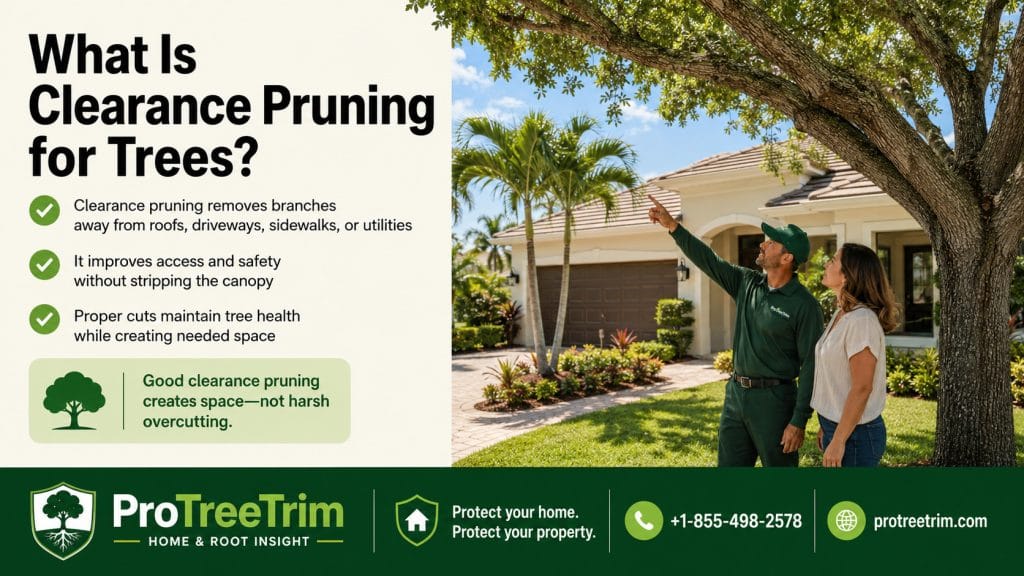
What Is Clearance Pruning for Trees?
Clearance pruning is tree pruning done to create safe and practical space between branches and property features. Homeowners often need clearance pruning when branches touch a roof, hang over a driveway, block a walkway, rub a fence, crowd a pool cage, or interfere with daily yard use.
Continue reading What Is Clearance Pruning for Trees?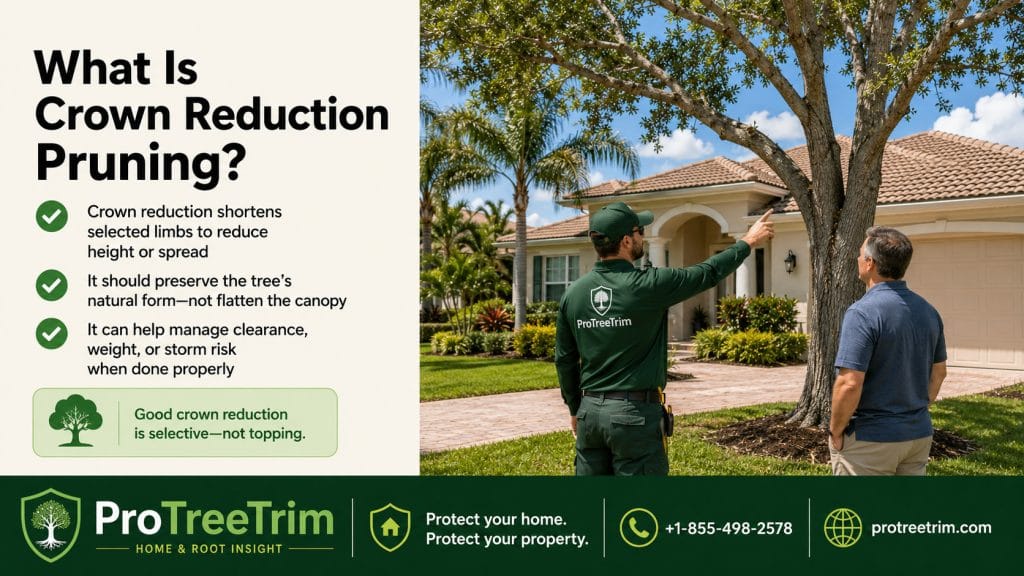
What Is Crown Reduction Pruning?
Crown reduction pruning is a careful method used to reduce the height or spread of a tree without topping it. Instead of cutting major limbs back to stubs, crown reduction uses selective cuts back to appropriate lateral branches. The goal is to make the tree slightly smaller, reduce a specific conflict, or lower stress on a branch while preserving natural structure.
Continue reading What Is Crown Reduction Pruning?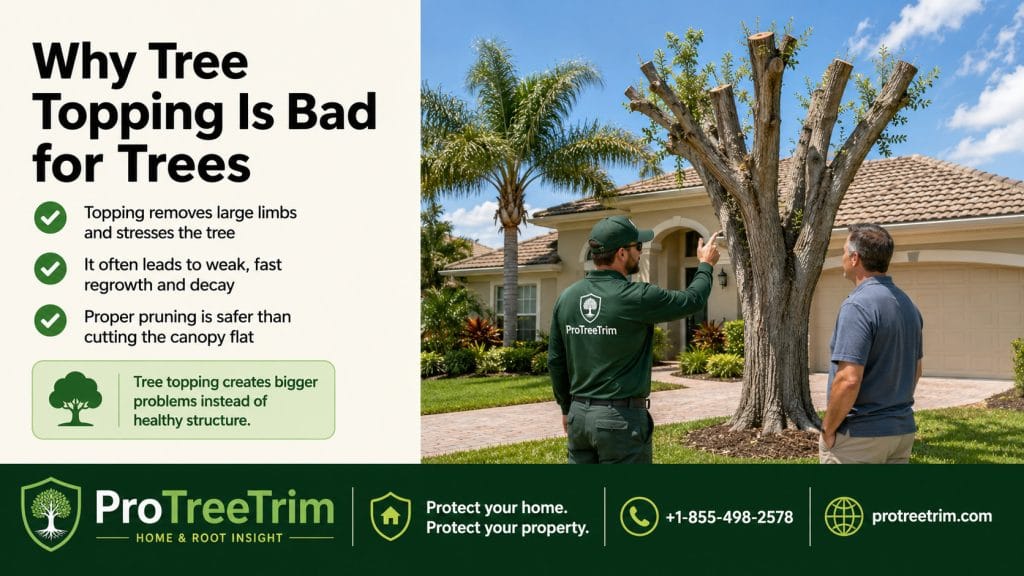
Why Tree Topping Is Bad for Trees?
Tree topping is one of the most damaging pruning mistakes homeowners can make. It means cutting the top or major limbs of a tree back to large stubs, usually to make the tree shorter or smaller quickly.
Continue reading Why Tree Topping Is Bad for Trees?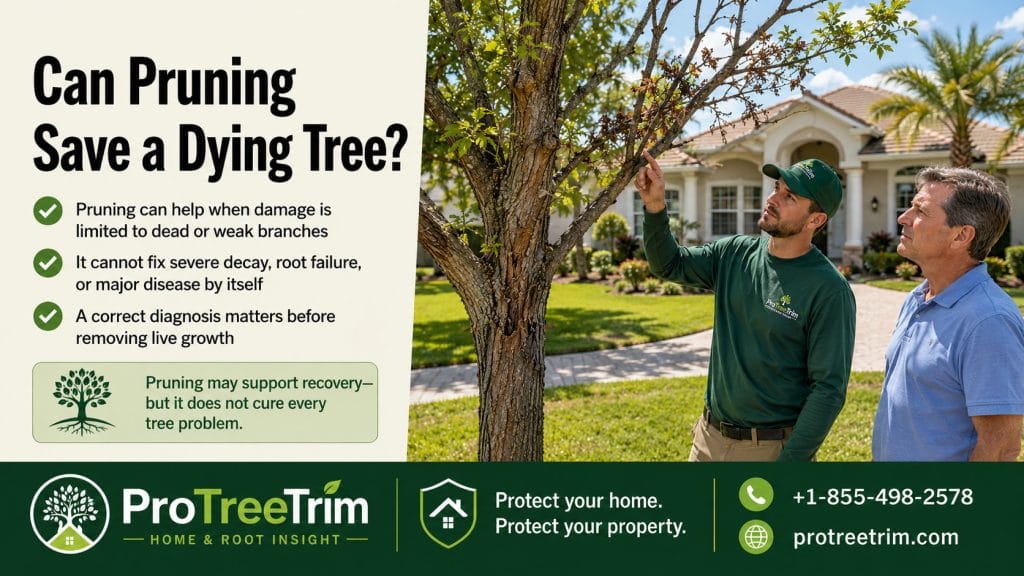
Can Pruning Save a Dying Tree?
Pruning can help a struggling tree in some situations, but it cannot save every dying tree. Removing dead, broken, diseased, or hazardous branches may reduce stress and improve safety. Light structural pruning may help a young tree recover from damage. But pruning cannot fix severe root damage, trunk decay, major lean, advanced disease, poor planting depth, or a tree that is already mostly dead.
Continue reading Can Pruning Save a Dying Tree?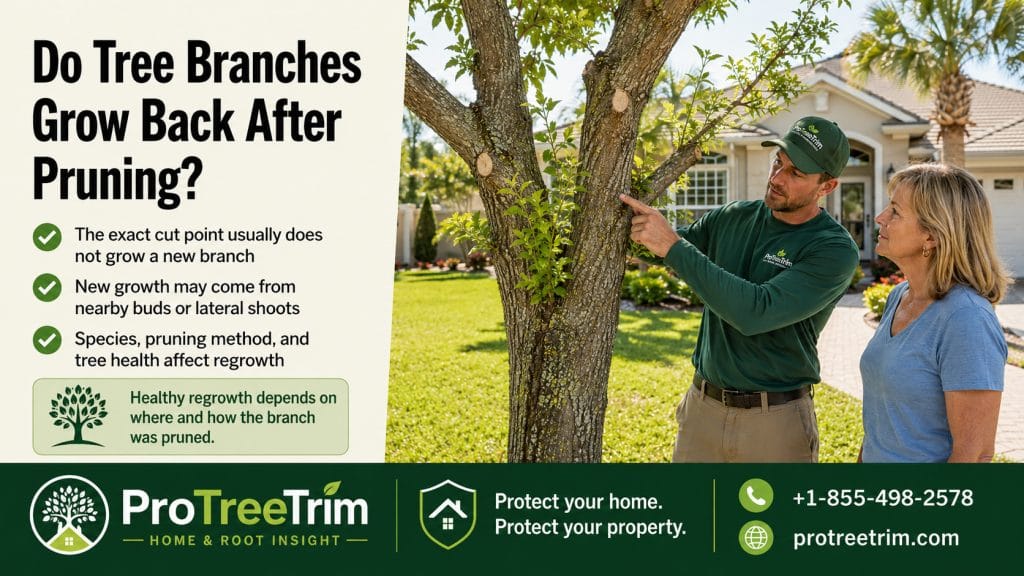
Do Tree Branches Grow Back After Pruning?
Tree branches do not always grow back after pruning. A cut branch usually does not regrow from the exact same spot in the same way. Instead, the tree may seal around the wound, redirect growth to nearby buds, or send out new shoots depending on the species, branch size, cut location, tree health, and pruning method.
Continue reading Do Tree Branches Grow Back After Pruning?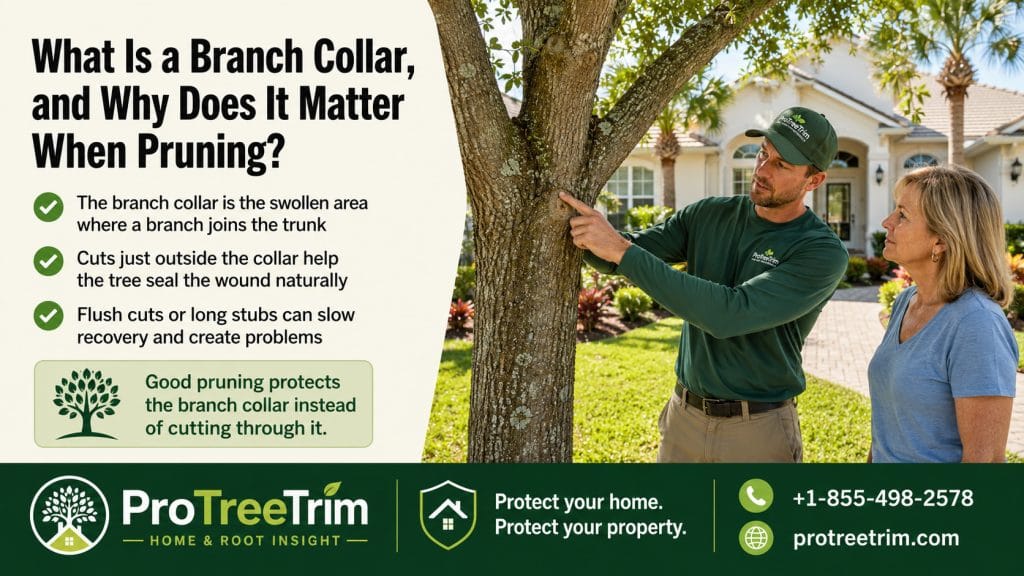
What Is a Branch Collar, and Why Does It Matter When Pruning?
A branch collar is the slightly swollen or raised area where a branch connects to the trunk or a larger limb. It may look like a subtle ring, ridge, flare, or thicker shoulder at the base of the branch.
Continue reading What Is a Branch Collar, and Why Does It Matter When Pruning?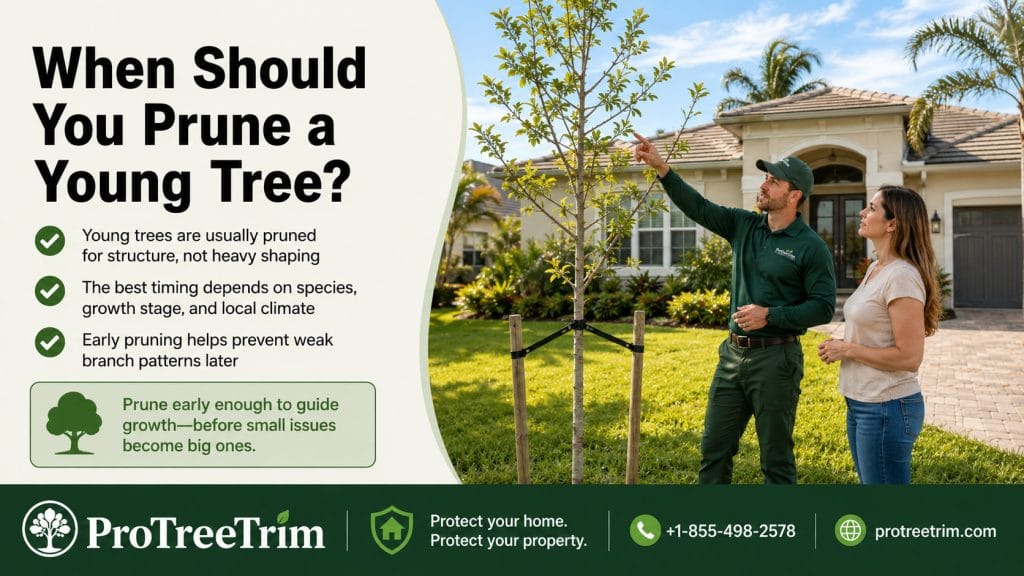
When Should You Prune a Young Tree?
Young trees should be pruned carefully and gradually. The goal is not to make them look perfect right away. The goal is to guide strong structure, remove obvious problems early, and avoid large corrective cuts later.
Continue reading When Should You Prune a Young Tree?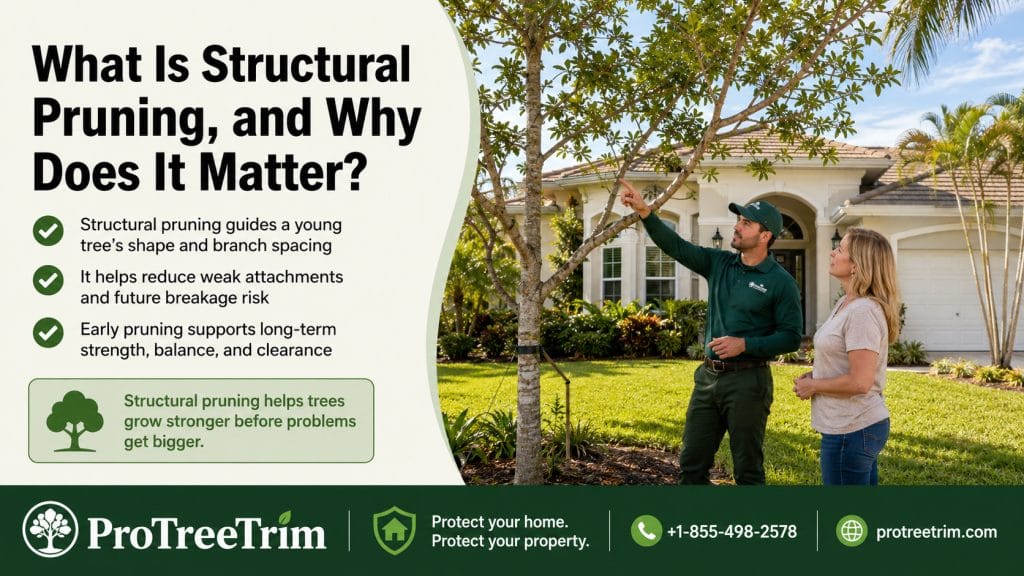
What Is Structural Pruning, and Why Does It Matter?
Structural pruning is pruning done to guide a tree’s future shape, branch spacing, and strength. It is especially useful on young and developing trees because small cuts made early can prevent larger, more expensive problems later.
Continue reading What Is Structural Pruning, and Why Does It Matter?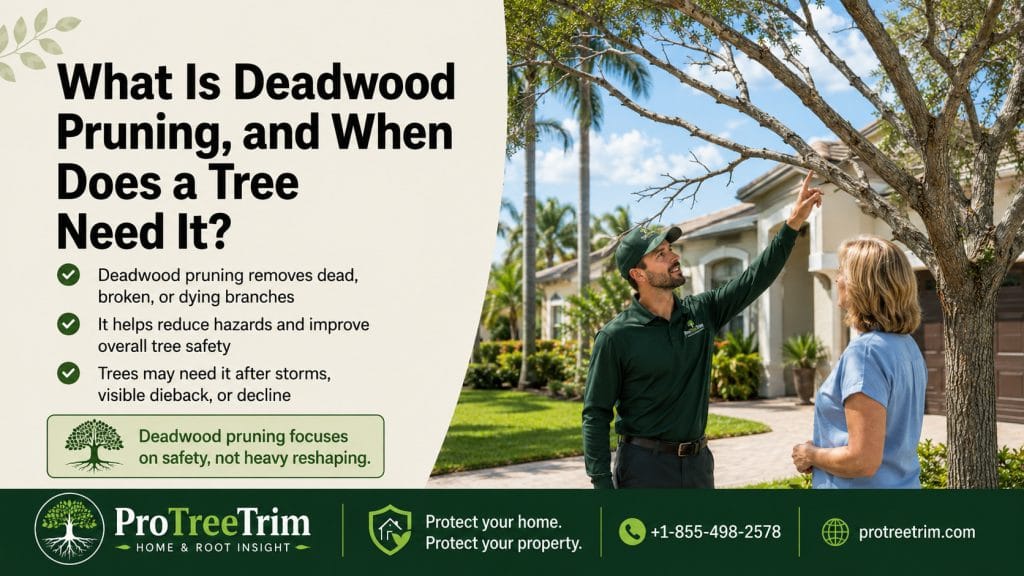
What Is Deadwood Pruning, and When Does a Tree Need It?
Deadwood pruning means removing dead branches from a tree. It is one of the most practical forms of tree pruning because it focuses on branches that no longer help the tree and may eventually break, fall, or create property concerns.
Continue reading What Is Deadwood Pruning, and When Does a Tree Need It?