
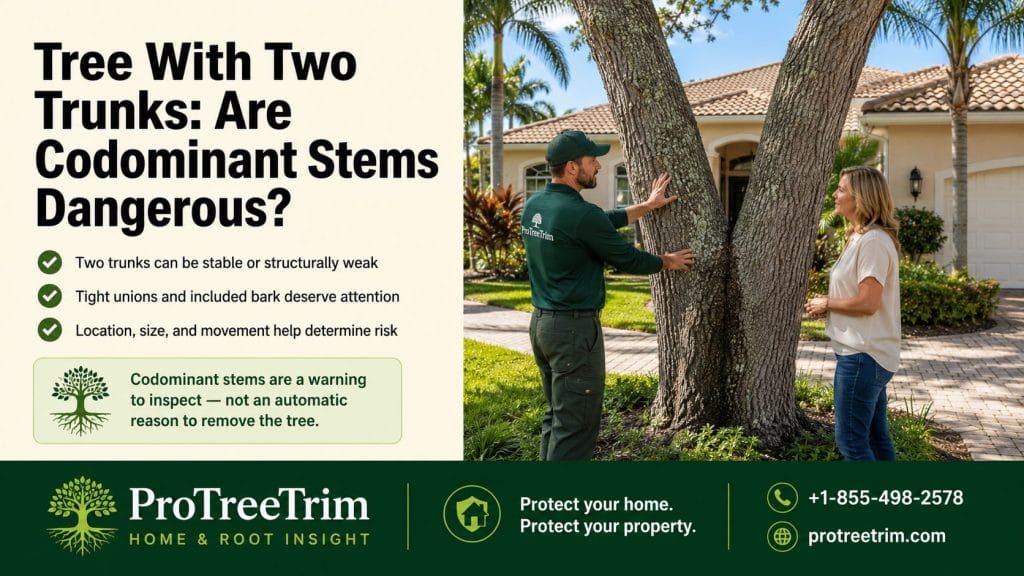
A tree with two trunks is not always dangerous. Many trees naturally develop multiple stems and stand for years without obvious problems. But when two main trunks grow closely together with a narrow V-shaped union, trapped bark, cracking, or heavy canopy weight, the tree may be more likely to split during wind, rain, or storms.
Continue reading Tree With Two Trunks: Are Codominant Stems Dangerous?Category: Tree Risk & Property Maintenance
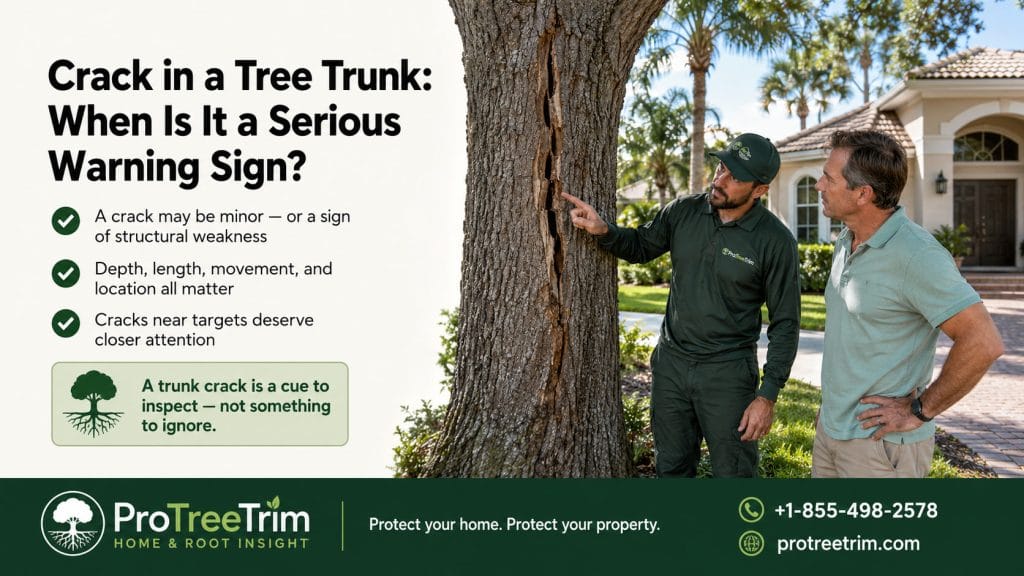
Crack in a Tree Trunk: When Is It a Serious Warning Sign?
A small bark split on a young tree is very different from a deep vertical crack running through the main trunk of a mature tree near a house.
Continue reading Crack in a Tree Trunk: When Is It a Serious Warning Sign?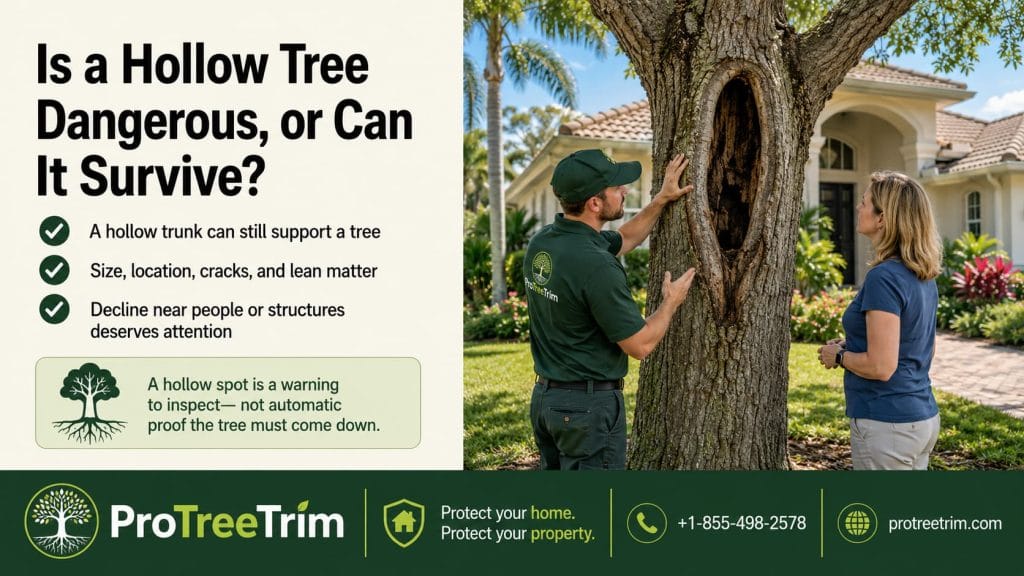
Is a Hollow Tree Dangerous, or Can It Survive?
A hollow tree is not automatically dead. Many trees can live for years with cavities, old wounds, or hollow sections. But a hollow tree can become dangerous when decay reduces the amount of sound wood that supports the trunk, major limbs, or root flare.
Continue reading Is a Hollow Tree Dangerous, or Can It Survive?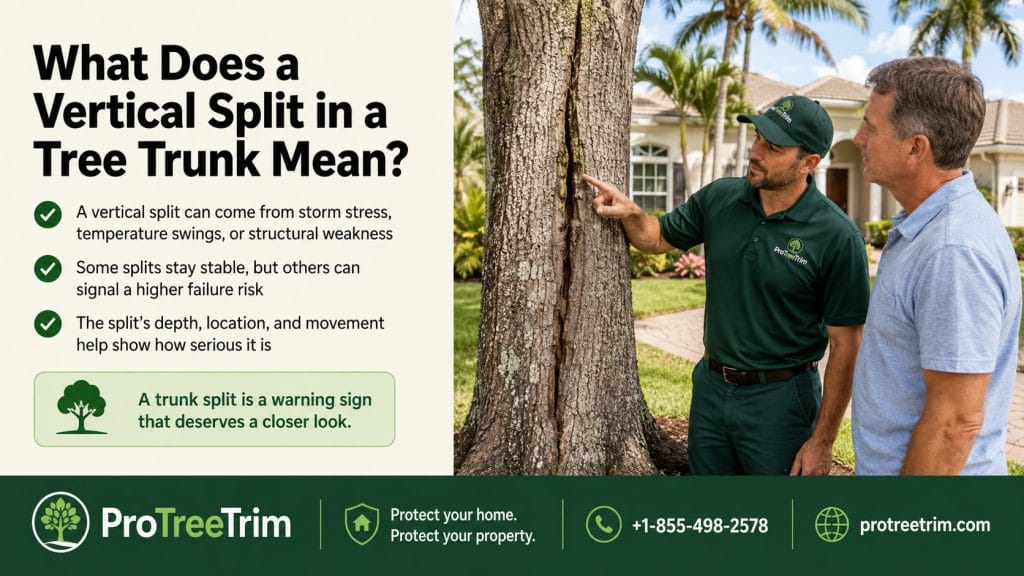
What Does a Vertical Split in a Tree Trunk Mean?
A vertical split in a tree trunk is a warning sign that should be taken seriously. Sometimes a split is a surface crack caused by weather, rapid temperature changes, old injury, or bark expansion. Other times, it may reveal deeper structural weakness, internal decay, storm damage, included bark, or trunk failure risk.
Continue reading What Does a Vertical Split in a Tree Trunk Mean?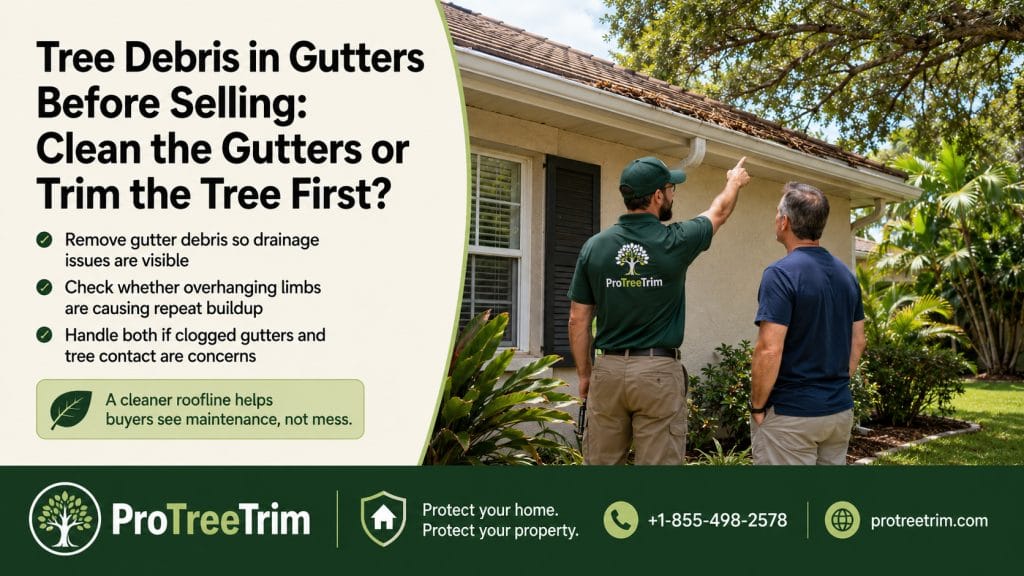
Tree Debris in Gutters Before Selling: Clean the Gutters or Trim the Tree First?
Tree debris in gutters can make a home look less maintained, even if the roof is otherwise in good shape. Before selling, homeowners should not only clean out the leaves, palm debris, twigs, or seed pods. They should also check whether the tree is still causing the problem and whether branches are touching the roofline.
Continue reading Tree Debris in Gutters Before Selling: Clean the Gutters or Trim the Tree First?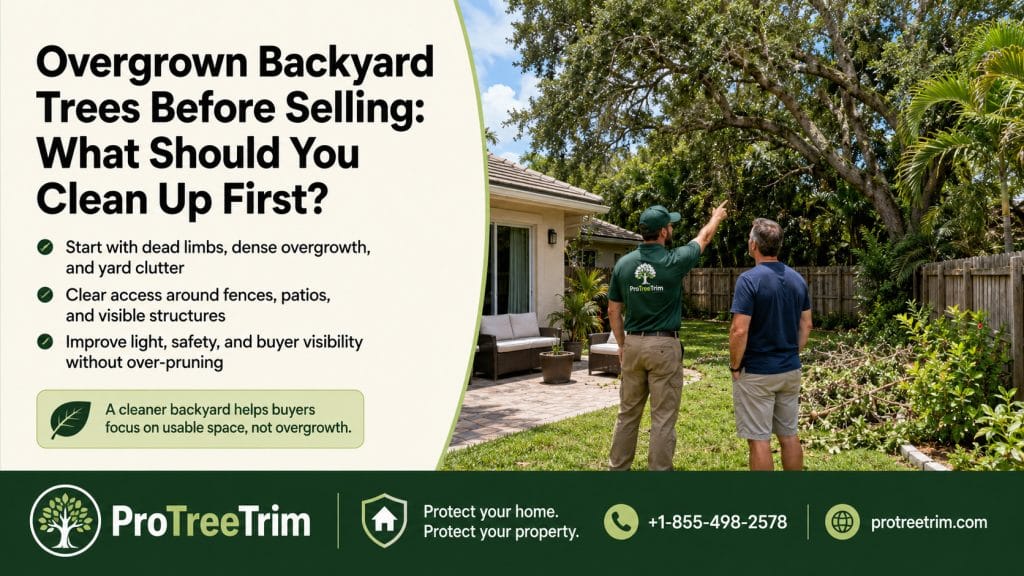
Overgrown Backyard Trees Before Selling: What Should You Clean Up First?
Overgrown backyard trees do not always need major trimming before a home sale. In fact, mature shade can help a yard feel private, established, and comfortable. The problem starts when buyers see blocked access, dead limbs, messy debris, fence damage, patio crowding, roof contact, or branches hanging over a pool cage, shed, or neighbor’s yard.
Continue reading Overgrown Backyard Trees Before Selling: What Should You Clean Up First?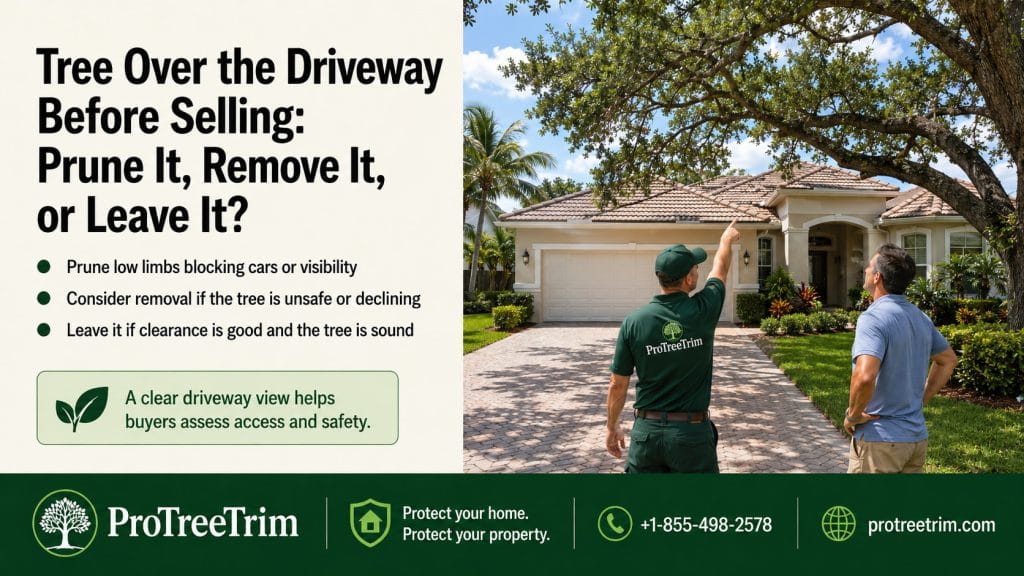
Tree Over the Driveway Before Selling: Prune It, Remove It, or Leave It?
A tree over the driveway can be a strong selling feature or a buyer concern. Shade over parked cars is useful. A large dead limb over the same area is not. Before selling, homeowners should look at clearance, branch condition, root impact, parking access, and whether the tree makes the property feel maintained or risky.
Continue reading Tree Over the Driveway Before Selling: Prune It, Remove It, or Leave It?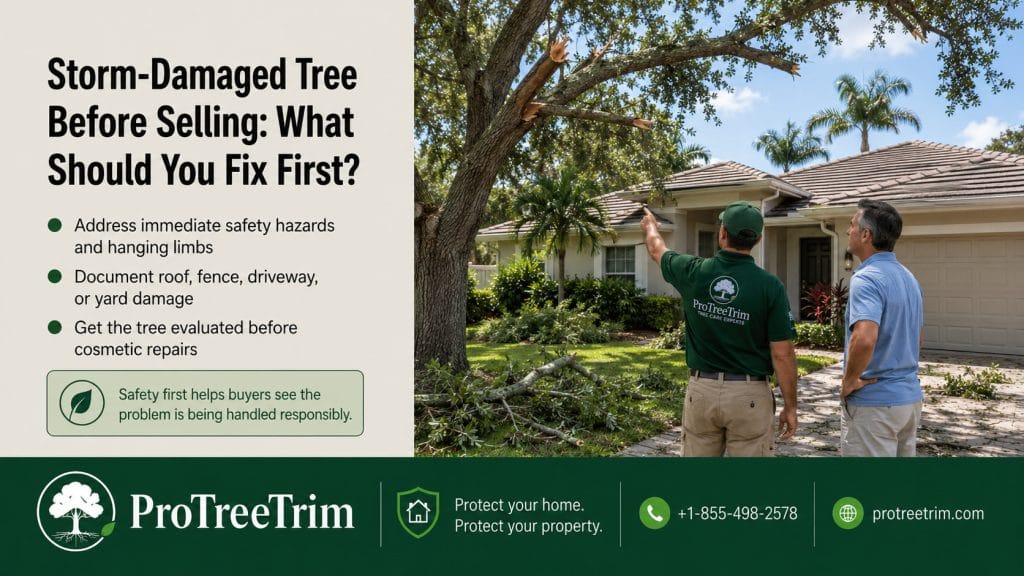
Storm-Damaged Tree Before Selling: What Should You Fix First?
A storm-damaged tree can make a property feel risky, even if the house itself is in good shape. Buyers may see broken limbs, a leaning trunk, roofline debris, fence damage, or a rough stump area and wonder whether more problems are waiting. Before listing, focus on what is still active, what is visible, and what could affect safety, access, or buyer confidence.
Continue reading Storm-Damaged Tree Before Selling: What Should You Fix First?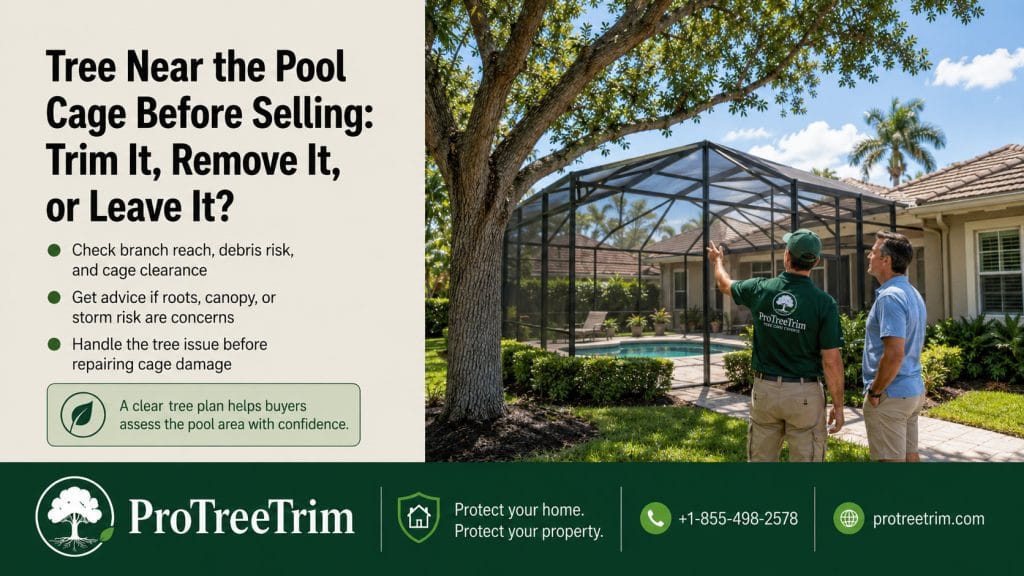
Tree Near the Pool Cage Before Selling: Trim It, Remove It, or Leave It?
A tree near the pool cage can be a selling point or a buyer concern. Shade around a pool area feels great, but branches touching screens, palm fronds dropping onto panels, roots lifting pavers, or a leaning trunk near the enclosure can make buyers wonder what they will have to fix after closing.
Continue reading Tree Near the Pool Cage Before Selling: Trim It, Remove It, or Leave It?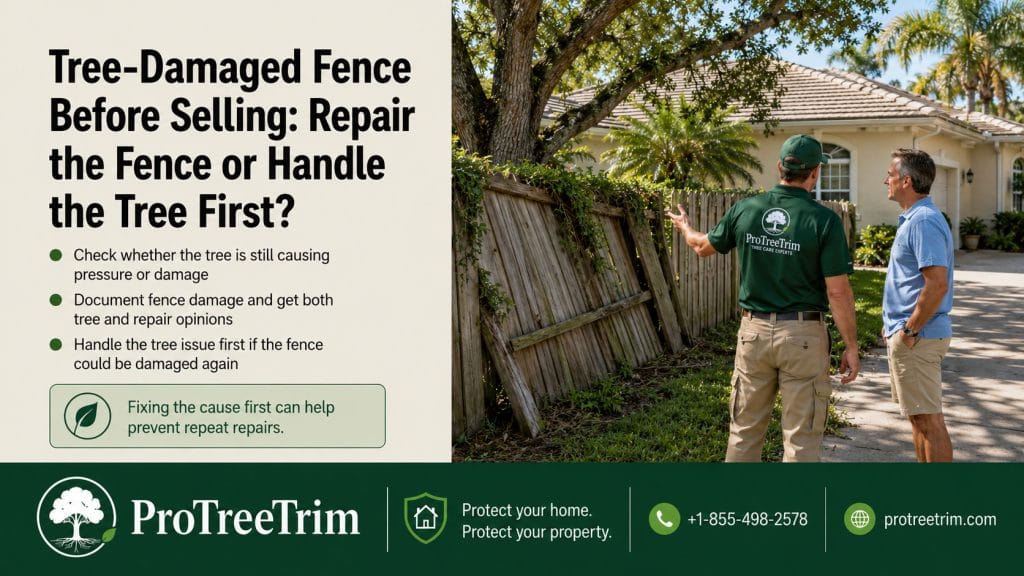
Tree-Damaged Fence Before Selling: Repair the Fence or Handle the Tree First?
A tree-damaged fence can make buyers wonder whether the yard has a one-time repair issue or an ongoing tree problem. Before listing, do not rush to replace a fence panel without checking what caused the damage. A broken fence from an old fallen branch is different from a leaning tree, heavy limb, root pressure, or recurring storm debris that could damage the repair again.
Continue reading Tree-Damaged Fence Before Selling: Repair the Fence or Handle the Tree First?