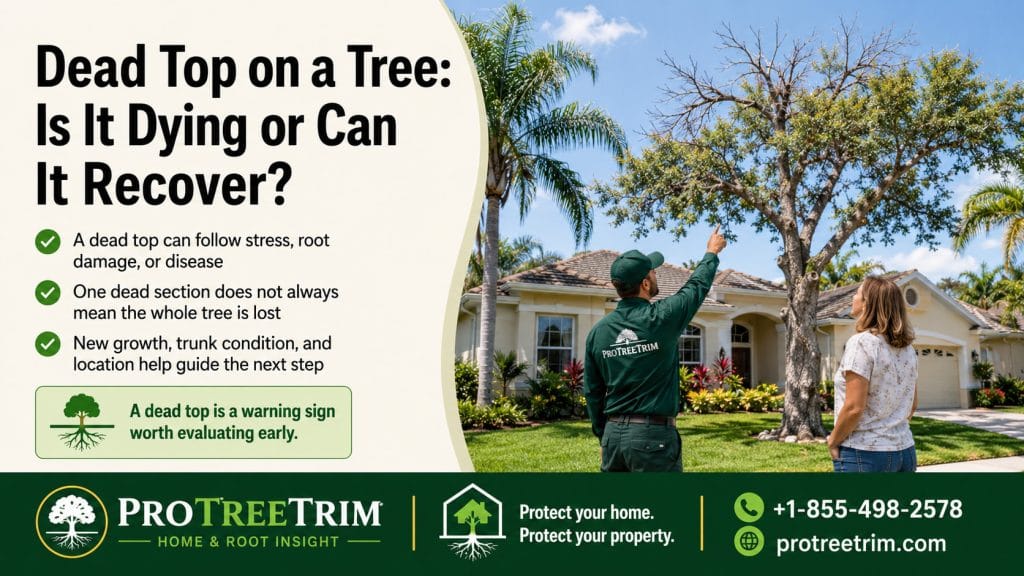
A dead top on a tree is a warning sign that should not be ignored. Sometimes the problem is limited to the upper canopy and the tree may respond with proper care or pruning. Other times, a dead top can signal root damage, drought stress, pest activity, disease, lightning injury, trunk damage, decay, or a tree that is declining from the inside out.
Continue reading Dead Top on a Tree: Is It Dying or Can It Recover?Guides
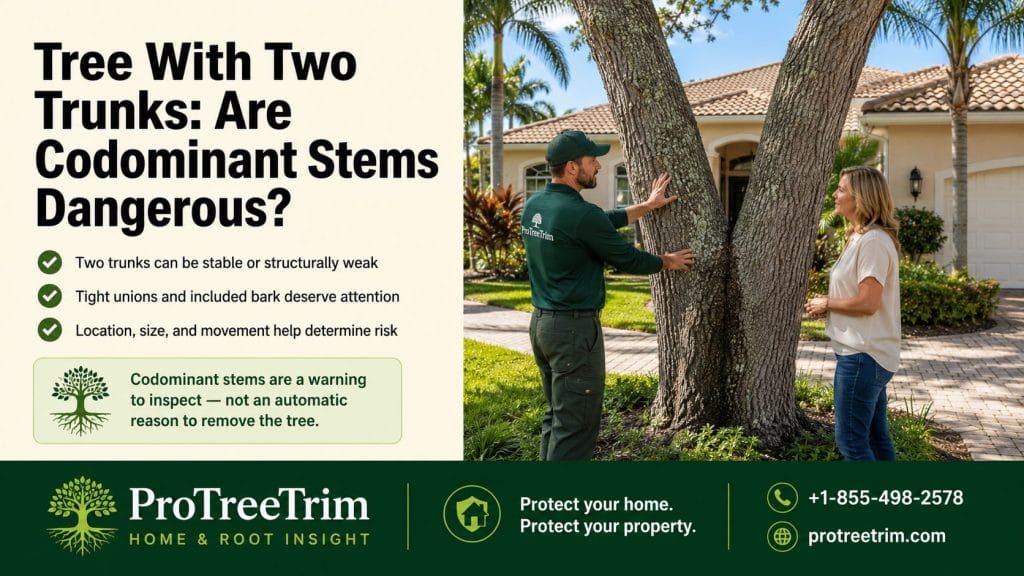
Tree With Two Trunks: Are Codominant Stems Dangerous?
A tree with two trunks is not always dangerous. Many trees naturally develop multiple stems and stand for years without obvious problems. But when two main trunks grow closely together with a narrow V-shaped union, trapped bark, cracking, or heavy canopy weight, the tree may be more likely to split during wind, rain, or storms.
Continue reading Tree With Two Trunks: Are Codominant Stems Dangerous?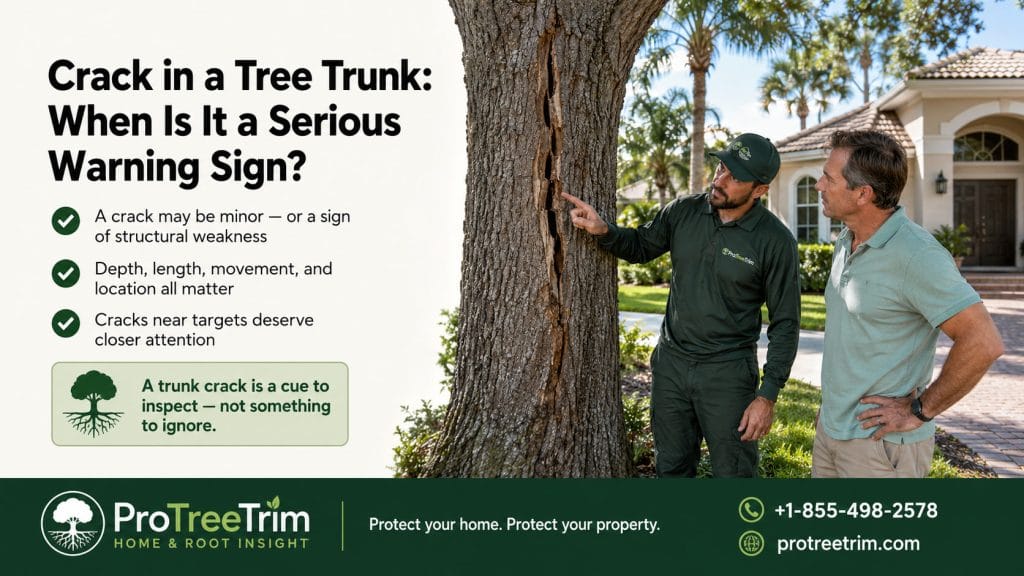
Crack in a Tree Trunk: When Is It a Serious Warning Sign?
A small bark split on a young tree is very different from a deep vertical crack running through the main trunk of a mature tree near a house.
Continue reading Crack in a Tree Trunk: When Is It a Serious Warning Sign?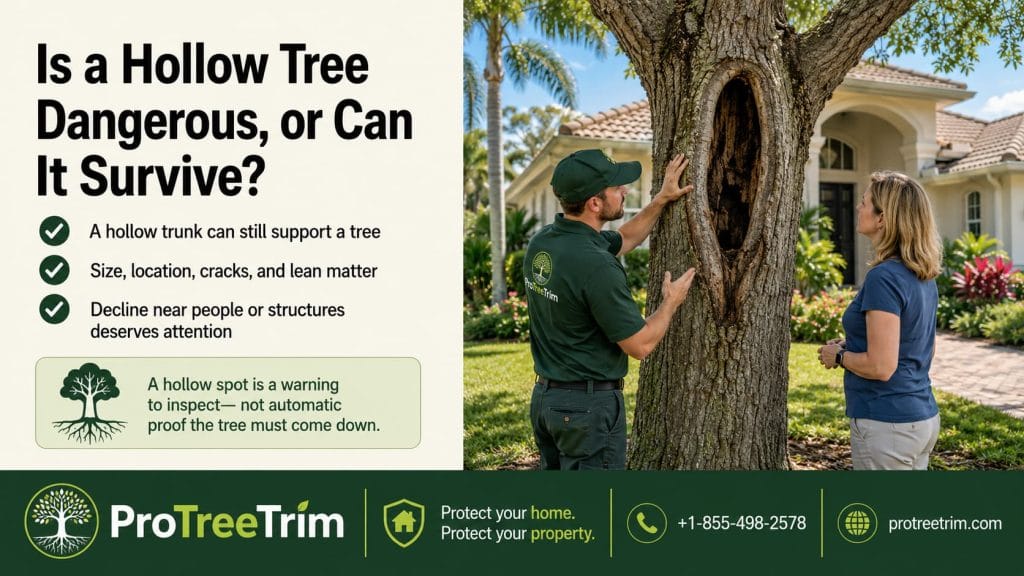
Is a Hollow Tree Dangerous, or Can It Survive?
A hollow tree is not automatically dead. Many trees can live for years with cavities, old wounds, or hollow sections. But a hollow tree can become dangerous when decay reduces the amount of sound wood that supports the trunk, major limbs, or root flare.
Continue reading Is a Hollow Tree Dangerous, or Can It Survive?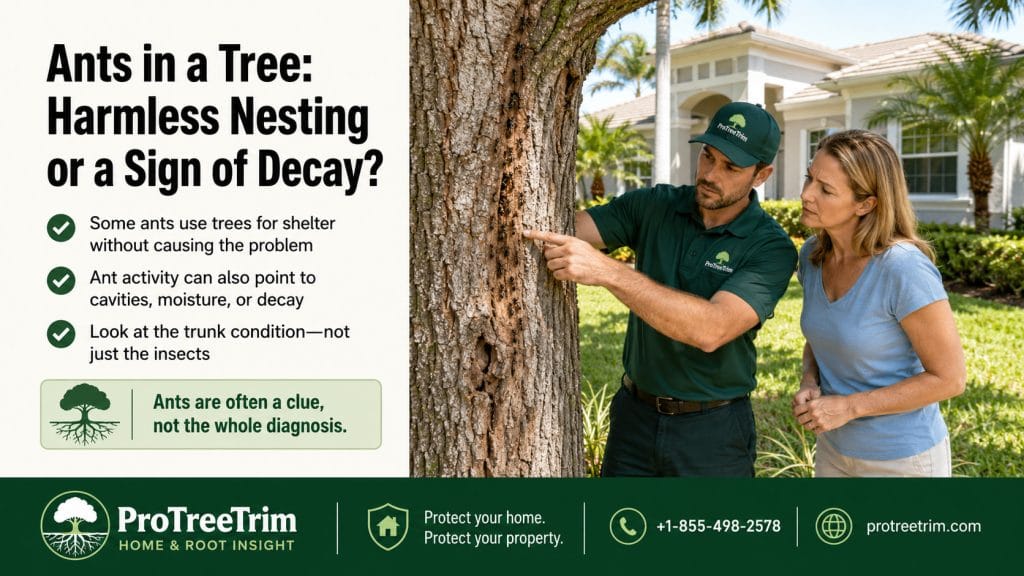
Ants in a Tree: Harmless Nesting or a Sign of Decay?
Ants in a tree do not always mean the tree is dying. Some ants simply travel over bark, feed on sap, or use small openings without seriously harming the tree. But ants can also be a clue that part of the tree is hollow, decaying, wet, wounded, or already weakened.
Continue reading Ants in a Tree: Harmless Nesting or a Sign of Decay?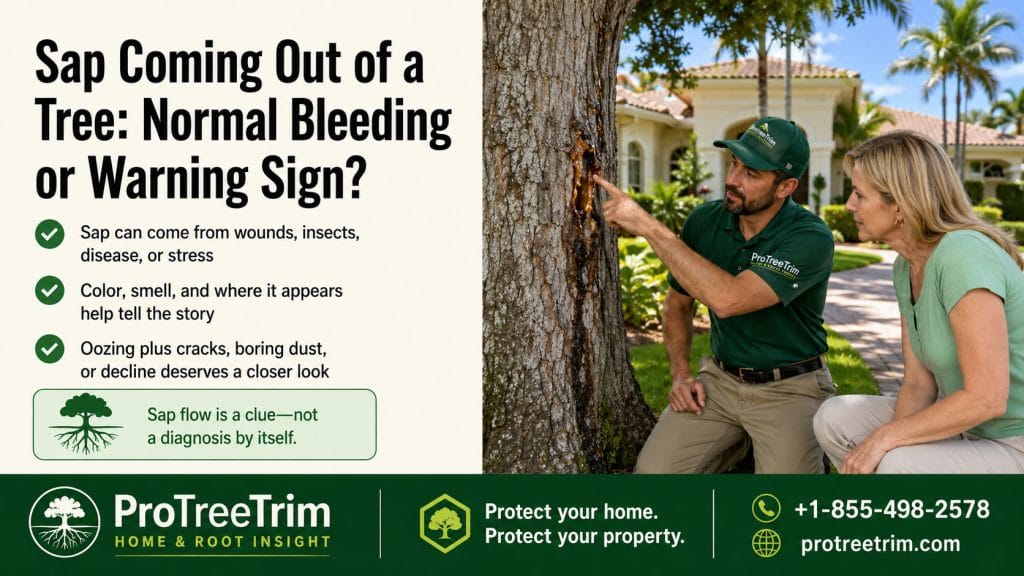
Sap Coming Out of a Tree: Normal Bleeding or Warning Sign?
Sap coming out of a tree can be normal, minor, or a warning sign. Some trees naturally bleed sap after pruning, seasonal changes, bark injury, or insect activity. Other times, sap or dark oozing can point to stress, pests, trunk wounds, cankers, decay, root problems, or a declining section of the tree.
Continue reading Sap Coming Out of a Tree: Normal Bleeding or Warning Sign?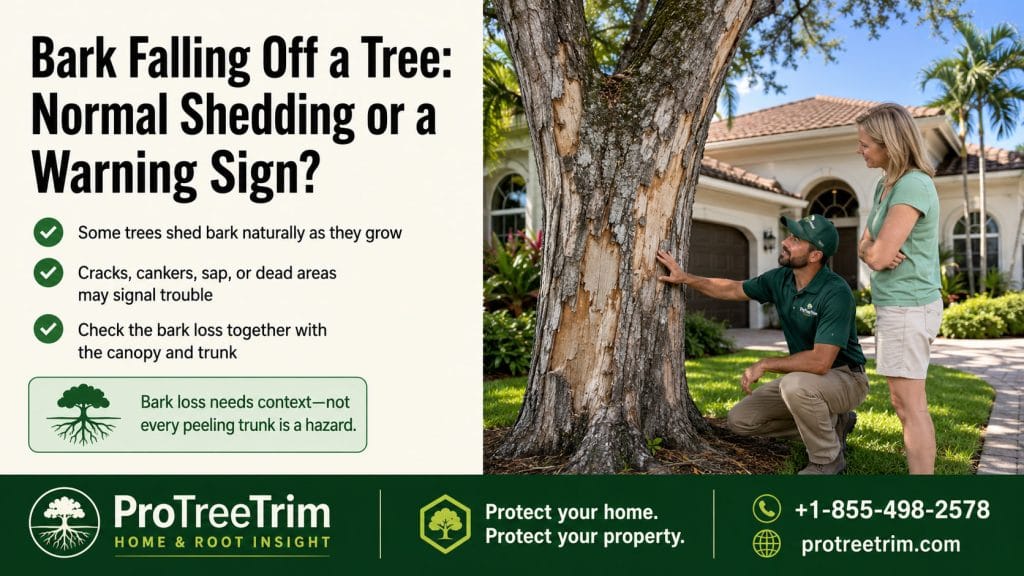
Bark Falling Off a Tree: Normal Shedding or a Warning Sign?
Bark falling off a tree can be normal, serious, or somewhere in between. Some trees naturally shed bark as they grow. Others lose bark because of drought stress, sunscald, insects, disease, mechanical injury, storm damage, trunk decay, or a dying section of wood.
Continue reading Bark Falling Off a Tree: Normal Shedding or a Warning Sign?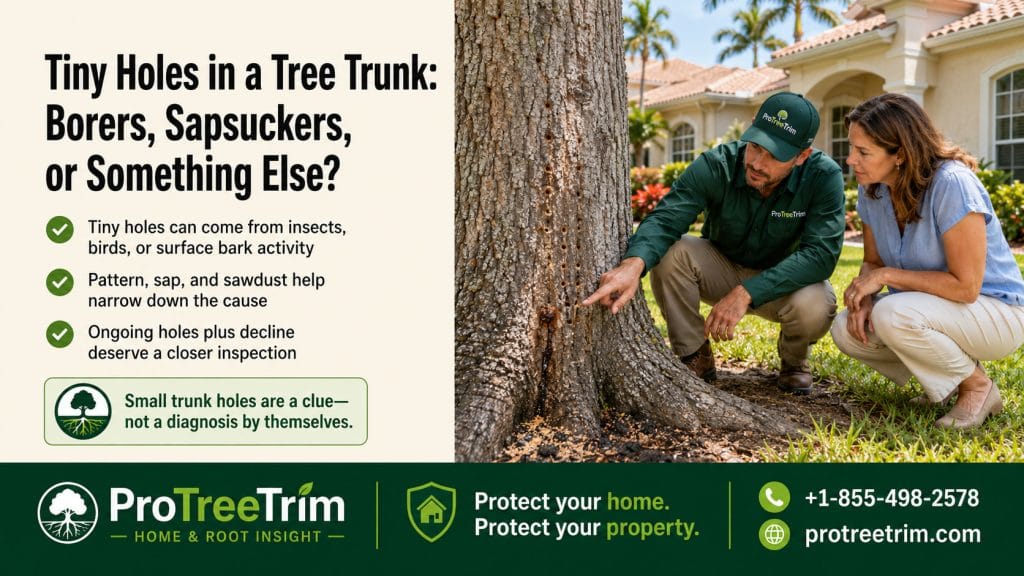
Tiny Holes in a Tree Trunk: Borers, Sapsuckers, or Something Else?
Tiny holes in a tree trunk can be harmless, serious, or somewhere in between. The cause depends on the pattern, size, location, tree species, canopy health, bark condition, and whether the holes are new or old.
Continue reading Tiny Holes in a Tree Trunk: Borers, Sapsuckers, or Something Else?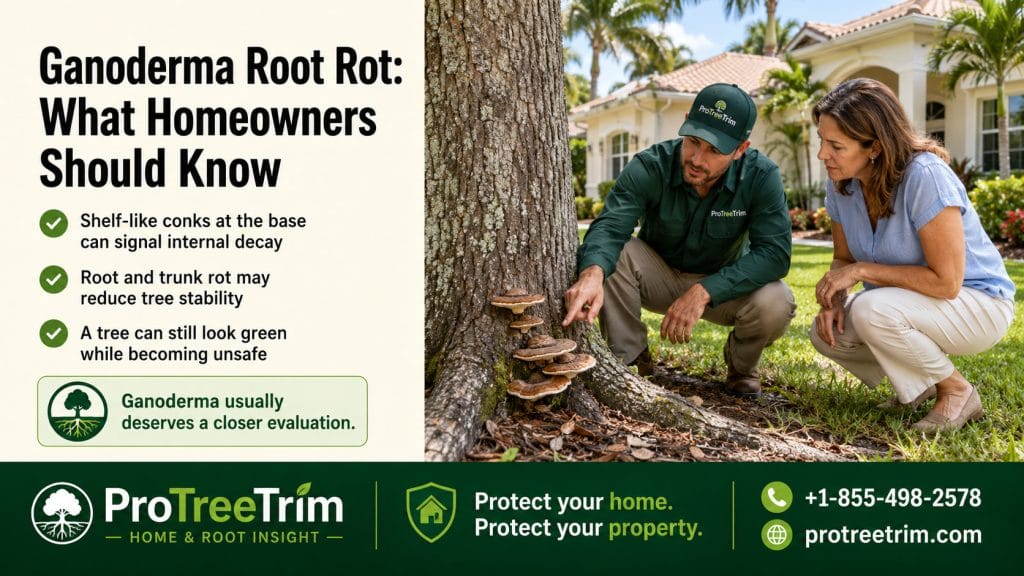
Ganoderma Root Rot: What Homeowners Should Know
Ganoderma root rot is a serious fungal decay problem that can affect the lower trunk, root flare, and major roots of trees and palms. Homeowners usually notice it when a shelf-like fungus, conk, or mushroom appears near the base of the tree.
Continue reading Ganoderma Root Rot: What Homeowners Should Know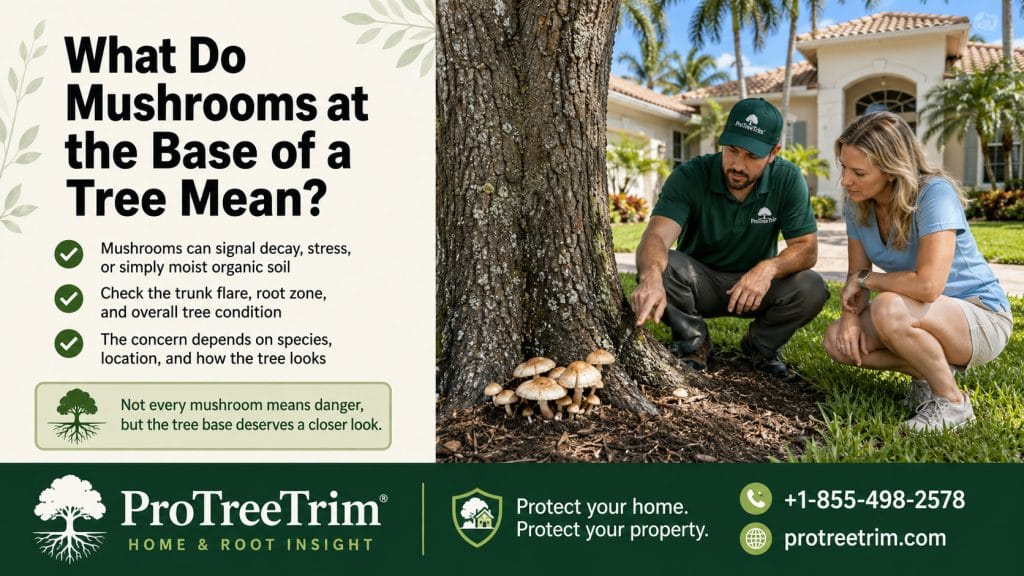
What Do Mushrooms at the Base of a Tree Mean?
Mushrooms at the base of a tree can mean several different things. Sometimes they are growing from old buried wood, mulch, stump roots, or decaying organic matter in the soil. Other times, they may be connected to root decay, trunk decay, or a fungal problem affecting the tree itself.
Continue reading What Do Mushrooms at the Base of a Tree Mean?