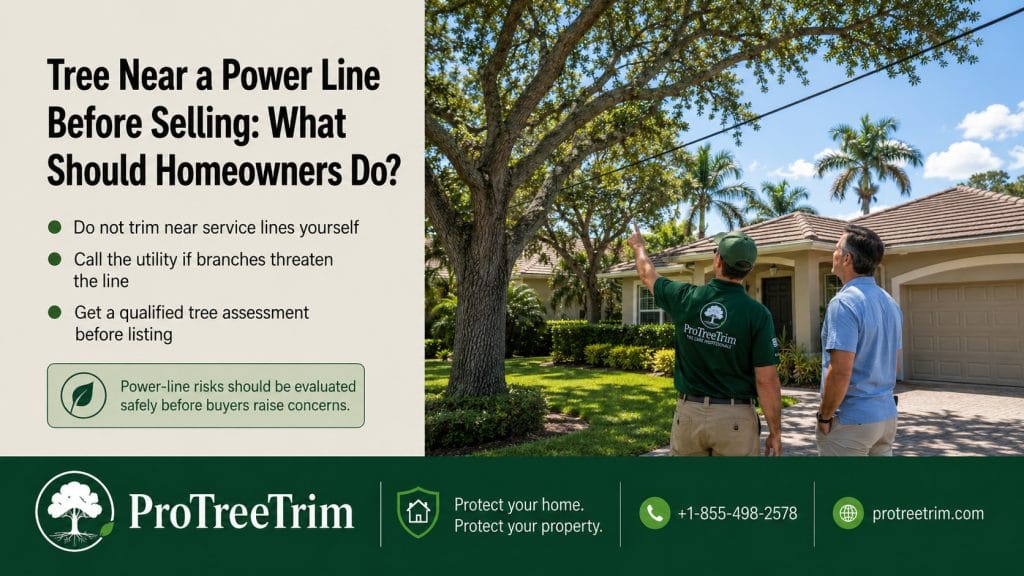
A tree near a power line can make buyers nervous before they even ask about the roof, fence, or driveway. The safest first step is not trimming. It is identifying whether an electrical line may be involved, contacting the utility when needed, and documenting what was done before the home is listed.
Continue reading Tree Near a Power Line Before Selling: What Should Homeowners Do?Category: Tree Risk & Emergency Help
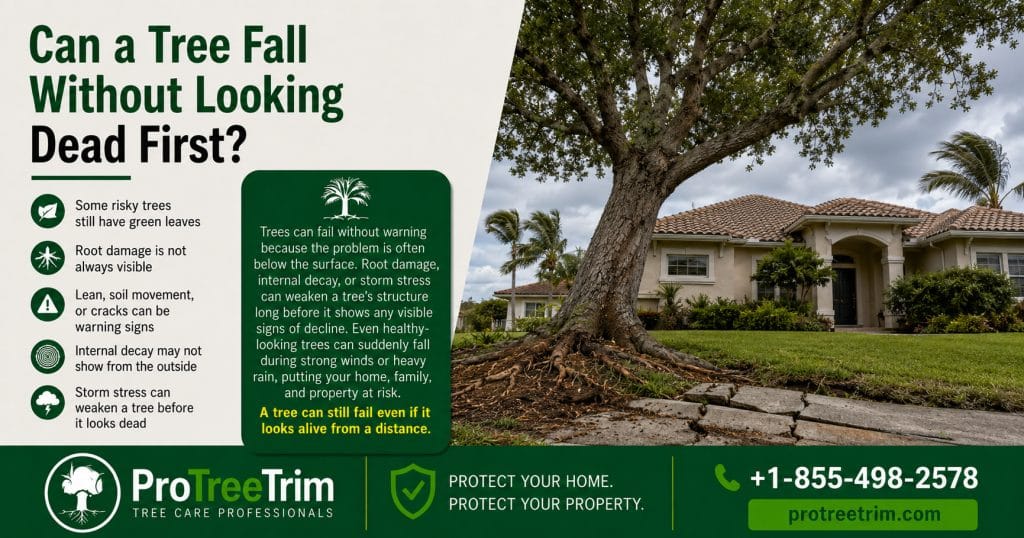
Can a Tree Fall Without Looking Dead First?
Yes, a tree can fall without looking dead first. Green leaves do not always mean the trunk, roots, or major limbs are structurally sound. In Florida, heavy rain, saturated sandy soil, hidden decay, old storm damage, and uneven canopy weight can turn a healthy-looking tree into a yard safety concern.
Continue reading Can a Tree Fall Without Looking Dead First?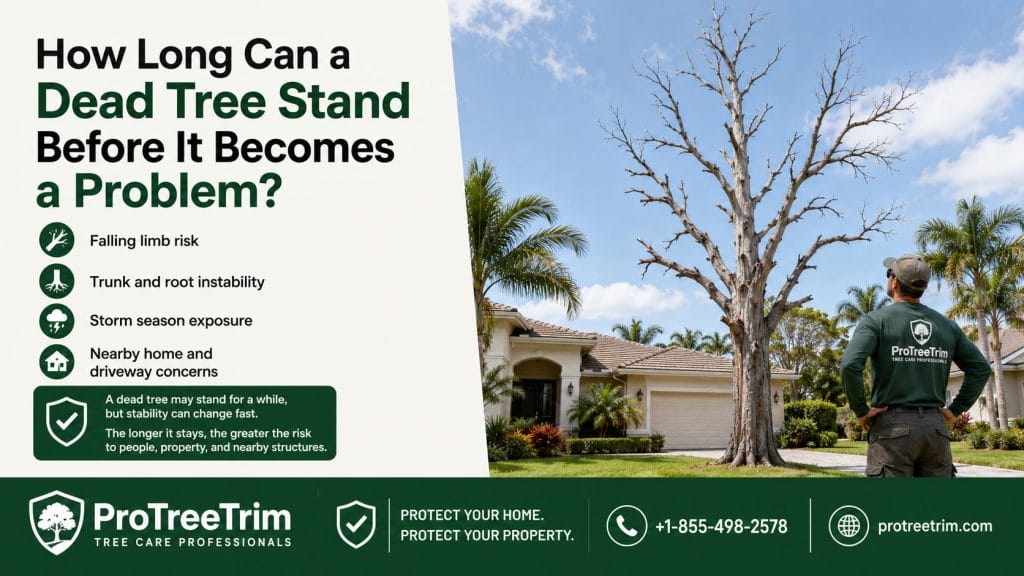
How Long Can a Dead Tree Stand Before It Becomes a Problem?
A dead tree may stay upright for months or even longer, but that does not mean it is safe to ignore. Once a tree is dead, it no longer repairs wounds, responds to decay, or holds branches the same way a living tree does. The real question is what it could hit if the trunk, roots, or limbs fail.
Continue reading How Long Can a Dead Tree Stand Before It Becomes a Problem?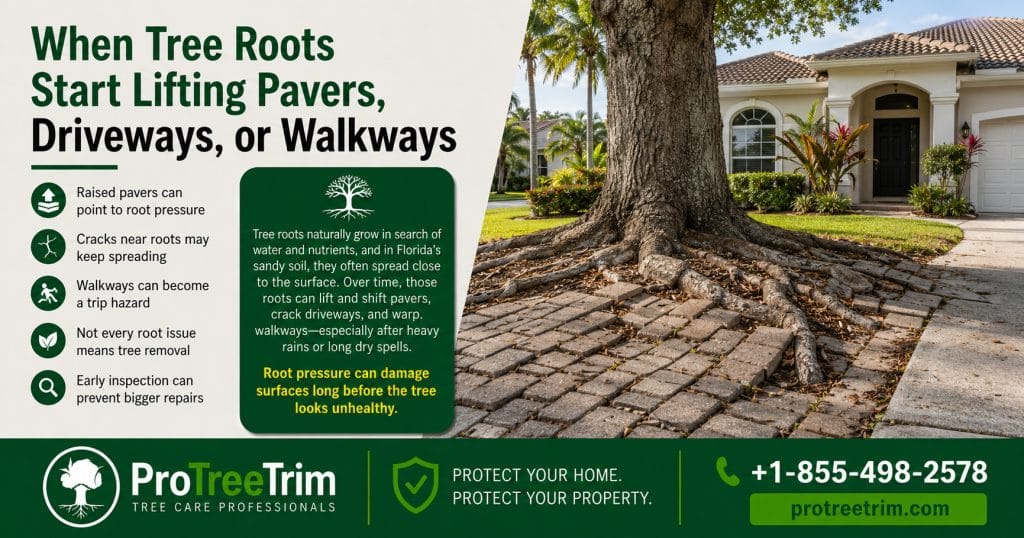
When Tree Roots Start Lifting Pavers, Driveways, or Walkways
Tree roots lifting pavers, driveways, or walkways can start as a small uneven spot and turn into a bigger property concern. In Florida yards, sandy soil, irrigation leaks, drainage changes, and fast-growing trees can all make root movement more noticeable. The key is to check both the surface damage and the tree’s condition before deciding what to do.
Continue reading When Tree Roots Start Lifting Pavers, Driveways, or Walkways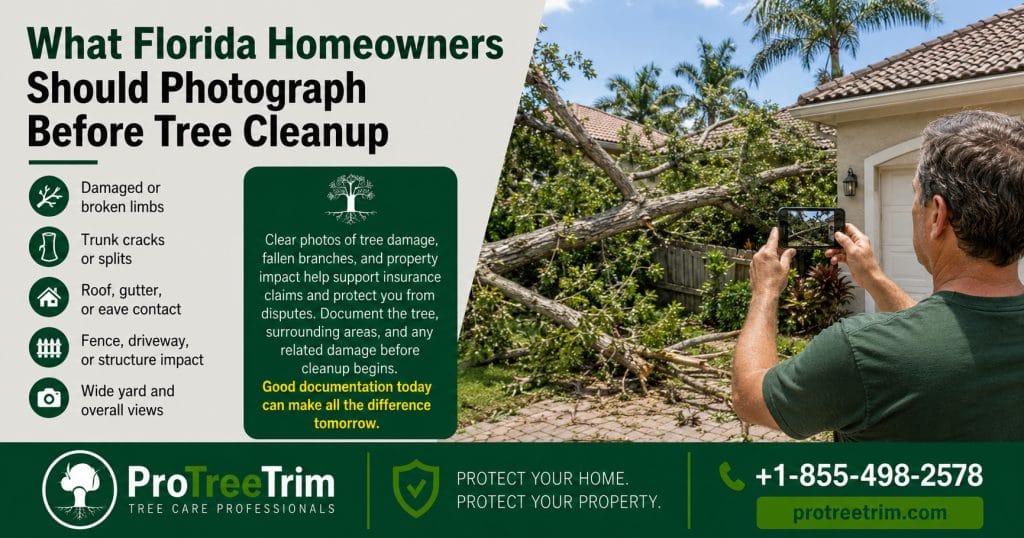
What Florida Homeowners Should Photograph Before Tree Cleanup
Before tree cleanup starts, take safe, clear photos of the fallen tree, broken limbs, damaged structures, and the area around the tree. Florida homeowners do not need perfect photography. The goal is simple: document what happened before debris is moved, branches are cut, or the yard looks different than it did right after the damage.
Continue reading What Florida Homeowners Should Photograph Before Tree Cleanup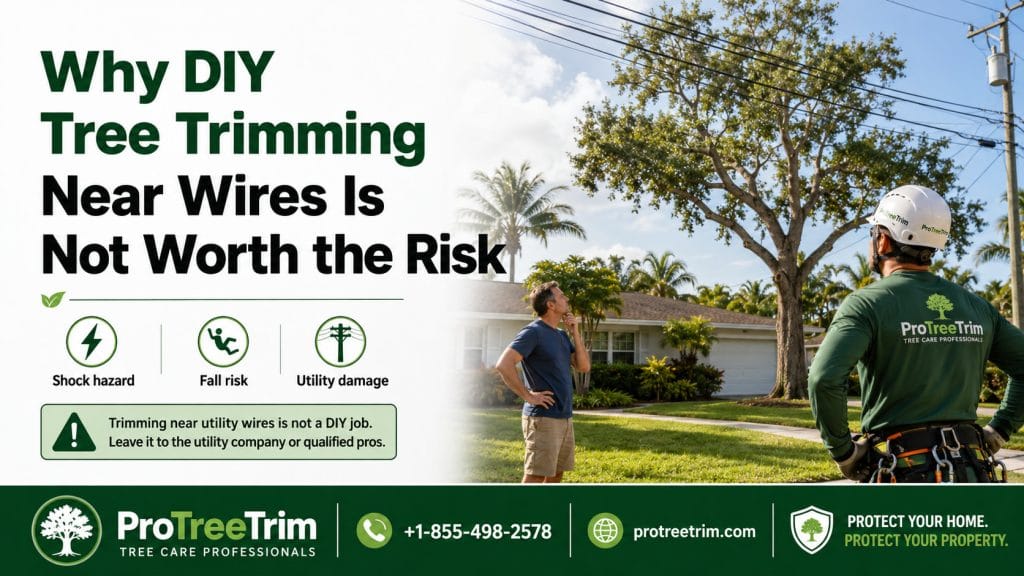
Why DIY Tree Trimming Near Wires Is Not Worth the Risk
A branch near wires may look like a small Saturday project. It is not. Tree trimming near electrical lines can turn dangerous before the first cut is finished. Homeowners should not use ladders, pole saws, ropes, pruning tools, or rented equipment near overhead wires. The safer first move is to step back and call the utility.
Continue reading Why DIY Tree Trimming Near Wires Is Not Worth the Risk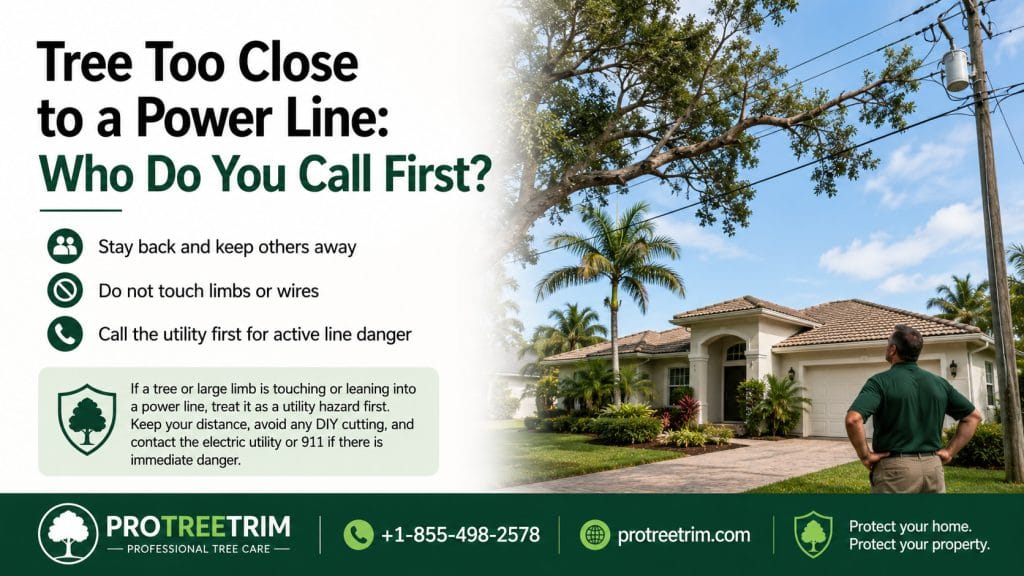
Tree Too Close to a Power Line: Who Do You Call First?
If a tree is too close to a power line, the first call is usually the utility, not a regular tree crew. Branches near electrical lines are not routine trimming. The safest next step depends on whether the branch is touching the line, close to it, storm-damaged, or part of a tree that may need pruning or removal after the electrical hazard is addressed.
Continue reading Tree Too Close to a Power Line: Who Do You Call First?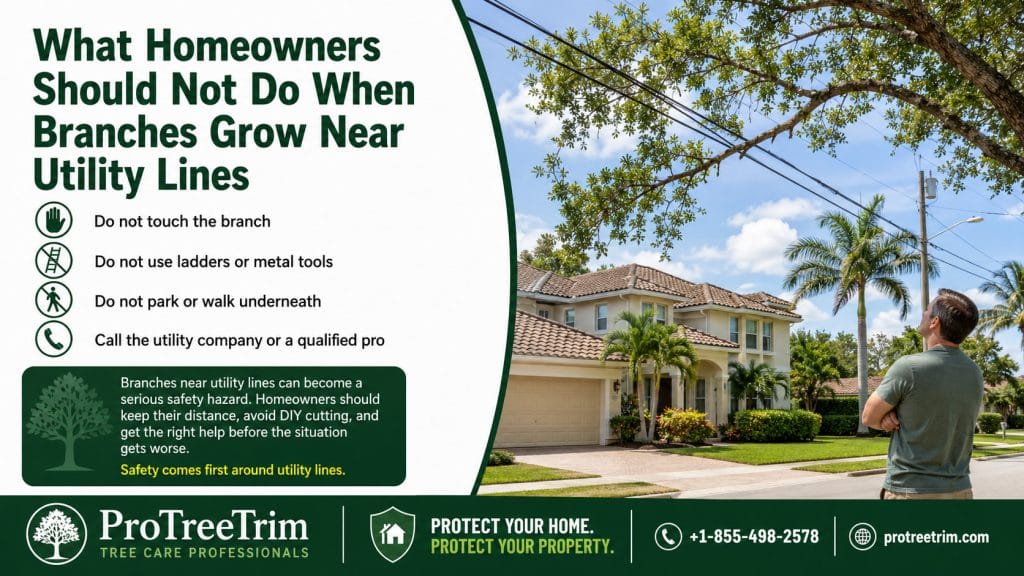
What Homeowners Should Not Do When Branches Grow Near Utility Lines
Branches near utility lines can turn a routine-looking trimming job into a serious safety problem. The safest move is usually not to cut, pull, climb, or guess. Homeowners should step back, identify whether electrical lines may be involved, contact the utility when needed, and save tree service work for after the electrical risk is addressed.
Continue reading What Homeowners Should Not Do When Branches Grow Near Utility Lines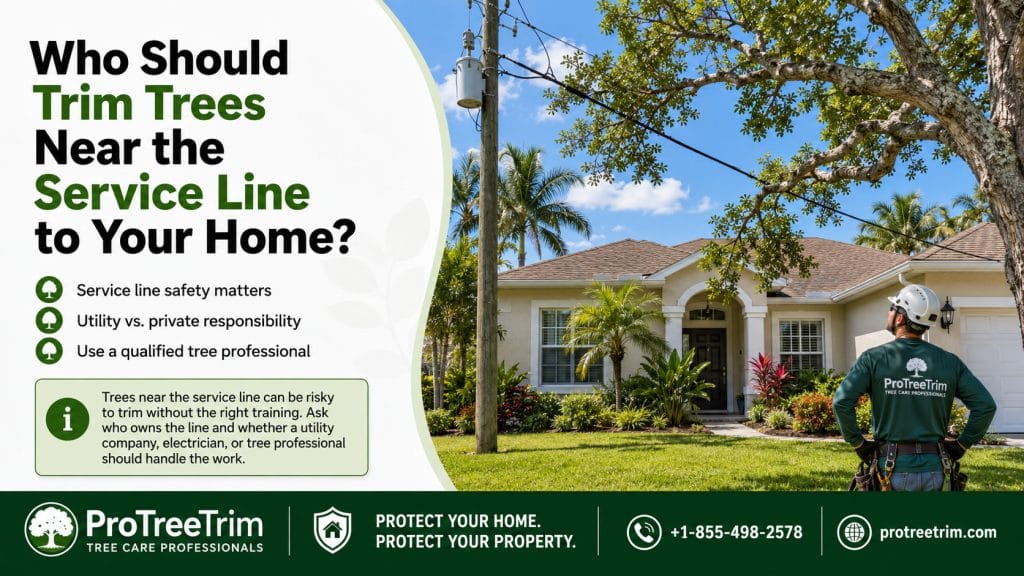
Who Should Trim Trees Near the Service Line to Your Home?
Trees near the service line to your home are not a normal pruning job. If branches are close to electrical wires, touching a line, or hanging over the connection to the house, the first question is not how to cut them. It is who can handle the work safely and whether the utility needs to be contacted first.
Continue reading Who Should Trim Trees Near the Service Line to Your Home?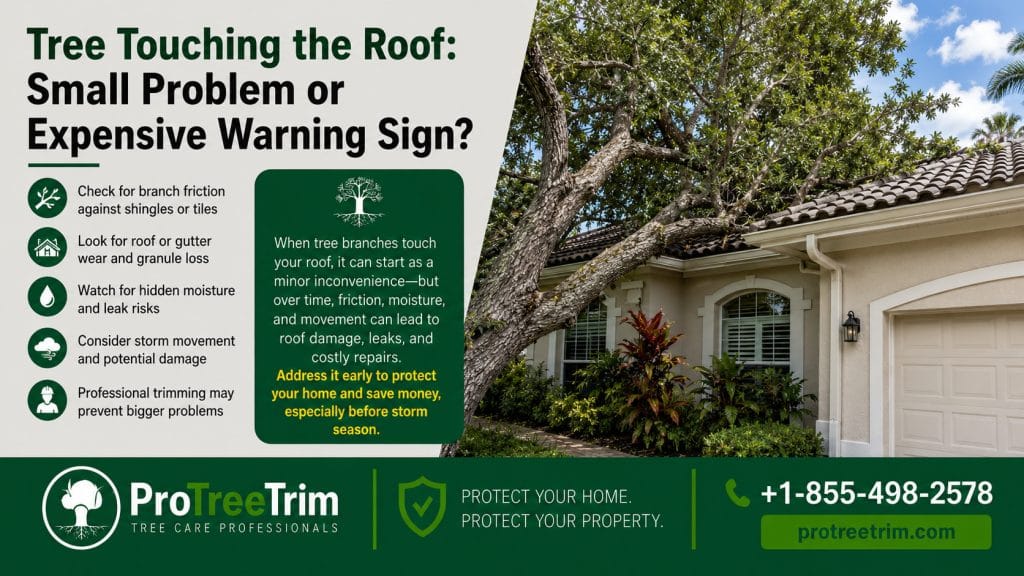
Tree Touching the Roof: Small Problem or Expensive Warning Sign?
A tree touching the roof may seem minor at first, especially if it is only a few leaves or small twigs. But in Florida, roof contact can become a bigger issue during wind, heavy rain, and storm season. Homeowners should check whether branches are rubbing shingles, blocking gutters, scraping fascia, dropping debris, or adding weight near vulnerable roof edges.
Continue reading Tree Touching the Roof: Small Problem or Expensive Warning Sign?