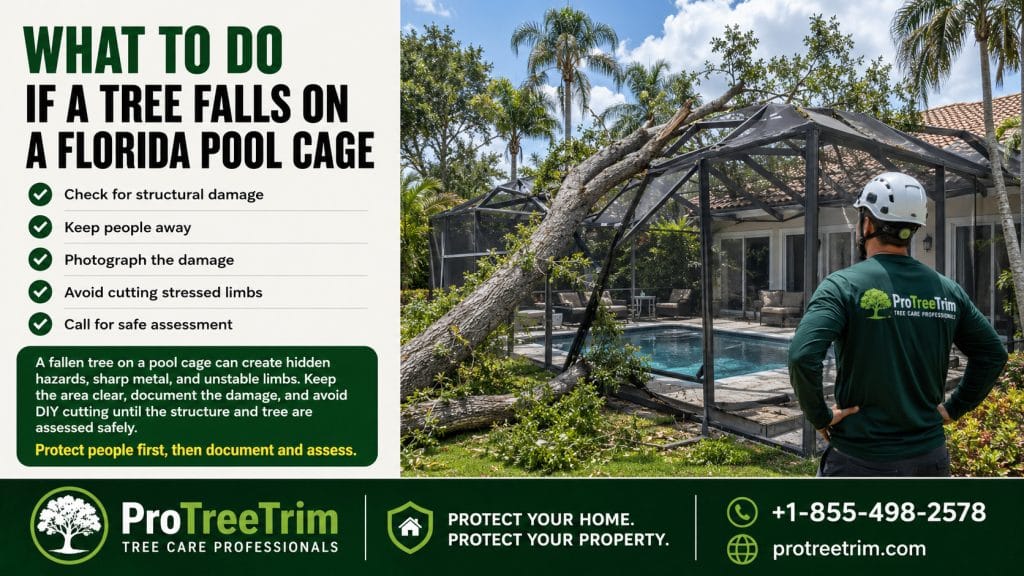
If a tree falls on your roof in Florida, do not climb up to inspect it or start pulling branches away. The roof may be weakened, limbs may be under pressure, and power lines or wet surfaces may create added danger. Start with safety, photos from the ground, insurance contact, and temporary protection if it can be done safely.
Start With Safety, Not Cleanup
A fallen tree on the roof can look stable after it lands, but that does not mean it is safe. Branches may be pressing into shingles, gutters, soffit, fascia, or the roof deck. The trunk may be resting in a way that shifts once someone cuts the wrong limb.
Keep people and pets away from the damaged area. If the tree touched a power line, service mast, electrical equipment, or anything connected to electricity, stay back and contact the utility or emergency services first. Do not walk under hanging limbs, stand on a wet roof, or try to “lighten the load” with a chainsaw.
Take photos from the ground before anything is moved. Get wide shots of the whole house and tree, then closer photos of the roof impact, broken limbs, gutters, attic vents, pool cage, fence, driveway, pavers, or landscaping damage.
| What to document | Why it matters |
|---|---|
| Full tree on the roof | Shows scale and direction of fall |
| Roof impact area | Helps explain where damage occurred |
| Broken limbs or trunk sections | Useful before cleanup changes the scene |
| Gutters, soffit, fascia, vents | Secondary damage may be easy to miss |
| Interior ceiling stains or leaks | Shows possible water entry |
| Cleanup and tarp receipts | May be needed for claim records |
Protect the Home From Further Damage
Florida’s Department of Financial Services advises homeowners to keep receipts and take photographs of damage before and after repairs, including emergency repairs. Its natural disaster guidance gives the example of using plywood, tarp, and duct tape to keep rain from entering a hole caused by a tree limb hitting the home.
That does not mean every homeowner should climb up and tarp the roof personally. If the damage is high, steep, wet, or unstable, temporary protection should be handled by someone equipped to do it safely. Citizens Property Insurance also advises documenting damage before cleanup, keeping receipts, and making temporary repairs to prevent further damage only if it is safe to do so.
Before paying for cleanup, ask for a written scope. Does the work include removing the tree from the roof, cutting debris into sections, hauling it away, protecting the roof, or only clearing access? Save invoices, messages, photos, and payment records in one folder.
If you are unsure whether a fallen tree, roof-adjacent limb, stump, or root issue needs professional cleanup, ProTreeTrim can help connect Florida homeowners with local tree service support. Call +1-855-498-2578 or visit protreetrim.com.
FAQs
Should I remove branches from the roof myself?
Avoid it. Branches can shift, the roof may be weakened, and wet surfaces increase the risk of injury.
Should I call insurance before cleanup?
If there is roof damage, contact your insurer as soon as practical and ask what documentation they need before major cleanup.
What records should I keep?
Keep photos, videos, estimates, invoices, tarp or repair receipts, cleanup records, and messages with contractors or insurance contacts.
ProTreeTrim™ can help you take the next step.
If you are dealing with a damaged tree, fallen branch, stump, root issue, palm concern, or storm cleanup question in Florida, call ProTreeTrim for tree service support.