
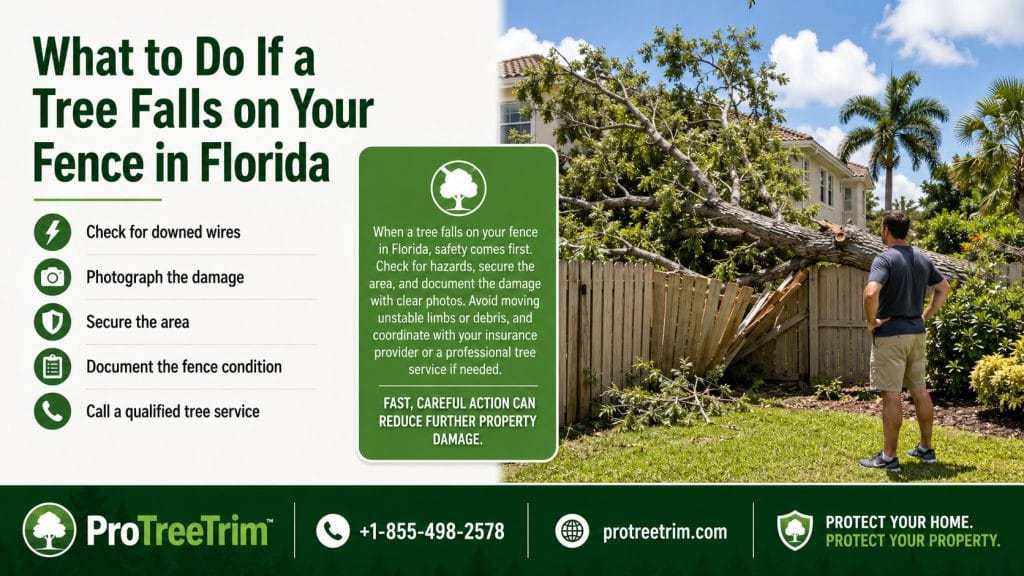
If a tree falls on your fence in Florida, do not rush to pull it off or cut it into pieces. A fallen limb or trunk may be holding pressure, resting on posts, or tangled with another tree. Start by checking safety, photographing the damage, and figuring out whether the tree came from your property, a neighbor’s yard, or a shared boundary area.
Check What the Tree Is Pressing Against
A fence can make storm cleanup tricky. A heavy oak limb may bend rails, crack posts, or press the fence toward a neighbor’s yard. A palm trunk may look light from a distance but still damage panels, gates, or nearby pavers. If the tree is resting on the fence at an angle, cutting the wrong section first can cause it to roll or shift.
Look for other hazards before stepping close. Are branches still hanging overhead? Is the fallen tree near a power line, outdoor lighting, pool equipment, irrigation valve box, or septic area? Is the fence now leaning into a walkway, driveway, or pet area?
Take photos from both sides if it is safe and you have permission to access the area. If the fence is on a property line, avoid entering a neighbor’s yard without talking to them first.
| What to document | Why it matters |
|---|---|
| Full tree and fence line | Shows where the tree came from |
| Broken posts or bent rails | Helps with repair estimates |
| Tree base and break point | Shows whether it uprooted or snapped |
| Neighbor-side damage | Useful for calm communication |
| Gate or access blockage | May affect cleanup urgency |
| Before-and-after cleanup photos | Helps keep records organized |
Talk Before Cleanup Gets Complicated
If the tree came from a neighbor’s property, keep the conversation factual. Share photos, ask what they have seen, and avoid making legal or insurance assumptions on the spot. Responsibility can depend on tree condition, damage, prior notice, and insurance policy language.
Before paying for cleanup, ask whether the quote includes removing the tree from the fence, hauling debris, stump work, and any special handling near the property line. Fence repair is usually a separate job, so save tree cleanup records and fence repair estimates in the same folder.
Do not try to yank branches off with a vehicle or rope. That can damage more fence sections, pull posts out of alignment, or send limbs toward the yard. Controlled cutting is usually safer than force.
If you are unsure whether a fallen tree, fence-damaged limb, stump, or root issue needs professional cleanup, ProTreeTrim can help connect Florida homeowners with local tree service support. Call +1-855-498-2578 or visit protreetrim.com.
FAQs
Should I remove the tree from the fence before taking photos?
No. Take safe photos first so the original damage is documented before cleanup changes the scene.
What if the tree came from my neighbor’s yard?
Document the damage, talk calmly with the neighbor, and check your insurance policy before assuming who pays.
Can I pull the tree off the fence myself?
Avoid pulling heavy limbs or trunks. The wood can shift suddenly and damage more fence, gates, pavers, or nearby landscaping.
ProTreeTrim™ can help you take the next step.
If you are dealing with a damaged tree, fallen branch, stump, root issue, palm concern, or storm cleanup question in Florida, call ProTreeTrim for tree service support.