
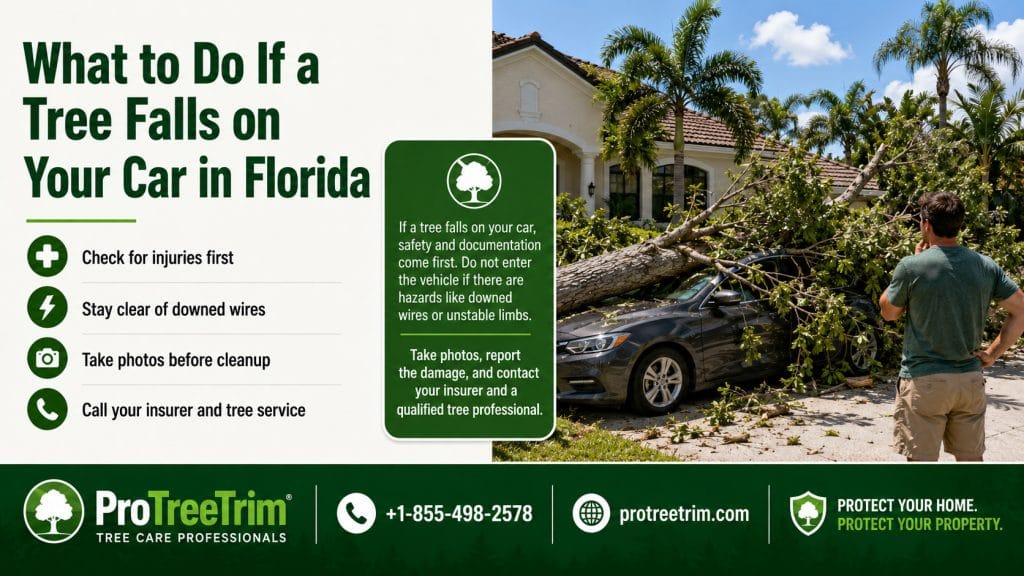
If a tree falls on your car in Florida, do not start cutting branches or moving the vehicle right away unless safety requires it. First check for power lines, hanging limbs, leaking fluids, blocked access, and damage to nearby fences, pavers, or the driveway. Then take photos before cleanup changes the scene.
Start With Safety and Documentation
A car under a fallen limb can make homeowners feel rushed, especially after a storm. Slow down. If the tree is touching a power line or service wire, stay away from the car and the tree until the utility or emergency help responds.
If it is safe to stand back, take wide photos showing the full tree, the car, where the tree came from, and where it landed. Then take closer photos of the windshield, roof, hood, trunk, mirrors, broken glass, dents, and any tree debris still resting on the vehicle.
Also photograph the surrounding area. A falling tree may damage more than the car: driveway pavers, irrigation heads, fence panels, a mailbox, garage door, or landscaping may also be affected.
| What to save | Why it helps |
|---|---|
| Wide photos of tree and car | Shows the full scene before cleanup |
| Close-ups of vehicle damage | Helps document dents, glass, and impact areas |
| Tree base or broken limb | Shows whether it uprooted, snapped, or split |
| Cleanup estimate or invoice | Records what was removed and when |
| Tow or repair records | Helps keep the claim file organized |
| Messages with tree crew or insurer | Shows timing and scope of work |
Check the Right Insurance Policy
Vehicle damage from a fallen tree is usually handled through auto insurance, not homeowners insurance. Comprehensive auto coverage may help pay for damage from a falling tree, branch, or limb, depending on your policy and deductible. Liability-only auto coverage generally would not cover that type of vehicle damage.
Florida’s Office of Insurance Regulation describes automobile insurance as coverage for motorized land vehicles, and notes that coverage can include loss or damage to the vehicle itself depending on the policy.
If the fallen tree also damaged insured property, such as a fence, garage, or structure, your homeowners policy may become part of the conversation. Florida’s Department of Financial Services says most policies cover debris and tree removal if a downed tree damaged insured property, but limits usually apply and policies vary.
Do not assume the tree owner automatically pays, especially after storm weather. If the tree was visibly dead, neglected, or previously documented as hazardous, keep old photos, messages, or arborist notes.
If you are unsure whether a fallen tree, limb, stump, or root issue near a vehicle needs professional cleanup, ProTreeTrim can help connect Florida homeowners with local tree service support. Call +1-855-498-2578 or visit protreetrim.com.
FAQs
Should I move the car before taking photos?
If it is safe to leave it in place, take photos first. Move it only if safety, access, or emergency instructions require it.
Does homeowners insurance cover a tree falling on a car?
Usually the auto policy is the first place to check. Comprehensive auto coverage may apply, depending on your policy.
Can I cut the branches off the car myself?
Avoid cutting heavy, pinned, or overhead limbs. The tree can shift and cause more damage to the car, driveway, or nearby structures.
ProTreeTrim™ can help you take the next step.
If you are dealing with a damaged tree, fallen branch, stump, root issue, palm concern, or storm cleanup question in Florida, call ProTreeTrim for tree service support.