
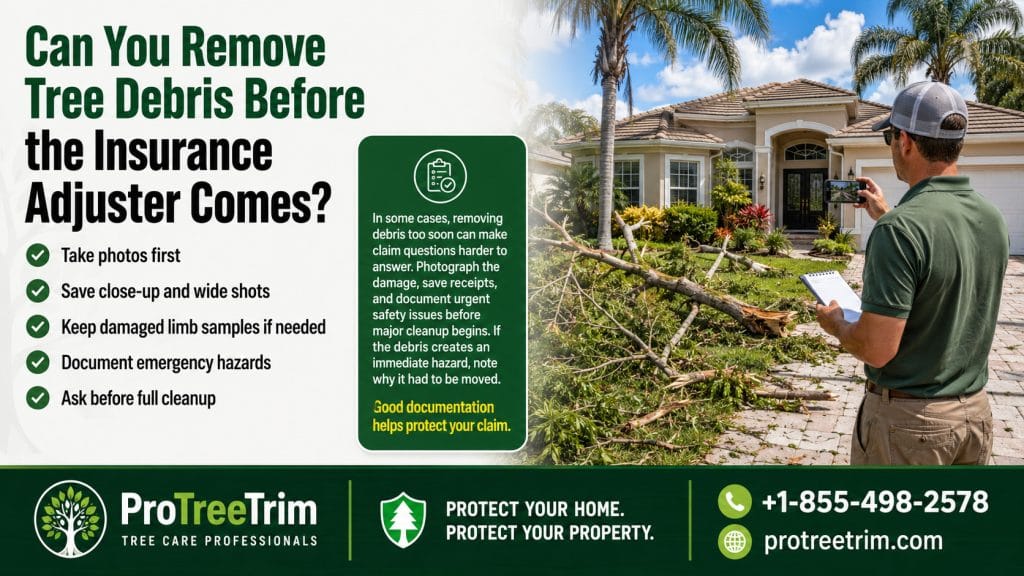
You may need to remove tree debris before the insurance adjuster comes, especially if it blocks access or creates a safety issue. But do not rush straight into cleanup. Florida homeowners should photograph the damage first, save receipts, keep written records, and avoid making permanent repairs before understanding what the insurer needs.
Document First, Then Protect the Property
After a storm, the yard can feel urgent. A tree may be across the driveway, a limb may be resting on the roof, or branches may be tangled in a pool cage. If the debris creates a safety problem, blocks the main entrance, or allows more water into the home, cleanup or temporary protection may be necessary.
The key is to document the scene before it changes. Citizens Property Insurance advises homeowners to take photos and videos of all damage before cleanup and to keep receipts for emergency repairs. It also says temporary repairs may be needed to prevent further damage, if safety allows.
Take wide photos first. Show the full tree, where it came from, where it landed, and what it damaged. Then take close-ups of roof impact, gutters, soffit, fences, pavers, pool screens, broken irrigation, stump areas, or cracked limbs.
| Before cleanup, save this | Why it helps |
|---|---|
| Wide photos of the whole scene | Shows scale and location |
| Close-ups of damage | Documents roof, fence, screen, or paver impact |
| Photos before and after emergency work | Shows what changed and why |
| Cleanup estimate or invoice | Records the work performed |
| Tarp, board-up, or repair receipts | Supports temporary protection records |
| Messages with contractors or insurer | Helps preserve the timeline |
Be Careful With Permanent Repairs
Temporary work is different from permanent repair. Florida’s Department of Financial Services advises homeowners to make emergency repairs to prevent further damage, document those repairs with photos or video, and keep receipts. Its disaster guidance also cautions homeowners not to dispose of destroyed property before it can be inspected by the field adjuster.
For tree damage, that means you may need to clear a driveway, tarp a roof, or remove unstable debris. But if possible, avoid fully erasing the evidence before you have documented it. If a limb punched into a roof, crushed a fence, tore a screen enclosure, or damaged a vehicle area, photograph the original condition before branches are hauled away.
If a tree crew must act quickly, ask for a written invoice that explains the work: emergency limb removal, tree removal from roof, driveway clearing, pool cage debris removal, stump grinding, or haul-away. Save before-and-after photos and payment proof in the same folder.
If you are unsure whether storm-related tree debris, a fallen limb, stump, or root issue needs professional cleanup before an adjuster visit, ProTreeTrim can help connect Florida homeowners with local tree service support. Call +1-855-498-2578 or visit protreetrim.com.
FAQs
Should I wait for the adjuster before removing tree debris?
Not always. If the debris creates a safety issue or may cause more damage, temporary cleanup may be needed. Take photos first.
What if the tree is blocking my driveway?
Document the blocked access, then ask your insurer what records they need. Save cleanup invoices and before-and-after photos.
Should I throw away damaged materials right away?
Avoid discarding damaged items before inspection when possible. If something must be removed for safety, photograph or video it first.
ProTreeTrim™ can help you take the next step.
If you are dealing with a damaged tree, fallen branch, stump, root issue, palm concern, or storm cleanup question in Florida, call ProTreeTrim for tree service support.