
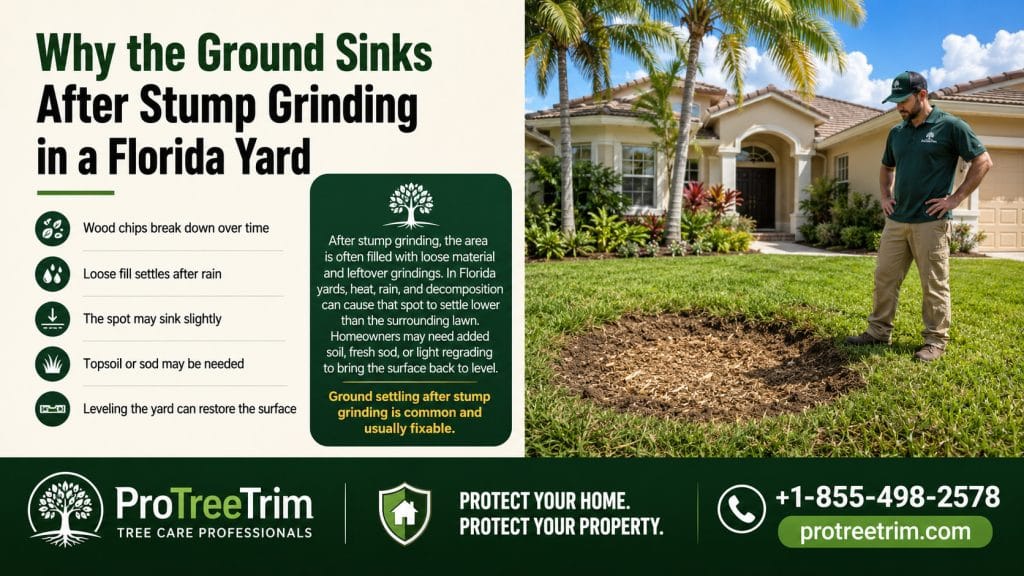
The ground can sink after stump grinding because the area is no longer solid wood and compact soil. It may be filled with loose grindings, old roots, air pockets, and disturbed soil. In Florida yards, rain, irrigation, sandy soil, and decaying root material can make the low spot show up weeks or months after the stump is gone.
Continue reading Why the Ground Sinks After Stump Grinding in a Florida YardCategory: Stump & Root

Should You Grind the Stump After Emergency Tree Removal or Wait?
After emergency tree removal, you do not always have to grind the stump the same day. But waiting too long can leave a trip hazard, pest concern, mowing obstacle, or unfinished repair area. In Florida yards, the right timing depends on access, soil condition, nearby pavers, irrigation, septic areas, and what you plan to do with the space next.
Continue reading Should You Grind the Stump After Emergency Tree Removal or Wait?
What Florida Homeowners Should Check Before Hiring a Stump Grinding Crew
Before hiring a stump grinding crew, Florida homeowners should look beyond the visible stump. Access, gate width, irrigation lines, nearby pavers, septic areas, leftover roots, cleanup expectations, and future plans for the space can all affect the job. A stump in an open lawn is very different from one beside a pool cage, fence, driveway, or tight landscape bed.
Continue reading What Florida Homeowners Should Check Before Hiring a Stump Grinding Crew
Can Tree Work Damage Pavers, Irrigation, or Septic Lines?
Yes, tree work can damage pavers, irrigation, septic areas, lighting wires, or buried utility lines if access and underground features are not planned before the job. In Florida yards, the risk is often less about the tree itself and more about what crews must cross to reach it: soft soil, narrow gates, pool decks, driveways, and hidden lines.
Continue reading Can Tree Work Damage Pavers, Irrigation, or Septic Lines?