
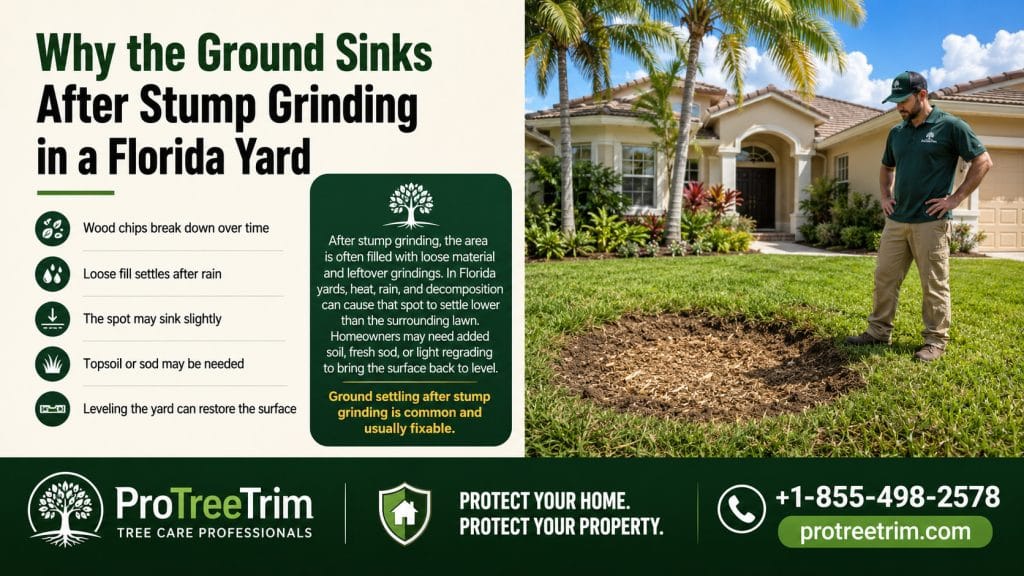
The ground can sink after stump grinding because the area is no longer solid wood and compact soil. It may be filled with loose grindings, old roots, air pockets, and disturbed soil. In Florida yards, rain, irrigation, sandy soil, and decaying root material can make the low spot show up weeks or months after the stump is gone.
Stump Grinding Changes What Is Under the Surface
Stump grinding removes the visible stump and grinds some of the wood below the surface, but it does not turn the area into stable lawn immediately. The hole may be filled with a mix of soil and wood chips. That can look level at first, especially right after cleanup.
Then the yard starts to settle.
Wood chips break down. Old roots soften. Rain moves loose soil into gaps. Irrigation may keep the area damp. Foot traffic, mowing, and normal yard use can press the material down. Before long, the spot may dip lower than the surrounding lawn.
This is especially noticeable near walkways, pavers, pool decks, fence gates, or driveway edges. A low spot in the middle of a back lawn may be annoying. A low spot beside a patio or walkway can become a trip concern or drainage problem.
| What you notice | What may be happening |
|---|---|
| Soft spot where stump was ground | Loose chips and soil are settling |
| Area sinks after rain | Water is compacting disturbed material |
| Grass struggles in the spot | Too many wood chips may remain near the surface |
| Pavers nearby shift or dip | Soil support may be uneven |
| Mushrooms appear later | Old organic material may be breaking down |
| Hole keeps returning | Larger roots may still be decaying underground |
How to Handle the Spot After Grinding
Do not assume the stump grinding was done poorly just because the ground settles. Some settling is normal after old wood and roots are removed or disturbed. The better question is whether the area was prepared for what you want next.
If the spot will become lawn, excess wood chips may need to be removed and replaced with cleaner soil before sod or seed goes down. If the area will become pavers or a walkway, the base needs more careful preparation. If you plan to replant, the old root mass, drainage, and soil condition should be checked before placing a new tree in the same hole.
Avoid simply dumping more mulch into a sinking spot near a house, pool cage, or walkway. That may hide the dip without fixing the soil underneath. Instead, watch how the area behaves after rain and irrigation.
If you are unsure whether a stump, root system, or settling yard area needs professional attention, ProTreeTrim can help connect Florida homeowners with local tree service support. Call +1-855-498-2578 or visit protreetrim.com.
FAQs
Is it normal for the ground to sink after stump grinding?
Yes, some settling can happen as wood chips, roots, and loose soil break down or compact.
Can I plant grass over a ground stump area?
Usually, but the area may need excess grindings removed, clean soil added, and time to settle.
Should I put pavers over a stump grinding spot?
Be careful. Pavers need stable support, and old roots or settling soil can cause uneven surfaces later.
ProTreeTrim™ can help you take the next step.
If you are dealing with a damaged tree, fallen branch, stump, root issue, palm concern, or storm cleanup question in Florida, call ProTreeTrim for tree service support.