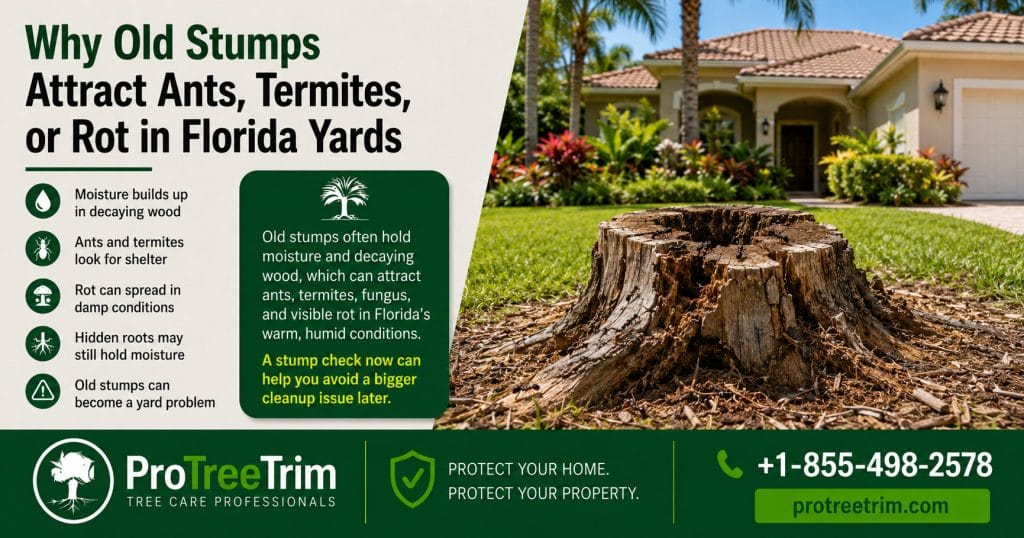
Old stumps attract ants, termites, fungi, and rot because they are dead wood sitting in warm, humid conditions. In Florida yards, moisture, mulch, irrigation, sandy soil, and shade can speed up decay. Not every stump is an emergency, but one close to the house, deck, fence, pool area, or pavers deserves a closer look.
Why a Stump Becomes a Yard Problem
Once a tree is cut down, the remaining stump starts breaking down. That process is natural. The issue is where it happens and what else is nearby.
A stump in a back corner of a large yard may slowly decay without causing much trouble. A stump beside a patio, walkway, fence line, shed, or foundation area is different. As the wood softens, it can hold moisture, attract insects, and leave a low spot as the soil settles. If mulch is piled around it or irrigation keeps the area damp, the stump may stay soft longer.
Ants are often the first thing homeowners notice. They may use cracks, loose bark, or hollow areas as shelter. Termites can also be drawn to dead wood, especially when it stays damp. Seeing insects in a stump does not automatically mean your home is infested, but it is not something to ignore if the stump is close to the structure.
Rot can create its own mess. The stump may become spongy, break apart, grow mushrooms, or sink below the surrounding lawn. In a Florida yard with pavers or a narrow side path, that can turn into an uneven walking area.
What Homeowners Should Check Before Removing It
Look at the stump’s location first. Is it near the home, garage, deck, fence, irrigation, pool cage, septic area, or walkway? Is the surrounding soil staying wet after rain? Are ants trailing from the stump toward the house or another wood structure? Are mushrooms or soft, crumbling wood visible?
Do not pour random chemicals into the stump or dig aggressively near utilities, irrigation lines, or other tree roots. If the stump is large, close to hardscape, or already breaking down, grinding may be cleaner than letting it rot in place for years.
If you are unsure whether a stump, root system, or decaying wood issue needs professional attention, ProTreeTrim can help connect Florida homeowners with local tree service support. Call +1-855-498-2578 or visit protreetrim.com.
FAQs
Do old stumps always attract termites?
No. But dead, damp wood can be attractive to wood-feeding insects, especially if the stump is left to decay.
Is a rotting stump dangerous?
Not always, but it can create soft spots, insect activity, uneven ground, and problems near walkways or structures.
Should I remove a stump close to the house?
It is usually worth evaluating. Stumps near foundations, decks, fences, or patios can create avoidable moisture and pest concerns.
ProTreeTrim™ can help you take the next step.
If you are dealing with a damaged tree, fallen branch, stump, root issue, palm concern, or storm cleanup question in Florida, call ProTreeTrim for tree service support.