
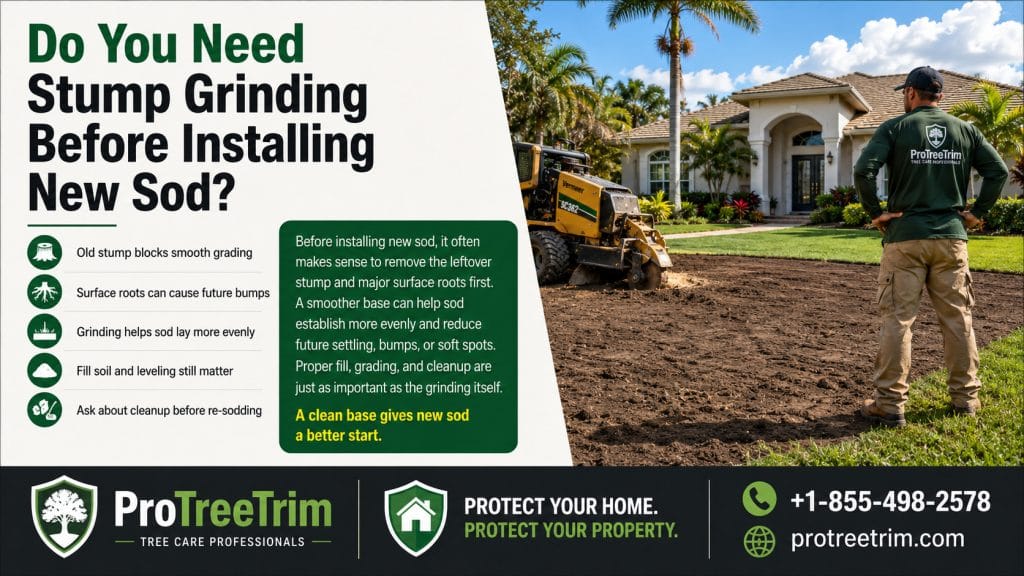
Yes, stump grinding is usually worth considering before installing new sod where a tree was removed. Sod needs stable, clean, level soil to root well. If an old stump, large roots, loose grindings, or decaying wood remain just below the surface, the lawn may sink, dry unevenly, or grow poorly in that spot.
Why Sod Does Not Like Old Stump Areas
A freshly removed tree can leave more behind than homeowners expect. Even if the trunk is gone, the stump base and large roots may still sit under the lawn. If sod is laid over that area without enough preparation, the surface may look fine for a few weeks and then start to dip.
Florida yards make this more noticeable. Heavy rain can settle loose soil quickly. Irrigation may keep wood chips damp. Sandy soil can shift around old roots. If the stump area is near a walkway, driveway, pool deck, or fence gate, even a small dip can become obvious.
Too many wood chips near the surface can also affect the new sod. They may hold moisture differently from the surrounding soil and break down over time. That does not mean every chip must disappear, but the top layer should be prepared for grass, not treated like a mulch bed.
| What is left behind | Why it matters for sod |
|---|---|
| Shallow stump wood | Blocks even soil depth |
| Large roots | Can cause uneven settling later |
| Excess grindings | May affect moisture and leveling |
| Loose fill | Can sink after rain or irrigation |
| Poor drainage | Can leave sod soggy or patchy |
| Old stump hole | May need cleaner soil before leveling |
What to Check Before Laying Sod
Before sod installation, look at the future lawn area from several angles. Is the old stump spot higher or lower than the rest of the yard? Does it feel soft underfoot? Are roots still visible? Does water collect there after irrigation or rain?
If stump grinding was already done, ask whether excess grindings should be removed and replaced with clean soil. If grinding has not been done yet, explain that sod is the next step. That may change how deep the stump is ground and how the area is cleaned afterward.
Do not rush to cover a problem with grass. Sod can hide uneven ground for a short time, but settling usually shows up later. A little extra preparation before installation is easier than lifting new sod to fix the same stump hole again.
If you are unsure whether a stump, root system, or sod-prep area needs professional attention, ProTreeTrim can help connect Florida homeowners with local tree service support. Call +1-855-498-2578 or visit protreetrim.com.
FAQs
Can I lay sod directly over stump grindings?
It is usually better to remove excess grindings near the surface and add clean soil before laying sod.
Will the ground settle after sod is installed?
It can, especially if old roots, loose chips, or disturbed soil remain under the sod.
Should stump grinding be done before or after lawn repair?
Usually before. Grinding first helps you level and prepare the area properly before new sod goes down.
ProTreeTrim™ can help you take the next step.
If you are dealing with a damaged tree, fallen branch, stump, root issue, palm concern, or storm cleanup question in Florida, call ProTreeTrim for tree service support.