
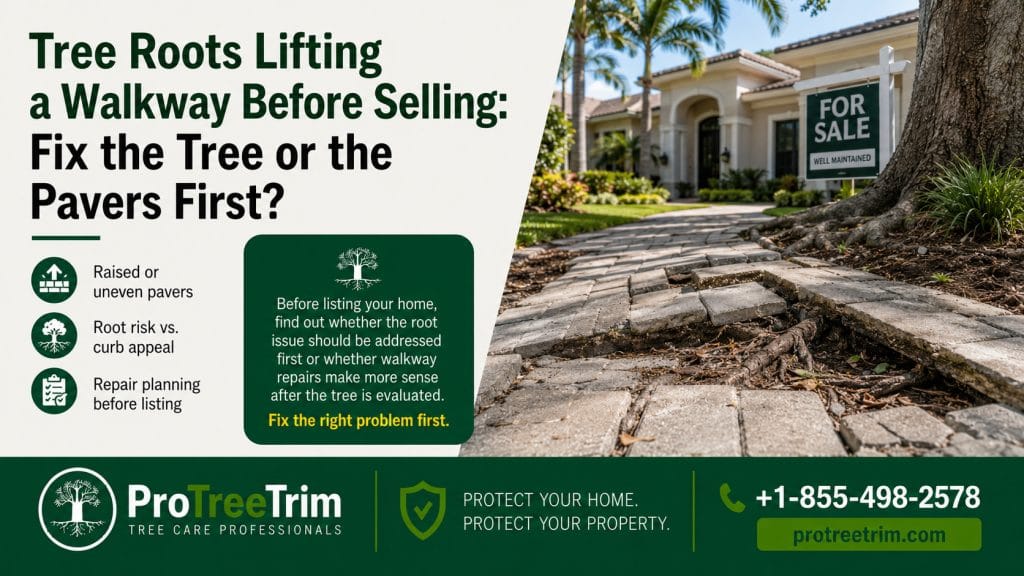
A lifted walkway near a tree can look like a small cosmetic issue until buyers start walking the property. Uneven pavers, cracked concrete, exposed roots, or a raised front path may raise questions about trip hazards, tree health, future repairs, and whether the problem will come back after closing.
Do Not Repair the Walkway Without Looking at the Tree
It is tempting to reset the pavers, patch the concrete, or cover the uneven area before listing photos. That may make the yard look cleaner for a moment, but it does not always solve the reason the walkway moved.
The tree may still be growing into the space. Soil may be settling under the walkway. Irrigation may be keeping one side wet. Old roots may be decaying after a past removal. The walkway base may have failed independently of the tree. A good decision starts with figuring out what is actually changing.
| What you see | What to check before repair |
|---|---|
| Pavers lifted near the trunk | Active roots, soil movement, or poor base support |
| Concrete cracked in one section | Root pressure, settling, or drainage issue |
| Roots exposed beside walkway | Erosion, shallow soil, or grade change |
| Walkway dips near an old stump | Decaying roots or settling may be involved |
| Same area repaired before | Underlying cause may still be active |
| Tree leans toward the path or house | Tree stability should be considered first |
Cutting Roots Can Create a Bigger Problem
A contractor may suggest cutting roots so the walkway can be reset flat. Sometimes small roots can be worked around. Large roots close to the trunk are a different story.
Those roots may help support the tree. Cutting them can stress the tree, reduce stability, or trigger decline later. That matters even more if the tree leans toward the house, driveway, pool cage, fence, or neighbor’s property.
For sellers, the risk is not only the repair itself. A buyer may later see a freshly repaired walkway beside a declining tree and wonder whether the issue was hidden instead of solved.
A better approach is to look at the full site:
- How close is the tree to the walkway?
- Are the roots large and close to the trunk?
- Is the tree otherwise healthy?
- Are limbs hanging over the roof, driveway, or entry?
- Does water collect along the walkway after rain?
- Is the walkway repair likely to move again?
- Would removing the tree create a stump, root, or settling issue before sale?
Think Like a Buyer Walking the Property
A buyer does not need to understand root biology to notice an uneven path. They see a raised walkway and start asking practical questions.
Will someone trip here?
Will this keep getting worse?
Is the tree damaging the property?
Will I need tree removal after closing?
Did the seller just patch the surface?
That is why documentation helps. If you repair the walkway, keep before-and-after photos, invoices, and notes about what was done. If a tree crew evaluates or removes the tree, save that paperwork too. If stump grinding is involved, document whether chips were removed, soil was added, or the area may settle later.
The goal is not to over-explain the yard to every buyer. It is to be prepared if the issue comes up during inspection or negotiation.
When Tree Removal May Be Part of the Decision
Removal is not automatically the right answer. A healthy, well-placed tree may be worth preserving, especially if it adds shade and curb appeal.
But removal may deserve discussion if the tree is too close to the walkway, repeatedly lifting hardscape, leaning toward the home, showing trunk damage, dropping large limbs, or making future repairs unrealistic. If the tree is already declining, repairing the walkway around it may only delay a bigger project.
If the tree is removed, do not forget the stump and roots. A freshly removed tree can still leave underground roots that decay and cause settling. A clean finish before listing may require stump grinding, chip removal, backfill, sod, mulch, or paver repair.
If you are unsure whether lifted walkway roots, stump grinding, or tree removal should be handled before listing your home, ProTreeTrim can help connect homeowners with local tree service support. Call +1-855-498-2578 or visit protreetrim.com.
FAQs
Should I repair lifted pavers before selling my home?
Often, yes, if they are visible or create a trip concern. But check whether roots, drainage, or settling will make the repair fail again.
Can I cut tree roots to fix a walkway?
Be careful. Cutting large roots near the trunk can stress the tree or affect stability. The tree and walkway should be considered together.
Will buyers care about exposed roots near a walkway?
They might, especially if the roots lift pavers, create uneven walking surfaces, or suggest future repair costs.
Should the tree be removed before fixing the walkway?
Not always. The answer depends on tree condition, root size, location, walkway damage, and whether the problem is likely to continue.
ProTreeTrim™ can help you take the next step.
If you are dealing with a damaged tree, fallen branch, stump, root issue, palm concern, or storm cleanup question in Florida, call ProTreeTrim for tree service support.