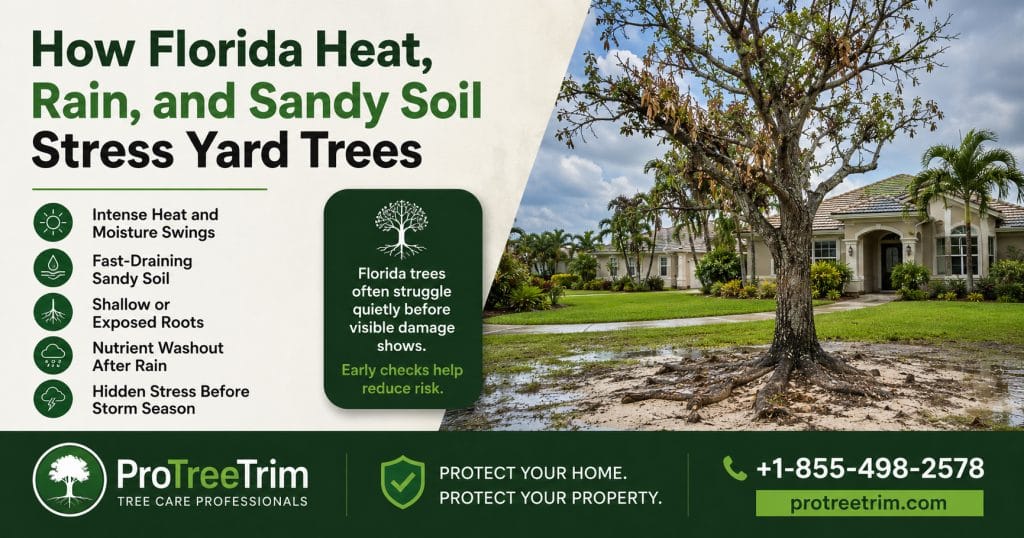
Florida trees face a difficult mix: intense heat, sudden downpours, sandy soil, irrigation swings, and storm-season winds. A tree may look fine from the street while its roots, trunk, or canopy are under stress. Homeowners should watch for changes in soil, drainage, leaf condition, limb weight, and root exposure before small issues become harder to manage.
Heat and Rain Can Stress the Same Tree
Florida weather can feel contradictory. One week the yard is dry and hot. The next week, water is standing near the mulch bed after a hard rain. Trees have to respond to both conditions.
During hot, dry stretches, leaves may wilt, thin, curl, or drop earlier than expected. Young trees, palms, and newly planted landscape trees may struggle first, especially if irrigation is uneven. A tree near a driveway, pavers, or a south-facing wall may also deal with extra reflected heat.
Then comes heavy rain. Too much water around the root zone can create a different problem. Roots still need oxygen. If the soil stays soggy, especially in low spots or compacted areas, the tree may show stress even though the yard looks “well watered.” Watch for mushrooms near the base, soft soil, exposed roots, or mulch that stays wet against the trunk.
The goal is not to diagnose the tree yourself. It is to notice patterns: repeated leaf drop, a new lean after rain, soil washing away, or limbs becoming heavier and lower over the roof, pool cage, driveway, or fence.
Sandy Soil, Mulch, and Yard Changes Matter
Sandy soil drains quickly, but that does not mean every Florida yard drains well. Grading, irrigation leaks, compacted paths, paver installation, and clogged landscape beds can all change how water moves around tree roots.
Check the base of the tree. Is the root flare buried under mulch or soil? Are roots exposed after rain? Is the ground dipping near an old stump or lifting near a walkway? These small clues can explain why a tree looks stressed even when the canopy still has green leaves.
Recent yard work is worth remembering too. Fence posts, trenching, pool work, driveway repairs, and new patios can disturb roots. A tree may not react immediately, but stress can show up later through thinning leaves, branch dieback, or reduced stability.
If you are unsure whether a stressed tree, palm, stump, or root issue needs professional attention, ProTreeTrim can help connect Florida homeowners with local tree service support. Call +1-855-498-2578 or visit protreetrim.com.
FAQs
Can sandy soil make trees weaker?
Not automatically, but sandy soil can dry quickly, shift after rain, and expose roots if drainage or irrigation is uneven.
Is too much rain bad for Florida trees?
It can be if water stays around the roots too long. Saturated soil may stress roots and make existing problems more visible.
What should I check after extreme heat or heavy rain?
Look for leaf drop, wilting, exposed roots, soft soil, new leaning, cracked limbs, or changes near pavers, driveways, and mulch beds.
ProTreeTrim™ can help you take the next step.
If you are dealing with a damaged tree, fallen branch, stump, root issue, palm concern, or storm cleanup question in Florida, call ProTreeTrim for tree service support.