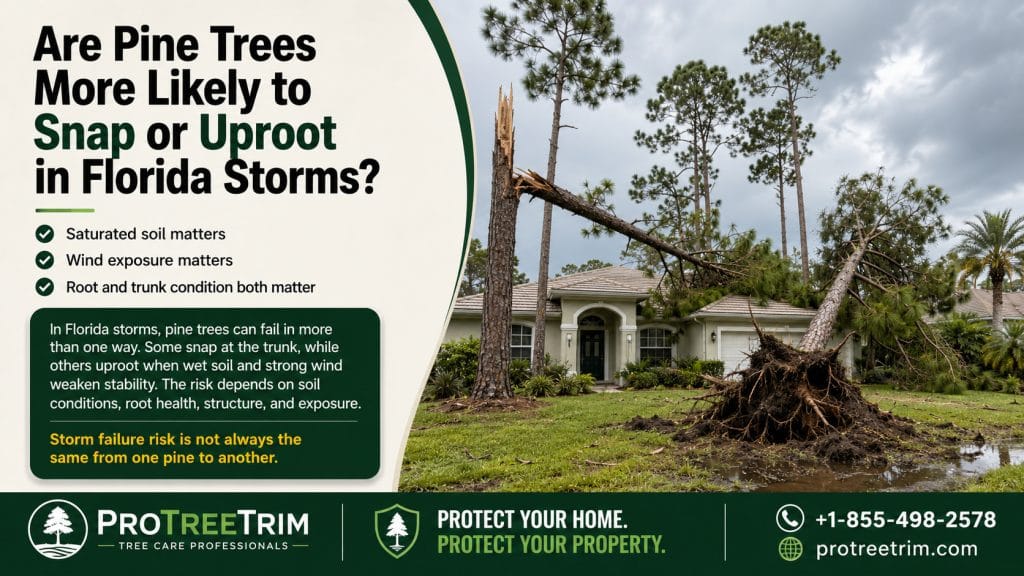
Pine trees can snap, uproot, or lean after Florida storms. The failure type depends on the tree’s roots, trunk condition, soil, wind exposure, saturation, and whether the pine was already stressed. A standing pine is not automatically safe, either; some storm damage can be internal or delayed.
Snapping and Uprooting Are Different Problems
A pine that snaps usually fails along the trunk or upper stem. You may see a broken top, a jagged trunk break, hanging limbs, or a section that cracked under wind load. This can happen fast and leave heavy wood near a roof, driveway, fence, or power line.
A pine that uproots fails closer to the ground. The root plate may lift, soil may mound on one side, and the tree may lean or fall with roots attached. In Florida yards, saturated soil after heavy rain can make root movement easier to notice, especially around sandy areas, drainage paths, driveways, or compacted lawn edges.
UF/IFAS says pines are very sensitive to wind damage and can snap, uproot, or lean after storms. It also notes that a pine still standing after a hurricane may have internal damage that is not visible from the outside.
| What you see | What it may suggest |
|---|---|
| Broken trunk or missing top | Stem failure or snapping |
| Tree leaning after storm | Root movement or trunk damage may be involved |
| Soil lifted on one side | Possible root plate movement |
| Pine still green but newly tilted | Damage may not be fully visible yet |
| Brown needles after storm period | Decline may be underway |
| Pine near roof, driveway, or wires | Cleanup urgency is higher |
Do Not Judge a Pine Only by Green Needles
Pines can be frustrating after storms because they may not show the full story right away. A pine may remain green for a while even if it was damaged. UF/IFAS notes that some pines can die over a period of six months to two years after wind storms, and some may stay green for a year or longer before suddenly turning yellow and then brown.
That does not mean every storm-hit pine should be removed immediately. It means homeowners should keep watching. If the pine has all brown needles, UF/IFAS says it is dead and should be removed.
The location matters. A pine in an open back corner can be monitored differently than one leaning toward a bedroom, driveway, pool cage, fence, parked vehicle area, or neighbor’s property. A delayed decline is more concerning when the tree has a clear target.
What Homeowners Should Check After a Storm
Start from a safe distance. Do not stand under the pine or walk near a lifted root plate. Look for a new lean, cracked trunk, broken top, exposed roots, soil movement, hanging limbs, or fresh bark wounds.
Take photos before cleanup. Get the full tree, trunk, base, root area, canopy, and anything nearby that could be damaged. If the pine is near utility lines, stay away and contact the utility or emergency services first.
Do not try to “balance” the tree by cutting limbs from one side. Pines do not become safer just because a few branches are removed. If the trunk, roots, or lean are compromised, trimming may not solve the risk.
If you are unsure whether a storm-damaged pine, leaning tree, stump, or root issue needs professional attention, ProTreeTrim can help connect homeowners with local tree service support. Call +1-855-498-2578 or visit protreetrim.com.
FAQs
Can a pine tree fall later after surviving a storm?
Yes. Some pines may show delayed decline after wind damage, so homeowners should keep watching for lean, browning needles, trunk cracks, or root movement.
Is a leaning pine always dangerous?
Not always, but a new lean after storm wind or heavy rain deserves attention, especially if the tree is aimed at a structure, driveway, fence, or utility line.
Should I remove a pine just because the top broke?
Not automatically. The decision depends on how much trunk damage occurred, whether the remaining tree is stable, and what it could hit if it fails.
What is the biggest warning sign at the base?
Lifted soil, exposed roots, torn roots, or a root plate pulling upward can suggest the pine has shifted and should be checked carefully.
ProTreeTrim™ can help you take the next step.
If you are dealing with a damaged tree, fallen branch, stump, root issue, palm concern, or storm cleanup question in Florida, call ProTreeTrim for tree service support.