
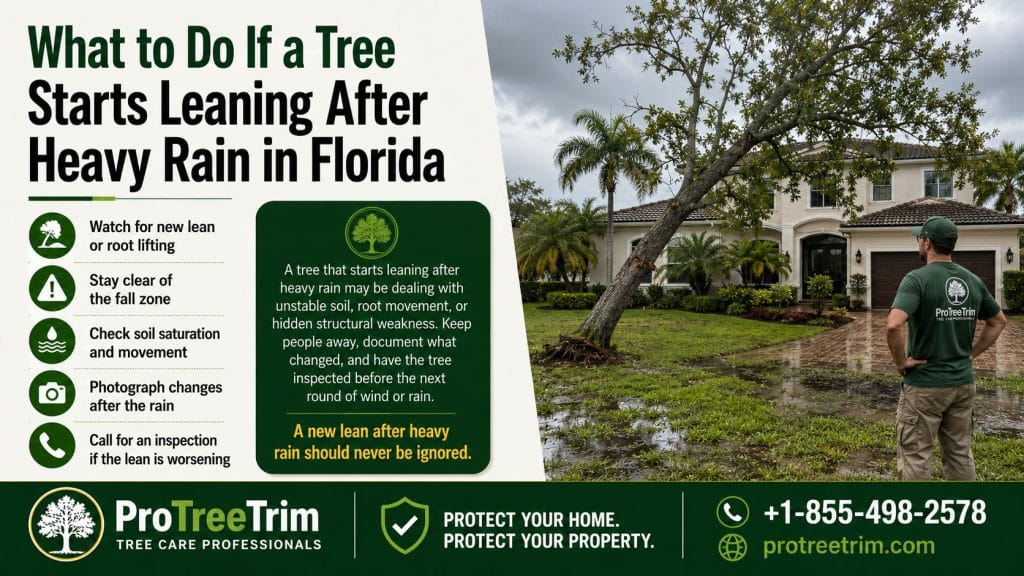
If a tree starts leaning after heavy rain, treat it as a change worth taking seriously. Florida yards can look normal on the surface while the soil around roots has softened, shifted, or pulled away. Do not stand under the tree to inspect it. Step back, check what it could hit, document the lean, and decide whether the situation needs urgent help.
Start With Distance and Direction
The first question is not “Will it fall?” No homeowner can know that from the ground. The better first question is: what is the tree leaning toward?
A tree leaning into open lawn may be less urgent than one aimed at a roof, bedroom, driveway, pool cage, fence, septic area, walkway, or neighbor’s property. If the tree is near overhead utility lines, keep away and contact the utility or emergency services as appropriate before arranging tree work.
Look at the base from a safe distance. Heavy rain can make existing root problems more visible. You may see lifted soil, exposed roots, cracking mulch, a gap opening near the trunk, or one side of the root area pulling upward. In sandy Florida soil, the ground may also feel soft or unstable around the tree after repeated rain.
| What you notice | Why it matters |
|---|---|
| Lean appeared suddenly after rain | May suggest recent root or soil movement |
| Soil lifting near one side | Could mean the root plate shifted |
| Roots exposed or torn | More concerning than a simple angled trunk |
| Tree leaning toward roof or pool cage | Raises property risk |
| Cracks in trunk or major limbs | May point to structural stress |
| Ground stays soggy near base | Drainage may be affecting root stability |
Compare, Photograph, and Avoid Quick Cuts
If you have older photos of the yard, compare the tree’s angle. Real estate listing photos, family pictures, security camera footage, or old storm-prep photos can help show whether the lean is new or long-standing.
Take fresh photos from several angles. Include the full tree, trunk base, root area, canopy, and anything nearby that could be damaged. Do not dig around the roots, cut “balancing” limbs, or try to pull the tree upright. Removing weight from the wrong side can change the tree’s balance and make the situation worse.
If the lean is new, increasing, or directed toward a structure or access area, do not wait for the next round of rain to decide. If you are unsure whether a leaning tree, palm, stump, or root issue needs professional attention, ProTreeTrim can help connect Florida homeowners with local tree service support. Call +1-855-498-2578 or visit protreetrim.com.
FAQs
Is a leaning tree after heavy rain an emergency?
It can be, especially if the lean is new, worsening, or aimed at a house, driveway, pool cage, fence, or utility line.
Can wet soil make a tree lean?
Wet soil can make existing root or stability problems more visible, especially after repeated heavy rain or poor drainage.
Should I trim branches to reduce the lean?
Not on your own. Cutting limbs can change the tree’s balance and may create a more dangerous situation.
ProTreeTrim™ can help you take the next step.
If you are dealing with a damaged tree, fallen branch, stump, root issue, palm concern, or storm cleanup question in Florida, call ProTreeTrim for tree service support.