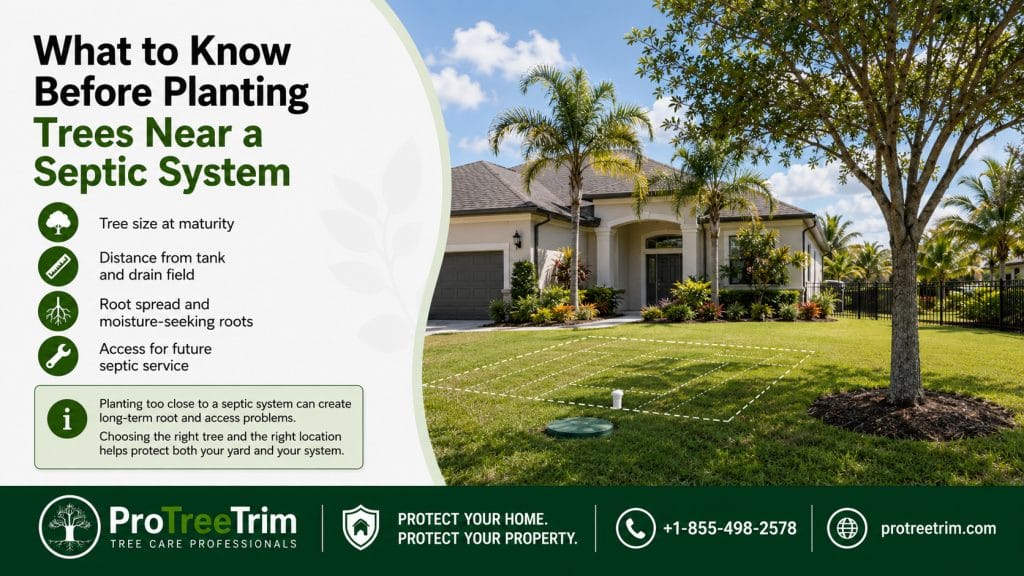
A tree near a septic system is not just a landscaping choice. It can become a root, access, drainage, and maintenance problem if the tree is planted too close to the tank or drain field. Before digging, homeowners should locate the septic area, choose plants carefully, and avoid treating the drain field like open yard space.
Start by Finding the Septic Layout
The most important step happens before you buy the tree. Find out where the septic tank, drain field, reserve area, and service access points are located. Old surveys, inspection records, permit documents, septic service invoices, or county records may help.
In Florida, onsite sewage system permitting and inspection are tied to the state and local health/environmental process. Florida DEP notes that county health department offices continue to handle permitting and inspection work for septic systems under the state’s onsite sewage program structure.
That matters because a homeowner may know where the tank lid is but not where the drain field lines run. Planting a tree based only on where the visible lid sits can still create trouble.
| Before planting, confirm this | Why it matters |
|---|---|
| Tank location | Keeps roots and digging away from system components |
| Drain field location | Roots can interfere with drain lines |
| Reserve area | Future system needs may depend on this space |
| Service access lids | Septic providers need room to work |
| Irrigation and private lines | These may not be obvious from the surface |
| Equipment route | Avoid future damage from driving over sensitive areas |
Trees and Drain Fields Are a Poor Match
The safest drain field planting is usually shallow-rooted vegetation, not trees. EPA guidance says grass or existing native vegetation are the best covers for a drain field, and it warns that tree and shrub roots can grow into drain lines, clogging or breaking them.
UF/IFAS also frames landscaping near septic drain fields as a system-care issue, not just a design choice. Its guidance explains that appropriate landscaping helps support septic system performance and protect water resources.
A tree does not have to be “aggressive” to become a problem. Roots grow toward moisture and oxygen. A drain field can provide both. If the tree is large at maturity, fast-growing, water-loving, or placed too close, the risk rises.
That does not mean every tree anywhere on a septic property is forbidden. It means the planting site should be chosen with mature size and root spread in mind, not just appearance.
What to Plant Instead
Over the drain field itself, think low, shallow, and accessible. Grass, suitable groundcovers, and low-maintenance shallow-rooted plants are usually better choices than trees or large shrubs. The area also needs to remain serviceable. A beautiful landscape bed that blocks inspection, pumping, or repair access is not a good long-term plan.
Avoid adding raised beds, heavy soil, patios, sheds, or anything that changes drainage or compacts the area. Also avoid planting trees where future roots, falling limbs, or stump removal would create a septic repair problem.
If you still want shade or screening, plant farther away and choose a tree whose mature height, canopy spread, and root behavior fit the site. Do not plant based on the size of the tree today.
Do Not Dig Blindly
Tree planting is still digging. Before digging, use 811 for public utility marking, then separately consider private lines such as irrigation, landscape lighting, pool lines, private electrical runs, and septic components. Public utility marking does not necessarily identify every private line on a property.
If a tree is already growing near your septic area, do not cut major roots or grind a stump without knowing what is underground. Root cutting can affect tree stability, and stump grinding near septic components needs careful planning.
If you are unsure whether a tree, stump, or root issue near a septic area should be handled before planting or repair, ProTreeTrim can help connect homeowners with local tree service support. Call +1-855-498-2578 or visit protreetrim.com.
FAQs
Can I plant a tree directly over a septic drain field?
That is generally not recommended. Grass, native vegetation, and shallow-rooted plants are safer choices over drain fields because tree and shrub roots can interfere with drain lines.
How far should a tree be from a septic system?
There is no single distance that fits every tree and property. Mature tree size, root behavior, soil, system layout, and local guidance all matter. Start by locating the drain field and choosing a planting site that keeps roots away from system components.
Can tree roots damage septic pipes?
Yes, roots can grow into drain lines and clog or break them, especially when trees or shrubs are planted too close to the system.
Should I remove an existing tree near my septic system?
Not automatically. First check the tree’s size, location, roots, system layout, and whether there are signs of septic trouble. For backups, odors, persistent wet areas, or system concerns, involve a septic professional.
ProTreeTrim™ can help you take the next step.
If you are dealing with a damaged tree, fallen branch, stump, root issue, palm concern, or storm cleanup question in Florida, call ProTreeTrim for tree service support.