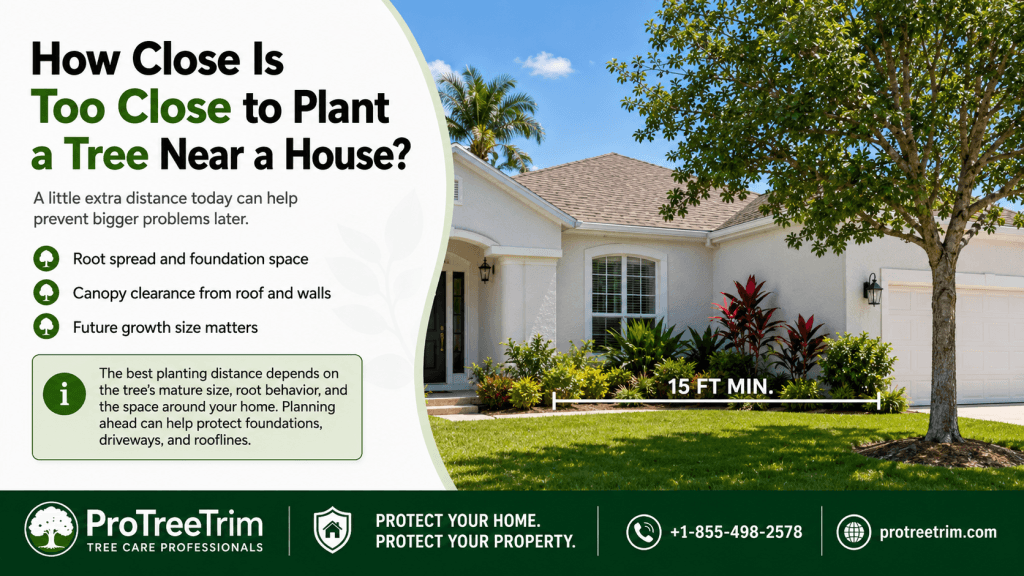
A tree is too close to a house when its mature size, roots, canopy, debris, or future maintenance needs are likely to interfere with the roof, foundation area, driveway, walkway, gutters, or access around the home. The right distance depends on the tree, not just the planting spot that looks open today.
Think About the Tree at Full Size
A young tree in a nursery pot can make a front bed look finished. That same tree may later shade the roof, lift pavers, crowd a window, scrape gutters, or block a side yard where crews need access.
Before planting, look at mature height and canopy spread. A small ornamental tree may fit near a walkway. A large shade tree belongs farther away from the house, driveway, pool cage, septic area, and overhead lines. Roots matter too, but not in the cartoon sense of roots “attacking” a home. More often, the issue is space, moisture, soil movement, hardscape conflict, and future maintenance.
| Before planting, check this | Why it matters later |
|---|---|
| Mature canopy width | Branches may reach roof, gutters, or windows |
| Mature height | Tall trees near homes become harder to prune safely |
| Root spread | Roots may conflict with pavers, walks, irrigation, or driveway edges |
| Drainage pattern | Wet beds near the house can create root and moisture issues |
| Access route | Future pruning or removal may need room for crews |
| Overhead wires | Wrong tree choice can create repeated utility conflicts |
| Debris pattern | Fruit, seed pods, fronds, or leaves may fall on roof or pool areas |
The Problem Is Usually Future Conflict
The best planting decision is not based on how the yard looks this weekend. It is based on what the tree will do over the next 10, 20, or 30 years.
A tree planted too close to the house may need repeated pruning just to stay off the roof. That can lead to awkward cuts, unbalanced growth, or a tree that never develops a natural shape. If the tree is close to a driveway or walkway, roots and soil movement may create lifting or settling. If it is planted beside a pool cage, falling limbs, palm fronds, or seed pods can become a regular maintenance problem.
Florida yards add a few extra details: sandy soil, irrigation beds, summer rain, palms near pool screens, live oaks with broad canopies, and narrow side yards. But the core rule applies anywhere: plant for the mature tree, not the empty space.
What to Do Before You Dig
Walk the site from several angles. Look up for wires. Look down for irrigation, lighting, drainage, and buried utilities. Look sideways at rooflines, gutters, pavers, fences, and where people walk or park.
Do not plant a tree directly where future trimming would require climbing over a roof, working above a pool cage, or squeezing equipment through a narrow gate. That choice may look fine now and become expensive later.
Also avoid planting too deeply or burying the root flare. A tree that starts with poor planting depth may struggle before it ever becomes a shade benefit.
If you are unsure whether an existing tree is already too close to your home, roofline, driveway, or pool area, ProTreeTrim can help connect homeowners with local tree service support. Call +1-855-498-2578 or visit protreetrim.com.
FAQs
Is there one safe distance for every tree near a house?
No. Mature height, canopy spread, root behavior, soil, drainage, and nearby structures all affect the right planting distance.
Can small trees be planted closer to a house?
Often, yes, but “small” should mean small at maturity, not small at the nursery. Check expected height and spread first.
Should I worry more about roots or branches?
Both matter. Roots can affect hardscape and drainage, while branches can affect rooflines, gutters, windows, pool cages, and future pruning access.
What if a tree is already too close to the house?
Do not rush to remove it. Check roof contact, roots, trunk lean, drainage, and access first. Some trees can be managed; others may need a longer-term plan.
ProTreeTrim™ can help you take the next step.
If you are dealing with a damaged tree, fallen branch, stump, root issue, palm concern, or storm cleanup question in Florida, call ProTreeTrim for tree service support.