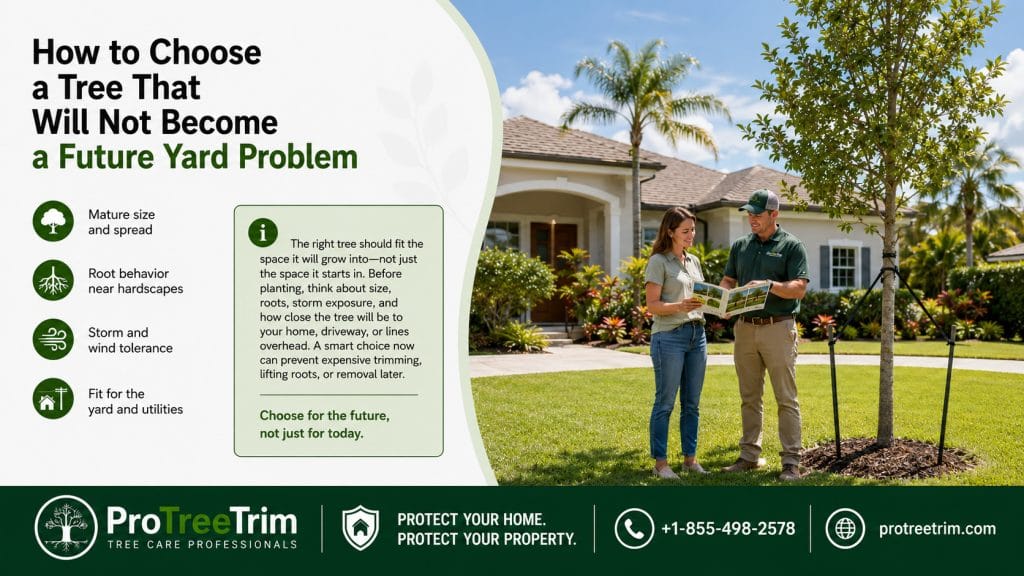
A good tree choice should still make sense years after planting. The right tree can add shade, privacy, and curb appeal. The wrong tree can crowd the roof, lift pavers, block the driveway, drop messy debris, interfere with irrigation, or become expensive to trim. Before planting, think about the mature tree, not the empty spot.
Start With the Problems You Do Not Want Later
Most homeowners shop for trees by appearance: flowers, shade, fast growth, or how nice the tree looks near the entry. Those things matter, but they should not be the first filter.
Start with the future conflict points around the yard. Is the planting spot near the house, driveway, sidewalk, pool cage, fence, septic area, underground lines, or overhead wires? Will a full-size canopy reach the roof or gutters? Will roots compete with pavers or irrigation? Will fruit, seed pods, palm debris, or heavy leaves land where people walk or park?
A tree that looks perfect at three feet tall can become the wrong tree if it needs constant pruning to stay out of trouble.
| Future issue to avoid | What to check before planting |
|---|---|
| Branches touching roof or gutters | Mature canopy width and direction of growth |
| Lifted pavers or walkway edges | Root spread, soil space, and hardscape distance |
| Constant driveway cleanup | Fruit, seed pods, leaves, or palm debris |
| Pool cage damage | Mature height, limb spread, and falling debris |
| Repeated trimming near wires | Mature height and overhead clearance |
| Wet tree bed or root stress | Drainage, irrigation, and soil conditions |
| Hard-to-remove tree later | Gate width, side-yard access, and nearby structures |
Fast Growth Is Not Always a Benefit
A fast-growing tree can feel like the smart choice because it fills space quickly. But speed is not the same as suitability. A tree that grows fast may need earlier pruning, more frequent cleanup, or more space than the yard can realistically provide.
That does not mean slow-growing is always better. It means the tree should match the site. A smaller ornamental tree may be better near a front walkway. A broader shade tree may belong farther from the house. A palm may work near a driveway only if its mature height, crown spread, debris pattern, and future removal access make sense.
For Florida yards, also think about storm season and summer rain. A tree planted too close to a pool screen, paver patio, or roofline may look harmless for years, then become difficult to manage once it matures.
Think About Maintenance Before You Plant
Every tree creates some kind of maintenance. The question is whether that maintenance fits your life and property.
A tree that drops small leaves into the lawn may be manageable. A tree that drops heavy seed pods onto a pool cage may not be. A tree that needs occasional shaping in an open yard is different from one that requires roofline pruning every year.
Before planting, ask:
- Will this tree still fit when it is mature?
- What will it drop, and where will it land?
- Will it need repeated pruning near the roof, driveway, or wires?
- Can a crew reach it later if trimming or removal is needed?
- Is the soil dry, wet, compacted, sandy, or heavily irrigated?
- Will the tree compete with septic areas, pavers, sidewalks, or irrigation?
Do not plant to solve one problem while creating three others. Shade is valuable, but not if the tree eventually blocks access, damages hardscape, or needs aggressive pruning to stay manageable.
If you are unsure whether an existing tree, stump, or root issue should be handled before planting something new, ProTreeTrim can help connect homeowners with local tree service support. Call +1-855-498-2578 or visit protreetrim.com.
FAQs
Should I choose a fast-growing tree for quick shade?
Maybe, but only if the mature tree fits the site. Fast growth can also mean earlier pruning, more cleanup, and more space conflicts.
What is the biggest mistake homeowners make when choosing a tree?
Planting for how the tree looks today instead of how large, wide, messy, or maintenance-heavy it may become later.
Should I avoid planting trees near pavers or driveways?
Not always. Choose a tree with the right mature size and root behavior, and leave enough space for soil, drainage, and future repairs.
Can the wrong tree increase future removal costs?
Yes. A tree planted in a tight side yard, beside a pool cage, close to wires, or near hardscape can be harder to trim or remove later.
ProTreeTrim™ can help you take the next step.
If you are dealing with a damaged tree, fallen branch, stump, root issue, palm concern, or storm cleanup question in Florida, call ProTreeTrim for tree service support.