
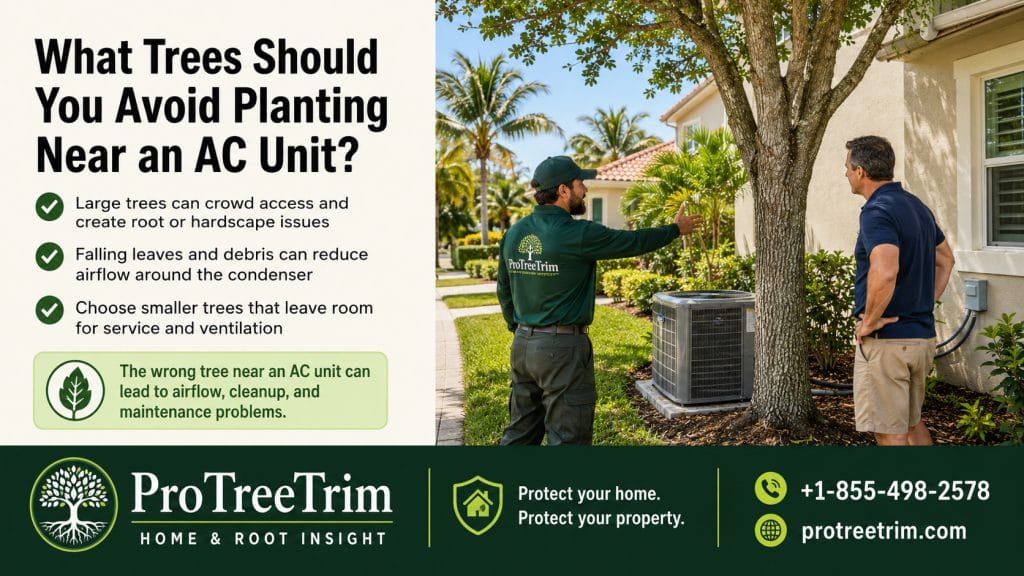
Planting near an outdoor AC unit can seem like a good idea. A little shade may make the area look better and feel cooler. But the wrong tree too close to the unit can block airflow, drop leaves into the equipment, interfere with service access, damage nearby lines, or create root and cleanup problems. Around AC equipment, spacing and mature size matter more than decoration.
The AC Unit Needs Breathing Room
An outdoor condenser needs open space around it so air can move properly. If a tree, shrub, branch, mulch pile, or dense planting blocks that airflow, the equipment may have to work harder.
That does not mean the area must be bare. It means any planting nearby should stay clear, manageable, and easy to maintain.
| Planting problem near AC unit | Why it matters |
|---|---|
| Branches crowding the unit | Can reduce airflow and make service harder |
| Leaves dropping into the equipment | Can create repeated cleanup needs |
| Dense shrubs or tree limbs around all sides | Can trap heat and restrict access |
| Roots near lines or pad | May complicate repairs later |
| Mulch piled against the unit | Can hold moisture and debris |
| Thorny or messy trees nearby | Makes service access unpleasant |
| Fast-growing tree planted too close | Can become a clearance problem quickly |
The goal is simple: shade and soften the area without boxing in the equipment.
Avoid Trees That Drop Constant Debris
The worst tree near an AC unit is often not the largest tree. It is the messiest one.
Leaves, flowers, seed pods, twigs, fruit, palm debris, bark pieces, and sticky residue can collect around or inside the unit. That can make the area look neglected and may increase the need for cleaning.
Be cautious with trees that drop:
- small leaves that collect in tight spaces
- brittle twigs
- heavy flowers or seed pods
- fruit or berries
- sticky sap or honeydew
- palm fronds or seed clusters
- bark flakes or messy seasonal debris
Every tree sheds something, but an AC unit is not the place for constant cleanup.
Do Not Plant Fast-Growing Trees Too Close
Fast-growing trees can become AC-unit problems quickly. A young tree may look well placed at first, then crowd the unit, block the service path, or send branches into the side yard faster than expected.
Fast growth is especially risky in narrow side yards where AC equipment often sits between the house, fence, walkway, and utility lines.
Before planting near the unit, ask:
- How wide will this tree become?
- Will branches hang over the AC area?
- Will roots grow near the equipment pad?
- Will the tree block technician access?
- Will leaves or fruit fall directly into the unit?
- Will future pruning be easy?
- Will the tree crowd the house, fence, or side gate?
If the tree only works while it is young, it is the wrong tree for the spot.
Service Access Matters More Than Looks
AC technicians need space to inspect, repair, and replace equipment. A planting that looks attractive today can become a nuisance if it blocks access later.
Avoid planting where a technician would have to push through branches, step over roots, move pots, crawl behind shrubs, or work under low limbs. Also avoid thorny or spiny trees near the service path.
A better planting plan keeps:
- clear walking access
- open space around the unit
- room to remove panels
- room for future replacement
- visibility around refrigerant and electrical lines
- enough space for airflow
- branches away from the fan and sides
A tree should improve the landscape without making basic home service harder.
Watch Underground and Surface Lines
AC units often sit near electrical conduit, refrigerant lines, drainage lines, irrigation, landscape lighting, and utility service paths. Tree planting near those areas should not be casual.
Before digging, underground utilities should be located where required. But even after digging safely, think about future roots and repairs. A small tree planted near AC lines may become a problem if roots, trunk growth, or stump removal interfere with the service area later.
Be extra careful near:
| Nearby feature | Why it matters |
|---|---|
| Refrigerant lines | Repairs should remain accessible |
| Electrical conduit | Digging and roots can complicate service |
| Condensate drain | Debris or roots may affect drainage paths |
| Irrigation lines | Planting and roots may damage shallow pipes |
| Utility meters | Access should remain open |
| Side-yard drainage | Roots and mulch should not block water flow |
| AC pad | Roots or settling may affect stability |
If the area already feels crowded with equipment and lines, a tree may not be the best choice.
Shade Can Help, but Placement Is the Key
The idea of shading an AC unit is reasonable, but the shade tree does not need to sit right beside the equipment. A tree planted farther away can cast shade without blocking airflow or dropping debris directly into the unit.
A better approach is to place the tree where its mature canopy provides some afternoon shade while still keeping branches, roots, and debris away from the equipment.
Do not plant a large tree so close that it eventually needs harsh pruning to keep it off the house, fence, utility lines, or AC unit.
Avoid Trees With Surface Roots Near the Pad
An AC unit usually sits on a pad. If a tree with large surface roots is planted too close, roots may eventually disturb nearby soil, pavers, or the pad area. That does not happen overnight, but poor placement can create future headaches.
Be cautious if the tree is known for:
- large surface roots
- fast root expansion
- aggressive growth in narrow spaces
- suckering from roots
- heavy trunk flare near hardscape
- poor fit in compacted side-yard soil
If the AC pad shifts or the surrounding walkway lifts, repairs may require working close to roots and equipment at the same time.
Do Not Use Trees to Hide the Unit Completely
Many homeowners plant trees or shrubs because they want to hide the outdoor unit. That is understandable, but full concealment often causes problems.
A dense planting screen may block airflow, trap heat, hide debris, attract pests, or make service difficult. A lighter, well-spaced planting is usually better than a wall of greenery.
Better screening options may include:
- smaller shrubs placed with clearance
- ornamental grasses away from the equipment
- a low planting bed that does not block airflow
- a fence screen with proper ventilation and access
- a small tree planted farther away for shade
- mulch kept clear of the unit base
The unit does not need to be beautiful. It needs to work and remain serviceable.
Think About Storm Debris
Trees near AC units should also be judged by what they may do during wind and storms. A brittle tree, palm with heavy fronds, or branchy tree in a tight side yard can drop debris onto or around the equipment.
Before planting, think about what could fall:
- limbs
- palm fronds
- seed pods
- fruit
- branches from a neighboring tree
- fence-line debris
- roofline leaves and twigs
A tree that drops large material near the unit can create both cleanup and damage concerns.
Better Traits for Trees Near AC Areas
If you want a tree near the AC side of the home, choose carefully.
Better traits include:
| Better trait | Why it helps |
|---|---|
| Small mature size | Easier to keep away from equipment |
| Moderate debris | Less cleanup around the unit |
| Narrow or controlled canopy | Reduces crowding in side yards |
| Strong branch structure | Less storm debris risk |
| Moderate roots | Fewer pad and line conflicts |
| Non-thorny branches | Safer service access |
| Easy pruning needs | Less chance of overgrowth |
A tree near mechanical equipment should be predictable and easy to maintain.
When a Tree Is Not the Best Choice
Sometimes the AC area is too tight for a tree. If the unit sits in a narrow side yard between the house, fence, gate, pavers, utility lines, and drainage path, a tree may create more problems than benefits.
Avoid planting a tree near the AC unit if:
- the mature canopy will crowd the equipment
- roots may affect the pad or lines
- access is already limited
- drainage is poor
- overhead or underground utilities are dense
- the tree drops heavy debris
- pruning would be difficult
- future removal would be expensive or awkward
In those cases, a lower planting bed, mulch, small shrubs with clearance, or a ventilated screen may be better.
Final Planting Test
Before planting near an AC unit, stand at the proposed spot and picture the mature tree.
Will air still move freely?
Can a technician still work there?
Will debris fall into the unit?
Will roots affect the pad or lines?
Will the tree crowd the house or fence?
Will this spot still make sense in 10 years?
If the mature tree makes service, airflow, or cleanup harder, move it farther away or choose another landscape option.
If you are unsure whether a tree is a good fit near your AC unit, side yard, fence, roofline, or utility area, ProTreeTrim can help connect homeowners with local tree service support. Call +1-855-498-2578 or visit protreetrim.com.
FAQs
Can you plant a tree near an outdoor AC unit?
Yes, but it should be far enough away to allow airflow, service access, root space, and easy cleanup.
What trees should not be planted near an AC unit?
Avoid messy, fast-growing, brittle, thorny, surface-rooting, or large trees that will crowd the unit or drop debris into it.
Is shade good for an AC unit?
Shade can help the area stay cooler, but the tree should not block airflow or service access. Planting farther away is often better than planting right beside the unit.
Should I use shrubs instead of a tree to hide the AC unit?
Often, yes. Small shrubs or a ventilated screen can soften the view while keeping the unit accessible, as long as airflow is not blocked.
ProTreeTrim™ can help you take the next step.
If you are dealing with a damaged tree, fallen branch, stump, root issue, palm concern, or storm cleanup question in Florida, call ProTreeTrim for tree service support.