
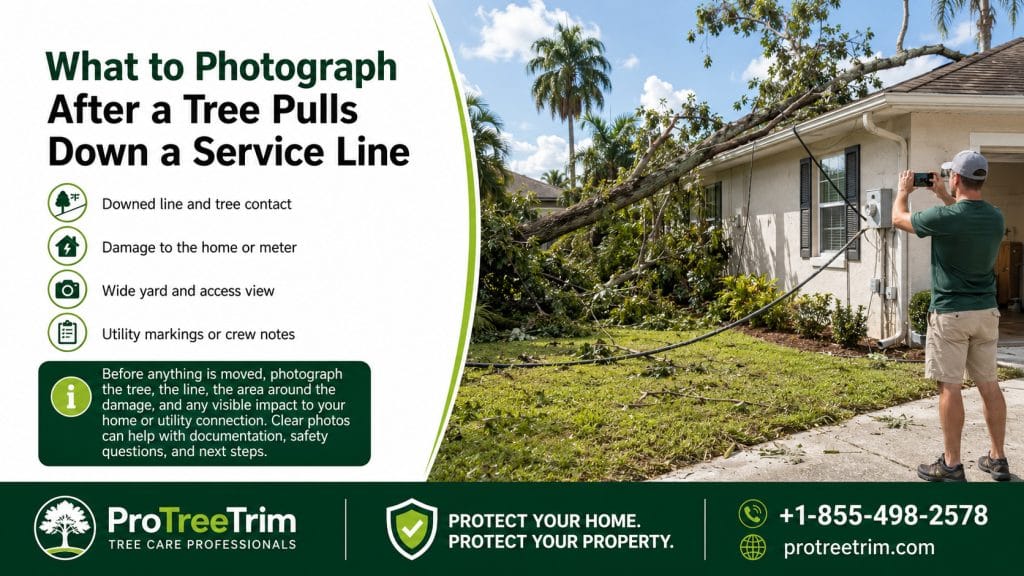
If a tree pulls down a service line, photos matter—but distance matters more. Do not walk under the tree, touch the line, move the branch, or step near anything the wire may be touching. Call the utility or emergency services first. Once the electrical hazard is addressed, document the tree, the line path, property damage, and cleanup work from safe angles.
Safety Comes Before Documentation
A service line pulled down by a tree can look less dramatic than a large tree on a roof, but it may be more dangerous. The line may be tangled in limbs, lying across a fence, touching water, resting near a driveway, or hanging from the side of the house.
FPL tells customers to assume all cables and wires are energized and stay away, especially in flooded or debris-filled areas that may hide downed lines. ESFI gives similar advice: always assume a downed power line is live and avoid going near it or anything in contact with it.
Do not take close-up photos if getting them means stepping into the hazard area. A wide photo from across the driveway, street, or yard is enough until the utility confirms the area is safe.
| What to photograph | Safe way to think about it |
|---|---|
| Full tree and line area | Use a wide shot from far away |
| Where the limb or trunk fell | Do not step under hanging branches |
| House connection area | Photograph only from safe ground |
| Fence, gate, driveway, or roof damage | Wait if the line is nearby |
| Branches touching wires | Do not move them for a clearer shot |
| Utility crew or tree crew work area | Stay outside their work zone |
What to Document After the Utility Hazard Is Handled
Once the utility or emergency responder has addressed the line, take a more complete set of photos if it is safe.
Start wide. Show the full tree, where it stood, where the line ran, and what the tree damaged. Then take closer photos of broken limbs, trunk wounds, roof edge damage, pulled hardware, broken fence sections, cracked pavers, damaged gutters, irrigation heads, pool cage panels, or landscaping impact.
Also document access. If the fallen limb blocked the driveway, trapped a vehicle, closed a side gate, or prevented entry to a rental property, photograph that before cleanup changes the scene.
Florida’s Department of Financial Services advises homeowners after natural disasters to make temporary repairs to prevent further damage, document repairs with before-and-after photos, keep receipts, and avoid disposing of destroyed property before it can be inspected when possible. Citizens Property Insurance also advises taking photos and videos before cleanup and keeping receipts for emergency repairs.
Save the Cleanup Trail, Not Just the Damage Photos
A tree pulling down a service line may involve more than one party: the utility, a tree crew, an electrician, a roofer, a fence repair company, or an insurer. Keep the records together.
Save:
- Photos before utility work, if taken safely
- Utility report numbers or appointment notes
- Tree cleanup estimate and invoice
- Receipts for emergency repairs
- Before-and-after cleanup photos
- Messages with contractors, property managers, HOA, or insurer
- Notes about when the damage was discovered
If you are unsure whether a storm-damaged tree, service-line cleanup, stump, or root issue needs professional tree service after the utility hazard is handled, ProTreeTrim can help connect homeowners with local tree service support. Call +1-855-498-2578 or visit protreetrim.com.
FAQs
Should I photograph a downed service line up close?
No. Stay back. Wide photos from a safe distance are enough until the utility confirms the area is safe.
Should I move branches off the line for a better photo?
Never move, cut, pull, or touch anything near a downed or tangled line. Treat the line and anything touching it as dangerous.
What photos are most useful after the utility clears the hazard?
Photograph the full tree, broken limbs, house connection area, property damage, blocked access, and before-and-after cleanup.
Should I keep the utility and cleanup records together?
Yes. Save utility notes, tree crew invoices, emergency repair receipts, photos, and messages in one folder.
ProTreeTrim™ can help you take the next step.
If you are dealing with a damaged tree, fallen branch, stump, root issue, palm concern, or storm cleanup question in Florida, call ProTreeTrim for tree service support.