
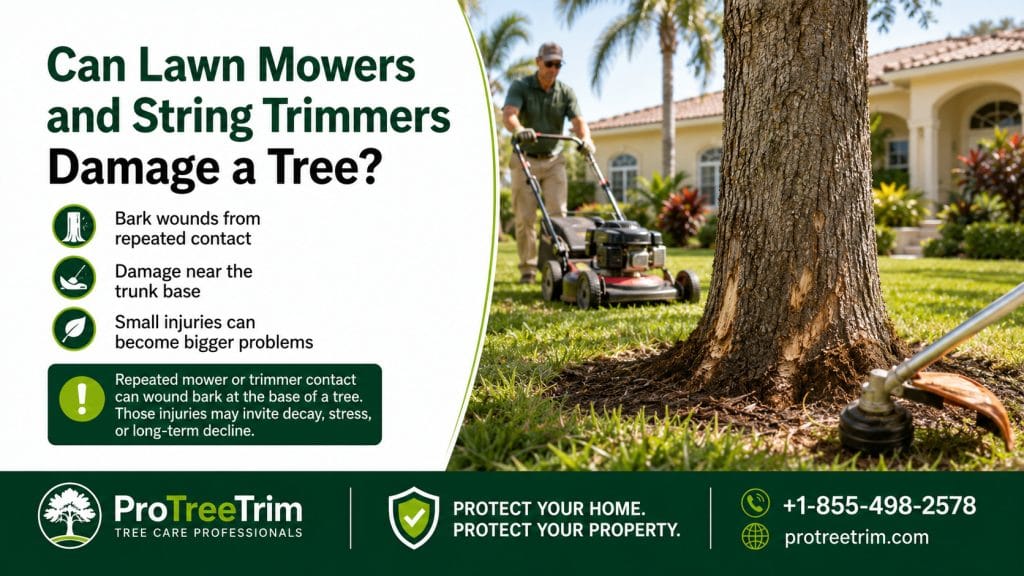
A lawn mower bump or string trimmer scrape may look minor at first, but repeated trunk damage can weaken a tree over time. The risk is highest near the base, where bark protects living tissue and roots begin. Homeowners should check for cuts, missing bark, exposed wood, soil compaction, and slow canopy decline.
Small Trunk Wounds Can Become a Bigger Problem
A single light scrape may not ruin a healthy tree. The problem is repetition. Week after week, a mower wheel hits the same root flare. A string trimmer strips bark from the same spot. Mulch gets pulled away, then piled back against the trunk. Eventually, the tree has a wound that never gets a clean chance to close.
The base of the tree is not just a post holding up branches. It is where trunk tissue, root flare, and major roots meet. Damage there can interfere with how the tree moves water and nutrients. It can also create an opening for decay, insects, moisture problems, or bark splitting.
This often happens in yards that are kept very neat. The grass is edged tightly. The mulch ring is small. The mower runs close to the trunk because the homeowner wants a clean look. From a distance, the yard looks maintained. Up close, the tree may be getting injured every week.
| What you see at the base | Why it matters |
|---|---|
| Thin ring of missing bark | Repeated trimmer contact may be injuring tissue |
| Exposed wood near soil line | Protective bark has been damaged |
| Ragged cuts or shredded bark | Wounds may not close cleanly |
| Roots scraped by mower wheels | Surface roots may be repeatedly injured |
| Soil packed hard around trunk | Compaction may stress roots |
| Mulch piled over the wound | Moisture may stay trapped against bark |
Watch for Slow Signs Above the Wound
Mower and trimmer damage does not always show up in the canopy right away. A tree may stay green for a while after the lower trunk is injured. Later, the homeowner may notice smaller leaves, dead branch tips, early leaf drop, thinning on one side, or insects around the wound.
That delayed reaction is why the trunk base deserves regular attention. A tree can look fine from the driveway while the lower bark is being damaged little by little.
Look especially closely at young trees, newly planted trees, palms with narrow trunk bases, and trees surrounded by turf. Young trees have less stored energy and less trunk protection. A weed trimmer can do more damage to a thin-barked young tree than most homeowners expect.
Palms are different from shade trees, but they are not immune to mechanical injury. Repeated damage near the base of a palm can still create stress, especially if the area also stays wet from irrigation or mulch.
The Fix Is Usually Simple: Create Space
The best prevention is not complicated. Keep mowers and string trimmers away from the trunk.
A wider mulch ring can help, but only if it is done correctly. Spread mulch outward, not upward. Keep it off the trunk. The shape should look more like a shallow donut than a mound. That gives mowing equipment a clear stopping point and protects the root area without burying the base.
Do not use plastic edging or tight rings that cut into roots or trap water. Do not pile soil against the trunk to hide a wound. Do not scrape loose bark away to “clean” the injury. If bark is still attached, leave it alone.
For trees in high-maintenance lawns, consider a simple routine:
- Keep grass pulled back from the trunk base.
- Use hand trimming carefully near exposed roots.
- Widen mulch rings as trees grow.
- Keep mulch a few inches away from bark.
- Check irrigation spray hitting the trunk.
- Photograph wounds if they appear to be spreading.
- Watch the canopy over the next few months.
When Trunk Damage Deserves More Attention
A small scrape on a healthy tree in an open lawn may be something to monitor. A deeper wound near a driveway, roofline tree, pool cage tree, or high-value shade tree deserves more caution.
Pay closer attention if the wound wraps around a large part of the trunk, exposes fresh wood, stays wet, attracts insects, produces oozing, or appears with dead limbs above. Also watch for mushrooms near the base, bark peeling, sawdust-like material, or a new lean after rain or wind.
If the tree already has other stress factors—construction near the roots, compacted soil, drainage problems, heavy pruning, or storm damage—the trunk wound may be one more burden the tree has to carry.
Do not rush to remove the tree only because a mower injured it. But do not keep damaging it either. Stop the source of injury, protect the base properly, and watch whether the tree stabilizes or continues to decline.
If you are unsure whether mower damage, string trimmer injury, bark loss, or root stress points to a larger tree issue, ProTreeTrim can help connect homeowners with local tree service support. Call +1-855-498-2578 or visit protreetrim.com.
FAQs
Can a string trimmer kill a tree?
Repeated string trimmer damage can seriously weaken a tree, especially if bark is stripped around much of the trunk or the wound keeps reopening.
Should I cover a mower wound with sealant?
Usually no. Avoid painting or sealing the wound unless a qualified professional gives a specific reason. Focus on preventing more damage and keeping mulch off the trunk.
How can I protect a tree from mower damage?
Create a wide, shallow mulch ring, keep mulch away from the bark, and avoid mowing or trimming directly against the trunk or exposed roots.
When should I worry about bark damage?
Worry more if the wound is deep, spreads around the trunk, stays wet, attracts insects, oozes, or appears with dead limbs, thinning leaves, mushrooms, or leaning.
ProTreeTrim™ can help you take the next step.
If you are dealing with a damaged tree, fallen branch, stump, root issue, palm concern, or storm cleanup question in Florida, call ProTreeTrim for tree service support.