
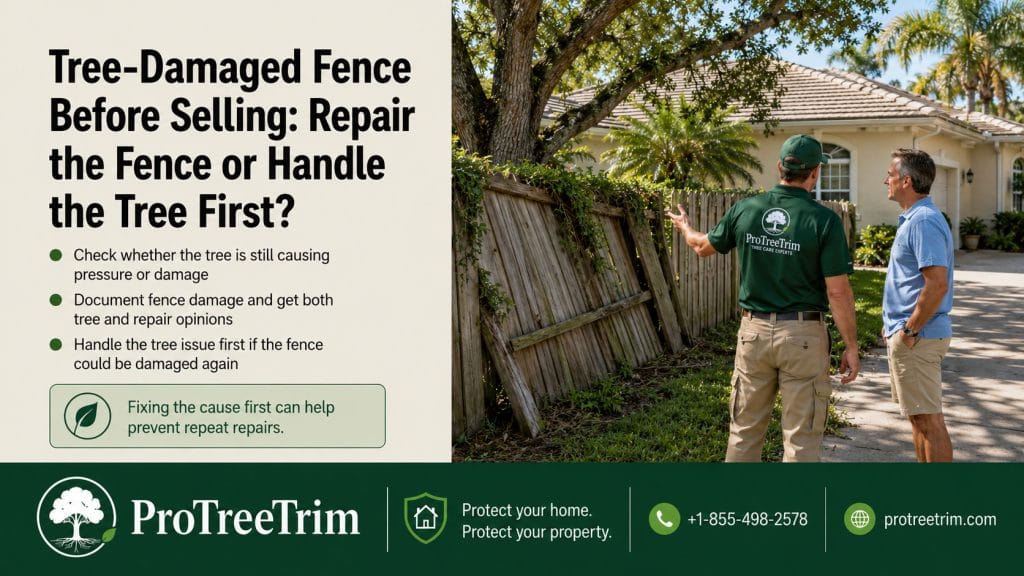
A tree-damaged fence can make buyers wonder whether the yard has a one-time repair issue or an ongoing tree problem. Before listing, do not rush to replace a fence panel without checking what caused the damage. A broken fence from an old fallen branch is different from a leaning tree, heavy limb, root pressure, or recurring storm debris that could damage the repair again.
Start With the Cause of the Fence Damage
A fence can be damaged by several tree-related issues. A branch may have fallen during a storm. A trunk may be leaning into the fence line. Roots may be pushing posts out of alignment. A palm may be dropping heavy fronds onto the same section. Vines or overgrowth may be hiding wood rot or loose panels.
The repair decision depends on whether the tree problem is finished or still active.
| What caused the damage? | What to check before repairing |
|---|---|
| One fallen limb after a storm | Are there more cracked or hanging limbs above? |
| Tree leaning into fence | Is the lean old, new, or worsening? |
| Roots lifting or shifting posts | Are roots still active near the fence line? |
| Palm debris repeatedly hitting fence | Does the palm need trimming or removal discussion? |
| Branches rubbing fence panels | Clearance pruning may prevent repeat damage |
| Dead tree beside fence | Fence repair may fail if tree removal is still needed |
A fence repair can make the yard look cleaner, but if the tree is still pressing, leaning, or dropping limbs, the buyer may notice the bigger problem anyway.
Think Like a Buyer Walking the Property Line
Fences sit in places buyers inspect closely: side yards, back corners, pool areas, pet areas, neighbor boundaries, and rental-property access points. A broken or patched fence can raise practical questions fast.
Is the yard secure?
Was there storm damage?
Will the neighbor care?
Is the tree still a risk?
Will I need to pay for removal after closing?
You do not need to over-explain every fence board. But if a tree clearly damaged the fence, it is better to handle the active issue before it becomes a negotiation point.
Walk the fence line slowly. Look for broken panels, leaning posts, branches resting on the fence, roots pushing near post bases, and tree limbs hanging over the boundary. Also check whether the damage appears on your side, the neighbor’s side, or both. If there is any neighbor concern, keep communication factual and avoid making legal claims without proper advice.
Repair Order Matters
In many cases, the tree work should come before the fence repair. Otherwise, a crew may need to remove or move the same fence section again to access the tree. A large limb may damage the new panel during removal. Stump grinding near a fence line may also need space.
A practical order often looks like this:
- Photograph the fence and tree before anything changes.
- Check whether limbs, trunk lean, roots, or debris are still active issues.
- Handle unsafe branches, tree removal, or stump grinding if needed.
- Repair or replace the fence after the tree work is complete.
- Take after photos and save invoices.
This is especially important in tight side yards, pool enclosures, and fenced backyards where access is limited. A good repair can be wasted if the tree crew later needs to reopen the area.
Do Not Hide an Active Tree Problem With a Fresh Fence Panel
A new fence panel can improve presentation, but it should not be used to cover a tree problem that still exists. Buyers may see a fresh repair beside a leaning trunk, dead limb, or stump and wonder what happened.
If the tree issue has been addressed, records help. Save the tree service invoice, debris hauling receipt, fence repair invoice, and before-and-after photos. You do not need to tell a dramatic story. A simple factual record is stronger.
For example: “A storm-damaged limb was removed, debris was hauled away, and the damaged fence panel was replaced.”
That sounds much better than a vague explanation during inspection.
When the Tree May Need More Attention Than the Fence
The fence may be the visible damage, but the tree may be the real decision.
Pay closer attention if you see:
- a tree leaning into the fence
- a cracked limb still hanging over the property line
- a dead tree beside the fence
- roots shifting multiple posts
- a trunk split near the fence line
- repeated branch drop after storms
- a palm crown dropping fronds toward the same area
- fence damage near utility lines or service equipment
If utility lines are involved, stop and contact the utility first. Tree and fence cleanup near wires is not a normal yard repair.
If you are unsure whether tree damage, fence-line limbs, stump grinding, or root pressure should be handled before listing your home, ProTreeTrim can help connect homeowners with local tree service support. Call +1-855-498-2578 or visit protreetrim.com.
FAQs
Should I repair a tree-damaged fence before selling?
Often, yes, if the damage is visible, affects security, or makes the yard look poorly maintained. But check whether the tree issue is still active first.
Should tree work happen before fence repair?
Usually, if limbs, trunk lean, roots, or stump work are involved. Repairing the fence first can create extra work if the tree crew needs access later.
Will buyers care about a broken fence from an old branch?
They might. Even if the damage was minor, buyers may wonder whether more limbs could fall or whether the yard was maintained.
What records should I keep after repair?
Save before photos, tree service invoices, debris hauling notes, fence repair receipts, and after photos showing the completed work.
ProTreeTrim™ can help you take the next step.
If you are dealing with a damaged tree, fallen branch, stump, root issue, palm concern, or storm cleanup question in Florida, call ProTreeTrim for tree service support.