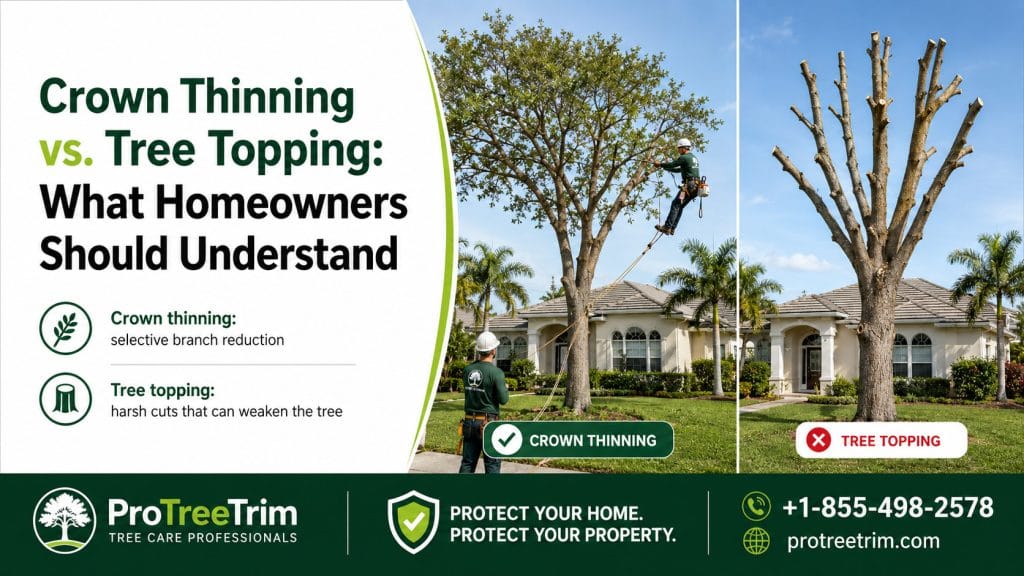
Crown thinning and tree topping are very different. Crown thinning is selective pruning with a purpose. Tree topping is a harsh cutback that removes large parts of the canopy or main branches. If a tree feels too dense, too tall, or too close to the roof, homeowners should understand the difference before approving work.
Continue reading Crown Thinning vs. Tree Topping: What Homeowners Should UnderstandCategory: Tree Care & Pruning Decisions
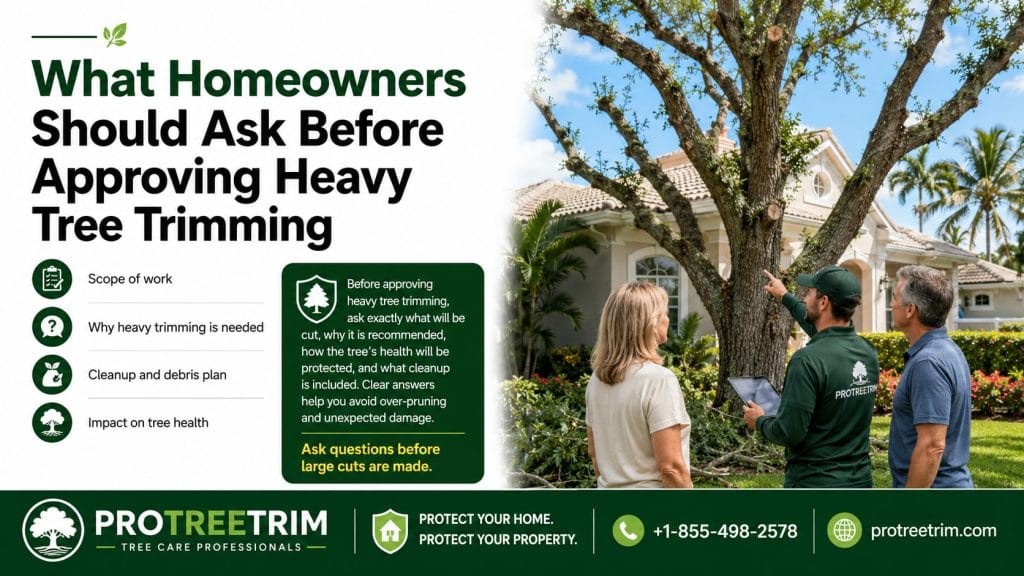
What Homeowners Should Ask Before Approving Heavy Tree Trimming
Heavy tree trimming should never be approved with a vague “cut it back” instruction. Before work starts, homeowners should understand which limbs are being removed, why those cuts are needed, how much live canopy will come off, and whether the crew has a plan for roofs, driveways, fences, pavers, pool cages, and irrigation.
Continue reading What Homeowners Should Ask Before Approving Heavy Tree Trimming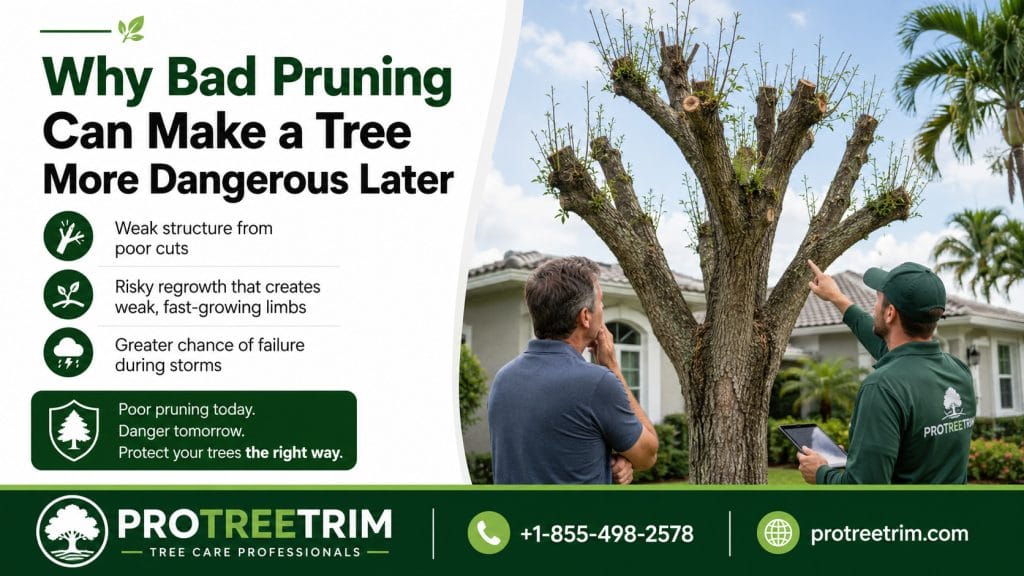
Why Bad Pruning Can Make a Tree More Dangerous Later
Bad pruning does not always look bad on day one. A tree may look shorter, cleaner, or “opened up” right after the work is done. The real problems often show up later: weak regrowth, large decay-prone cuts, unbalanced limbs, sun-exposed bark, or branches that fail during wind and rain.
Continue reading Why Bad Pruning Can Make a Tree More Dangerous Later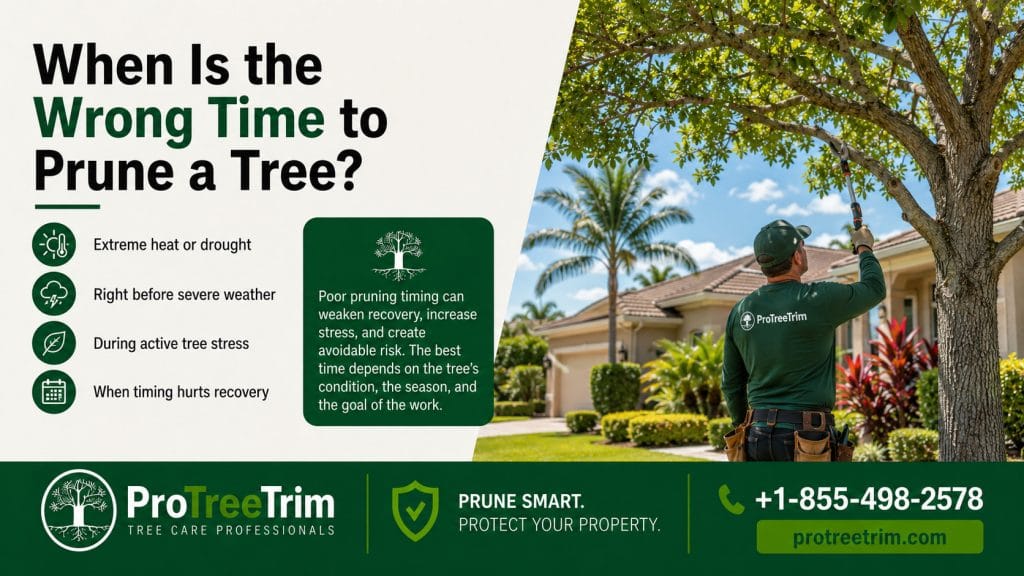
When Is the Wrong Time to Prune a Tree?
The wrong time to prune a tree is usually when the tree is already stressed, the weather is unsafe, a storm is close, or the cut has no clear purpose. Homeowners often think pruning is always helpful, but a careless cut can remove healthy foliage, open unnecessary wounds, or make a tree harder to manage later.
Continue reading When Is the Wrong Time to Prune a Tree?