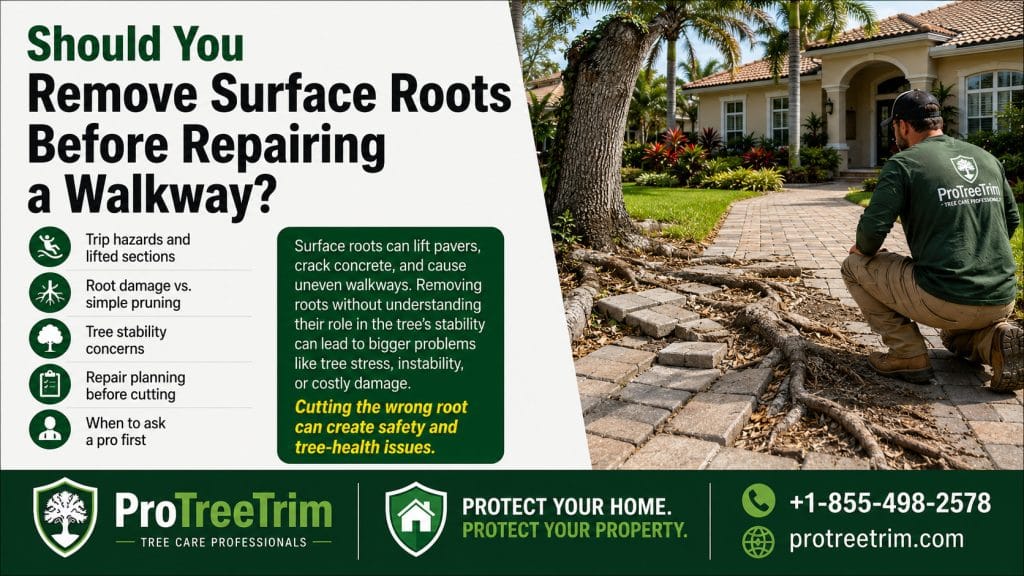
You should not automatically remove surface roots before repairing a walkway. In a Florida yard, visible roots may be part of the tree’s support system, especially if the tree stands near a house, driveway, pool cage, fence, or street. The safer first step is to understand what caused the lifting and whether cutting roots could create a bigger problem.
Surface Roots Are Not Always Just a Cosmetic Issue
Raised roots can make a walkway uneven, crack pavers, lift edging, or create a trip hazard. That does not mean every visible root should be cut out.
Surface roots often appear where soil is shallow, compacted, washed out, or repeatedly wet from irrigation. In Florida’s sandy soil, rain and runoff can expose roots that used to be covered. Around older homes, roots may also run under walkways because the tree and hardscape have been sharing the same tight space for years.
The important question is root size and location. A small root near the edge of a path is different from a large structural root close to the trunk. Cutting a major root can affect the tree’s health or stability, especially before storm season.
| What you notice | Why it matters |
|---|---|
| Small roots near walkway edge | May be easier to work around |
| Large root close to trunk | Cutting may affect stability |
| Walkway lifted in several spots | Root and soil movement may both be involved |
| Water collects near the path | Drainage may be contributing |
| Tree leans toward the walkway or house | Root cutting needs extra caution |
| Repaired area keeps shifting | Cause may not have been solved |
Repair the Walkway Without Ignoring the Tree
Before hiring someone to reset pavers or pour a new section, take photos of the walkway, roots, tree base, and nearby drainage. If irrigation lines, lighting wires, or septic areas are nearby, mark them before digging begins.
Ask whether the walkway can be adjusted instead of cutting major roots. Sometimes the repair may involve raising or rerouting a small section, improving drainage, changing edging, or using a design that works around the tree. In other cases, the tree may be too close, too large, or too structurally involved with the damaged area, and removal may need to be discussed.
Do not grind or chop surface roots just to make the walkway look flat. That can hide the immediate problem while creating a new risk later. Also avoid piling soil or mulch deeply over exposed roots as a quick cover-up; that can trap moisture and create other issues near the base.
If you are unsure whether surface roots, a stump area, or walkway damage needs professional tree service attention before repair, ProTreeTrim can help connect Florida homeowners with local support. Call +1-855-498-2578 or visit protreetrim.com.
FAQs
Can I cut tree roots that are lifting a walkway?
Be careful. Small roots may be manageable, but cutting large roots near the trunk can affect the tree’s stability.
Should I fix the walkway first or the root problem first?
Check the root and drainage situation first. Otherwise, the repaired walkway may lift or settle again.
Can exposed roots be covered with soil?
A light correction may help in some cases, but piling soil or mulch heavily over roots can create moisture and trunk-base problems.
ProTreeTrim™ can help you take the next step.
If you are dealing with a damaged tree, fallen branch, stump, root issue, palm concern, or storm cleanup question in Florida, call ProTreeTrim for tree service support.