
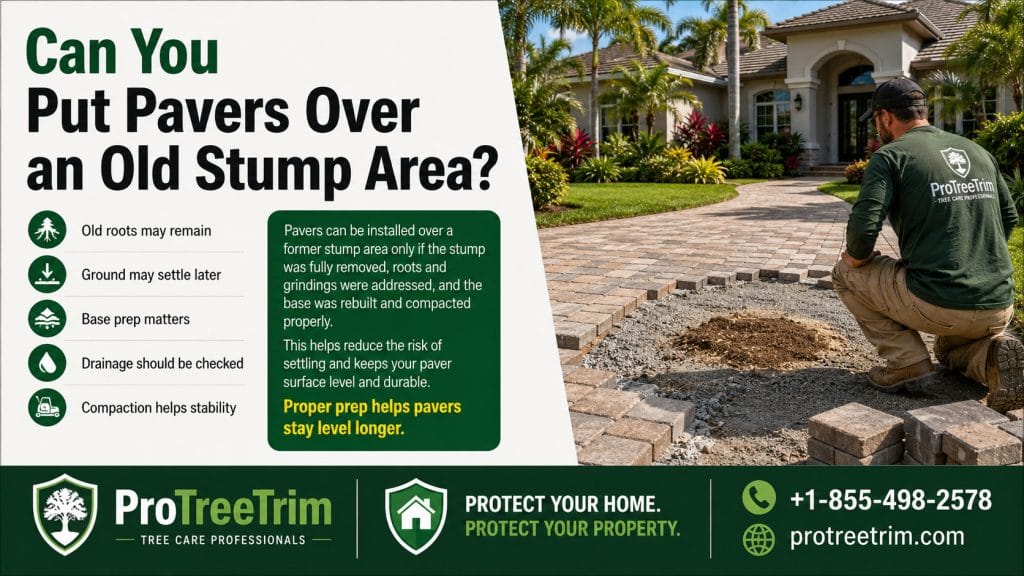
You can sometimes put pavers over an old stump area, but only after the ground is properly prepared. If old roots, stump wood, loose grindings, or soft soil remain under the surface, the pavers may settle, lift, or become uneven later. In Florida yards, rain, irrigation, sandy soil, and drainage make this worth checking before installation.
Why Old Stump Areas Are Tricky Under Pavers
Pavers need a stable base. An old stump area is usually the opposite of stable unless it has been cleaned, filled, compacted, and leveled correctly.
After stump grinding, the hole may contain a mix of soil and wood chips. That can look flat for a while, but wood breaks down over time. Roots left underground may decay and leave gaps. Heavy rain or irrigation can move loose soil into those gaps, creating low spots under the future patio or walkway.
That is why pavers installed too quickly over a stump area may look good at first and then start to dip. The issue may show up along a walkway, pool deck edge, driveway border, or backyard patio where people walk every day.
| What may be under the pavers | Why it matters |
|---|---|
| Loose stump grindings | Can break down and settle |
| Old root mass | May decay and leave voids |
| Soft sandy soil | Can shift after rain or irrigation |
| Poor drainage | Can weaken the base layer |
| Uneven fill | May cause pavers to dip or tilt |
| Nearby active roots | Can lift or disturb the surface later |
What to Check Before Installing Pavers
Before pavers go down, ask what was done after the stump was ground. Were excess grindings removed? Was clean fill added? Was the area compacted? Were large roots left close to the surface? If the answer is unclear, it is better to investigate before the patio is built.
Also look around the area. Is there a tree nearby with active roots? Does water collect after storms? Is irrigation spraying directly into the bed? Is the future paver area close to a pool cage, fence gate, driveway, or side-yard access path? These details affect how noticeable future settling will be.
Do not assume a thicker paver will solve a bad base. The base preparation matters more than the surface material. If the area still feels soft underfoot, it is not ready to be covered.
If you are unsure whether an old stump area, root system, or paver project needs professional tree service attention first, ProTreeTrim can help connect Florida homeowners with local support. Call +1-855-498-2578 or visit protreetrim.com.
FAQs
Can pavers be installed right after stump grinding?
Sometimes, but the area may need excess grindings removed, clean fill added, and proper compaction before pavers go down.
Will old roots under pavers keep growing?
If the tree was removed, roots usually stop active growth, but they can still decay and cause settling over time.
Should the stump grinder go deeper before pavers are installed?
Possibly. The right depth depends on the paver base, remaining roots, drainage, and how the area will be used.
ProTreeTrim™ can help you take the next step.
If you are dealing with a damaged tree, fallen branch, stump, root issue, palm concern, or storm cleanup question in Florida, call ProTreeTrim for tree service support.