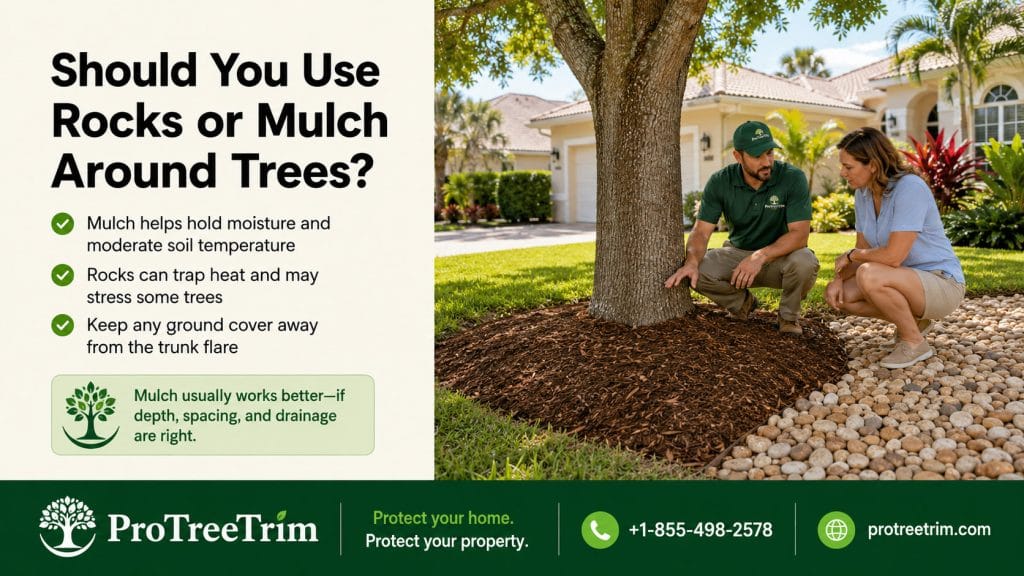
Mulch is usually the better choice around trees when it is applied correctly. It helps moderate soil temperature, conserve moisture, reduce mower damage, and improve the area around the root zone. Rocks can look clean and low-maintenance, but they may increase heat, compact soil, make root-zone problems harder to see, and create long-term maintenance issues if used too heavily.
The real answer is not simply rocks bad, mulch good. The right choice depends on the tree, the site, drainage, heat, roots, and how the material is installed.
Start With What the Tree Needs
A tree does not care whether the landscape bed looks modern, tropical, or low-maintenance. It needs oxygen, moisture, stable soil temperature, root space, and a trunk base that stays visible and healthy.
Both rocks and mulch can become problems when they are installed poorly.
| Material | Possible benefit | Possible problem |
|---|---|---|
| Organic mulch | Helps moisture, temperature, and root protection | Can harm trees if piled against trunk or too deep |
| Rocks | Clean look, low decomposition, less frequent replacement | Can increase heat and make soil/root issues harder to manage |
| Rubber mulch | Long-lasting appearance | Not usually ideal for tree root zones |
| Landscape fabric under either | Weed control at first | Can restrict soil health and create root/mulch problems later |
The material matters, but installation matters more.
Why Mulch Usually Works Better Around Trees
Organic mulch is often better because it behaves more like a natural forest floor. Leaves, bark, and organic matter break down slowly and support a healthier soil environment over time.
Good mulch can help:
- reduce mower and string-trimmer damage
- keep soil temperature more stable
- conserve moisture during dry periods
- reduce weed competition near the trunk
- protect exposed surface roots from foot traffic
- make the tree bed look intentional
- create a safer buffer between lawn equipment and bark
A simple mulch ring can do more for a tree than many homeowners realize.
The Biggest Mulch Mistake: Volcano Mulching
Mulch becomes harmful when it is piled against the trunk like a volcano. This traps moisture against bark, hides the root flare, encourages decay concerns, and can create a perfect place for pests or roots to grow incorrectly.
A good mulch ring should be wide and shallow, not tall and tight.
Better mulch rules:
- keep mulch away from the trunk
- leave the root flare visible
- avoid deep piles
- spread mulch outward instead of upward
- refresh lightly rather than stacking more each year
- remove old excess mulch if the bed is too high
Mulch should protect the root zone, not bury the tree.
Why Rocks Can Be Risky Around Trees
Rocks are popular because they look neat and do not break down like mulch. In some yards, they can work in limited areas. But around trees, they can create heat and root-zone issues.
Rocks can:
- absorb and reflect heat
- make soil hotter in sunny areas
- compact soil over time
- make it harder to add organic matter
- hide root flare problems
- make surface roots harder to manage
- complicate future digging or planting
- damage mower blades if scattered into lawn
- make tree removal or stump grinding messier later
In hot climates or sunny front yards, rock beds around trees can become especially harsh.
Rocks Near Young Trees Need Extra Caution
Young trees are still establishing. Their roots are adjusting, and their trunk base is vulnerable. Rocks around a newly planted tree can increase heat and make watering harder to judge.
A young tree may struggle if rocks are installed:
- too close to the trunk
- over compacted soil
- on top of landscape fabric
- in full afternoon sun
- where irrigation is inconsistent
- around a buried root flare
- in a small cutout surrounded by pavement
For a new tree, organic mulch is usually more forgiving than rock.
Landscape Fabric Can Make Either Choice Worse
Many rock beds are installed over landscape fabric. Some mulch beds use fabric too. It may reduce weeds at first, but around trees it can create long-term problems.
Fabric can interfere with soil improvement, trap roots near the surface, make it harder for water to move evenly, and become a tangled mess as roots grow through it.
Homeowners often discover the problem later when:
- roots grow into the fabric
- weeds grow on top anyway
- mulch or rocks sink into the fabric
- water runs off instead of soaking in
- the root flare becomes hidden
- removing the fabric would damage roots
Around trees, a simple mulch bed without fabric is often the better long-term choice.
Heat Matters Near Driveways, Sidewalks, and Walls
Rocks may look attractive near hardscape, but heat can stack up. A tree planted near a driveway, sidewalk, patio, street, wall, or pool deck may already face reflected heat. Adding rock around the root zone can increase that stress.
This matters especially for trees that already show:
- brown leaf edges
- wilting during hot afternoons
- early leaf drop
- yellowing foliage
- exposed roots
- slow growth
- thinning canopy
- dry compacted soil
If the site is already hot and dry, rock may make the tree’s environment harder.
Mulch Helps Prevent Mower and Trimmer Damage
One of the most practical benefits of mulch is keeping lawn equipment away from the trunk. Repeated mower bumps and string-trimmer cuts can injure bark and weaken a tree over time.
A mulch ring creates a visible “do not mow here” zone.
This is especially useful around:
- young trees
- thin-barked trees
- trees in front lawns
- trees with exposed roots
- trees near sidewalks
- trees in rental properties
- trees in high-maintenance lawns
Rocks may also create a border, but scattered stones can become a mowing hazard and may not protect the trunk as well if the bed is poorly edged.
Rocks Can Hide Root Problems
A rock bed can make a tree base look tidy while hiding problems underneath. The root flare may be buried. Surface roots may be trapped under fabric. Soil may stay compacted. Water may move unevenly. The tree may look landscaped, but the root zone may be struggling.
Before installing rocks, check:
| Tree-base question | Why it matters |
|---|---|
| Is the root flare visible? | Buried flare can create long-term stress |
| Are surface roots already exposed? | Rocks may not solve the root issue |
| Is soil compacted? | Rocks can make improvement harder |
| Does water soak in? | Runoff may leave roots dry |
| Is fabric planned? | Roots may grow into it later |
| Will rocks touch the trunk? | Trunk moisture and heat concerns increase |
A clean look should not hide an unhealthy base.
When Rocks May Be Acceptable
Rocks are not automatically forbidden. They may work in some landscape areas if they are kept away from the trunk, installed without suffocating the root zone, and used where heat and drainage are not major problems.
Rocks may be more acceptable when:
- the tree is mature and healthy
- rocks are not piled against the trunk
- the root flare remains visible
- no fabric is trapping roots
- the site is not extremely hot
- drainage is good
- the rock area is limited
- future access remains possible
Even then, organic mulch is often the more tree-friendly option.
When Mulch Is the Better Choice
Mulch is usually better when the tree is young, stressed, newly planted, near lawn equipment, in hot soil, or showing root-zone stress.
Mulch is especially useful when:
- the tree is establishing
- roots need protection from mowing
- soil dries too quickly
- exposed roots are present
- the tree is near a sidewalk or driveway
- the yard gets strong afternoon heat
- the bed needs a softer, more natural root environment
- you want easier future inspection of the root flare
A proper mulch ring is one of the simplest tree-care improvements a homeowner can make.
Do Not Cover Exposed Roots With Rocks
If roots are visible, do not solve the problem by covering them with rocks. Exposed roots may indicate soil erosion, compaction, shallow rooting, or normal mature root development. Rocks can make the area hotter, harder to walk on, and more difficult to correct later.
A better response may be:
- expand the mulch bed
- reduce mowing over roots
- avoid adding deep soil
- improve drainage if erosion is present
- keep mulch shallow
- protect roots from foot traffic
- avoid cutting major roots
The goal is to protect the roots, not hide them.
Around Palms, Keep the Base Visible
Palm trees also benefit from careful base management. Whether using rocks or mulch, do not bury the trunk base or hide the area where the trunk meets the soil.
Around palms, avoid:
- mulch piled against trunk
- rocks packed tightly against trunk
- irrigation spraying the base constantly
- fabric wrapped around the trunk area
- old palm boots trapping wet debris
- seed pods and fronds collecting under rocks
A palm base should be clean, visible, and easy to inspect.
Around Oaks, Protect the Root Zone
Mature oaks often have wide root systems and important surface roots. A heavy rock bed under an oak may not be the best choice, especially if roots are already exposed or soil is compacted.
For oaks, mulch usually works better because it creates a softer buffer over the root zone without adding excessive heat or weight.
Avoid:
- cutting roots to install edging
- trenching around the tree
- adding deep soil over roots
- compacting the area with heavy rock work
- piling mulch against the trunk
- covering roots with fabric and stone
A large oak’s root zone should be protected, not decorated aggressively.
What About Decorative Stone Borders?
A stone border around a mulch bed can be fine if it does not cut into roots, block water, or trap soil against the trunk. The problem is usually not a few edging stones. The problem is trenching, compaction, deep rock layers, fabric, and material packed against the tree.
If you add a border, keep it:
- shallow
- away from major roots
- wide enough for the tree bed
- not pressed against the trunk
- easy to adjust as roots grow
- designed so water still reaches the soil
Tree roots grow. Borders should not become root prisons.
What Homeowners Should Check Before Switching
Before replacing mulch with rocks, or rocks with mulch, inspect the tree.
Check:
- Is the root flare visible?
- Is the trunk base dry and healthy?
- Are roots exposed?
- Is the soil compacted?
- Does water soak in or run off?
- Is landscape fabric present?
- Are there mushrooms, pests, or bark wounds?
- Is the tree near heat-reflecting hardscape?
- Will future pruning or stump grinding need access?
The right landscape material depends on the site’s actual condition.
Final Homeowner Takeaway
Mulch is usually better than rocks around trees because it supports a healthier root-zone environment when applied correctly. Rocks can look clean, but they may increase heat, hide problems, compact soil, and make root-zone care harder.
Use mulch wide and shallow. Keep it away from the trunk. Leave the root flare visible. Avoid landscape fabric when possible. If rocks are used, keep them limited, do not pile them against the tree, and make sure water, air, and inspection access remain available.
If you are unsure whether rocks, mulch, fabric, exposed roots, or a buried root flare are affecting a tree in your yard, ProTreeTrim can help connect homeowners with local tree service support. Call +1-855-498-2578 or visit protreetrim.com.
FAQs
Is mulch or rock better around trees?
Mulch is usually better because it helps protect the root zone, conserve moisture, and reduce mower damage when applied correctly.
Can rocks around a tree hurt it?
They can, especially if they increase heat, cover the root flare, compact soil, trap roots under fabric, or are piled against the trunk.
How should mulch be placed around a tree?
Mulch should be spread wide and shallow, with space around the trunk and the root flare left visible.
Should landscape fabric be used under mulch or rocks around trees?
Usually it is better to avoid fabric around tree root zones because roots may grow into it and soil health can suffer over time.
ProTreeTrim™ can help you take the next step.
If you are dealing with a damaged tree, fallen branch, stump, root issue, palm concern, or storm cleanup question in Florida, call ProTreeTrim for tree service support.