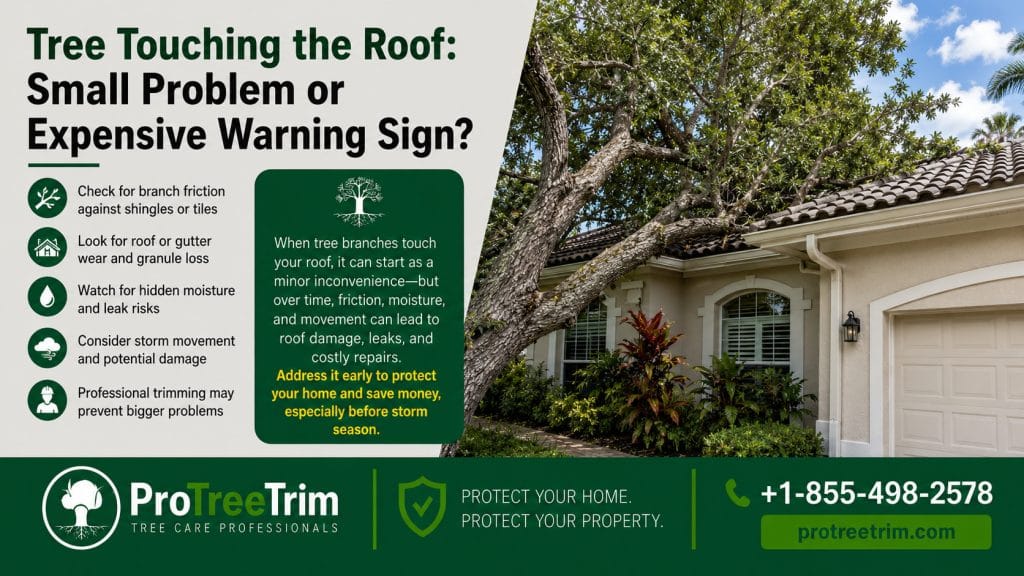
A tree touching the roof may seem minor at first, especially if it is only a few leaves or small twigs. But in Florida, roof contact can become a bigger issue during wind, heavy rain, and storm season. Homeowners should check whether branches are rubbing shingles, blocking gutters, scraping fascia, dropping debris, or adding weight near vulnerable roof edges.
What Roof Contact Can Tell You
Start by looking at the type of contact. A few leaves brushing the roof is different from a heavy limb resting on shingles or pushing against a gutter. If branches scrape the same spot every windy afternoon, they can wear surfaces down over time. If the limb is large, cracked, or leaning from one side of the canopy, the concern is more urgent.
Check the roofline from the ground. Look for branches touching shingles, palm fronds hanging into gutters, limbs pressing near soffits, or mossy debris collecting in shaded valleys. In many Florida yards, oaks, palms, and fast-growing landscape trees can crowd a home before the homeowner notices. Pool cages, fences, pavers, and narrow side yards can make the work more complicated once the branches get larger.
Also check what is happening below the tree. Is the trunk leaning toward the house? Are roots lifting pavers or driveway edges? Is water pooling near the base after storms? Roof contact may be the visible symptom, while the larger issue is poor clearance, uneven canopy weight, or a tree planted too close to the structure.
When It Deserves Attention Soon
Do not climb onto the roof or pull branches down yourself. A limb that looks light from the ground may be heavier than expected, especially after rain. Cutting the wrong branch can also shift weight toward the roof, fence, or nearby power service line.
Take clear photos from the yard, including the whole tree, the roof contact point, and any gutter or screen enclosure damage. If the home is a rental or vacation property, photos can also help explain the issue to a property manager, HOA, or insurance contact.
If a tree, palm, branch, stump, or root issue near your roof needs a closer look, ProTreeTrim can help connect Florida homeowners with local tree service support. Call +1-855-498-2578 or visit protreetrim.com.
FAQs
Is it bad if tree branches touch the roof?
It can be. Light contact may seem harmless, but repeated rubbing, debris buildup, and heavy limbs can create roof and gutter concerns.
Can I cut roof-touching branches myself?
Avoid cutting large, overhead, wet, or roof-adjacent limbs yourself. The weight can shift quickly once a cut is made.
Should palms be trimmed if fronds touch the roof?
Yes, roof contact from palm fronds should be addressed carefully, especially if debris is collecting in gutters or near pool screens.
ProTreeTrim™ can help you take the next step.
If you are dealing with a damaged tree, fallen branch, stump, root issue, palm concern, or storm cleanup question in Florida, call ProTreeTrim for tree service support.