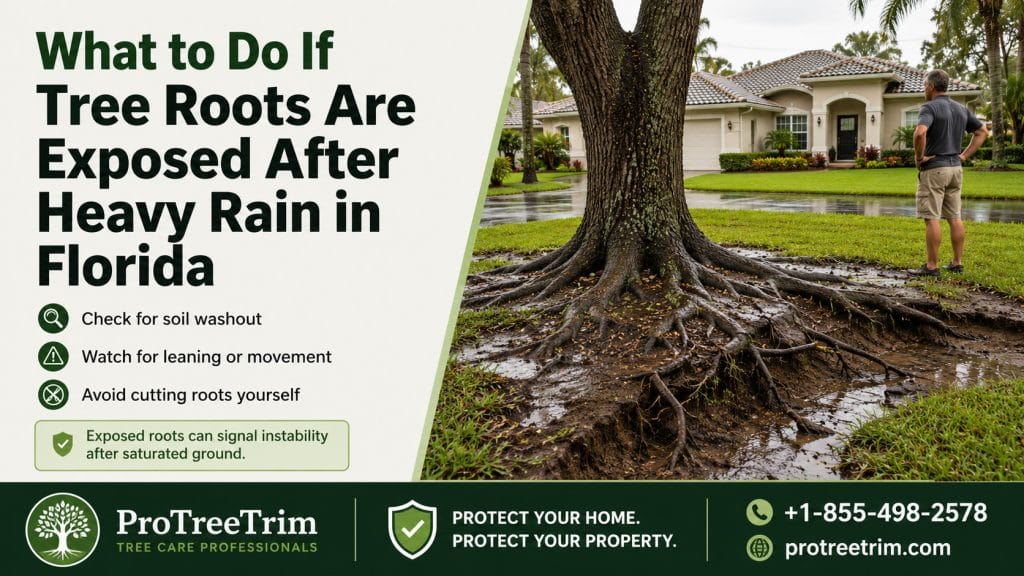
Exposed tree roots after heavy rain are not always an emergency, but they are worth checking. In Florida yards, rain can wash soil away, uncover shallow roots, soften the ground, or reveal movement around the root plate. The key is to distinguish between normal surface roots and a tree that may have shifted.
First, Look at What Changed
Some trees naturally have visible surface roots, especially older shade trees growing near lawns, pavers, driveways, and compacted soil. If those roots have been visible for years, they may not be new damage.
The concern is fresh change. After heavy rain, look for soil washed away from the trunk, mulch pulled downhill, a new gap near the base, or roots that look torn rather than simply exposed. If the tree also has a new lean, lifted soil on one side, or cracks in the ground, the issue may be more than erosion.
Florida’s sandy soil can move quickly during hard rain. Water running off a roof, driveway, patio, or pool deck may cut channels through a tree bed. Irrigation overspray can repeatedly weaken the same area. A drainage problem may expose roots before the tree itself shows obvious stress.
| What you notice | What it may suggest |
|---|---|
| Thin roots exposed in mulch bed | Soil washout or mulch erosion |
| Large roots newly uncovered | Possible erosion or grade change |
| Roots look torn or lifted | More concerning than simple exposure |
| Soil mound raised on one side | Root plate may have shifted |
| Tree has a new lean | Needs closer attention |
| Water keeps flowing through the bed | Drainage problem may continue |
Do Not Bury the Problem Too Fast
A common reaction is to cover exposed roots with a thick layer of soil or mulch. That can hide the problem without solving it. Heavy mulch against the trunk can trap moisture, cover the root flare, and make it harder to see decay, insects, or soil movement later.
A light correction may be reasonable in some landscape beds, but avoid piling material against the trunk. Keep the base visible enough to monitor changes. If water is carving the same path after every storm, address the water route first. That may mean adjusting downspouts, checking irrigation, improving bed edging, or changing how runoff moves across the yard.
Also avoid cutting exposed roots just because they are inconvenient. Large roots help support the tree. Cutting them near a house, driveway, pool cage, fence, or walkway can create a bigger safety issue than the exposed root itself.
Take photos before making changes. Show the full tree, exposed roots, trunk base, water path, nearby pavers, driveway edge, pool deck, fence, or irrigation heads. If the tree shifts later, those photos can help show when the problem started.
If you are unsure whether exposed roots, soil washout, a stump area, or root movement needs professional attention, ProTreeTrim can help connect Florida homeowners with local tree service support. Call +1-855-498-2578 or visit protreetrim.com.
FAQs
Are exposed tree roots always dangerous?
No. Some trees naturally have surface roots. Fresh exposure after rain, especially in leaning or lifted soil, warrants closer attention.
Can I cover exposed roots with mulch?
A light layer may help protect roots, but do not pile mulch against the trunk or bury the root flare.
Should I cut roots that are sticking out of the ground?
Avoid cutting large roots without guidance. Root cutting can affect stability, especially if the tree is close to structures or hardscape.
ProTreeTrim™ can help you take the next step.
If you are dealing with a damaged tree, fallen branch, stump, root issue, palm concern, or storm cleanup question in Florida, call ProTreeTrim for tree service support.