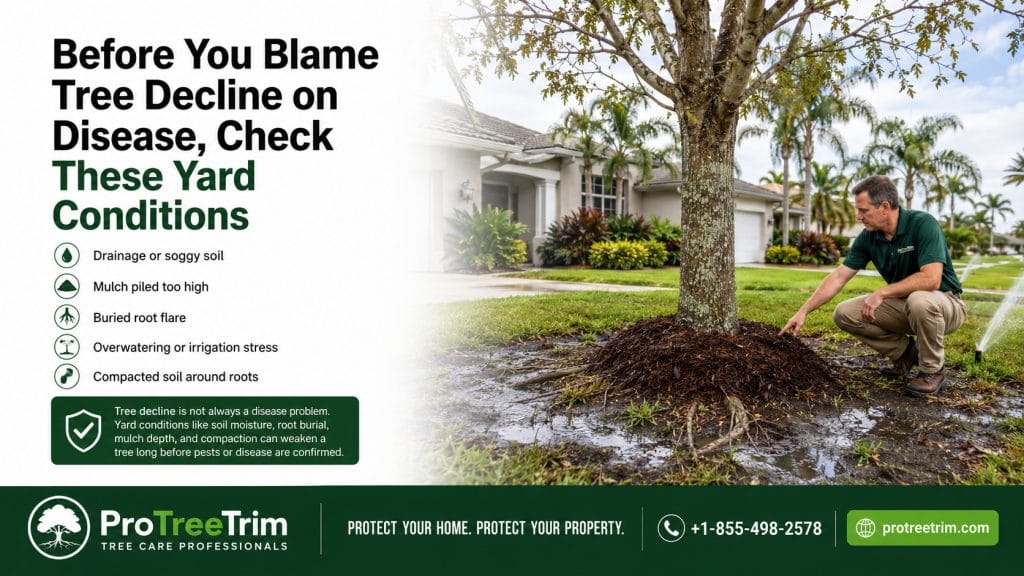
A tree that looks thin, tired, or uneven is not automatically diseased. Many yard trees decline due to root stress, poor drainage, drought, overwatering, mulch buildup, construction damage, poor pruning, or storm damage. Disease may be part of the picture, but it should not be the first guess before the site conditions are checked.
A Sick-Looking Tree May Be Reacting to the Yard
Homeowners often notice the canopy first. Leaves look smaller. One side thins out. Branches at the top die back. A palm crown looks weaker than it did last season. It is natural to wonder whether the disease is spreading through the tree.
Sometimes it is. But many tree problems start around the roots.
Roots need oxygen, space, and stable soil. If the tree bed stays wet after irrigation, if mulch is piled against the trunk, or if rainwater collects near the base, the tree may show above-ground stress. The opposite can also happen: sandy soil, reflected heat from driveways, or long dry stretches can leave a tree short on moisture even when the lawn nearby looks green.
Recent yard work is another common clue. Fence installation, paver repair, trenching, pool work, irrigation changes, driveway widening, and grading can disturb roots. A tree may not react the same week. The canopy may thin months later, which makes the original cause easy to forget.
| What you notice | What to check before assuming disease |
|---|---|
| Top branches dying back | Roots, drought stress, soil compaction, construction |
| Leaves yellowing unevenly | Irrigation, drainage, nutrients, root stress |
| One side of canopy thinning | Root damage or limb structure on that side |
| Mushrooms near the base | Moisture, decaying wood, old roots, mulch depth |
| Bark peeling or cracking | Sun exposure, old wounds, pests, storm damage |
| Sudden decline after yard work | Trenching, grade changes, root cutting, soil compaction |
When Disease Becomes a More Reasonable Concern
Disease becomes more worth investigating when symptoms are patterned, spreading, or paired with other warning signs. For example, repeated branch dieback in the same section, soft wood, cankers, fungal growth at the trunk, oozing areas, or rapid canopy loss can all justify a closer look.
Still, avoid diagnosing the tree from one symptom. Yellow leaves do not point to one cause. Mushrooms do not always mean the tree is doomed. Dead branches at the top can come from root trouble, drought, or old injury, not only disease.
A better approach is to make a simple timeline. When did the problem start? Did it follow heavy rain, a dry spell, construction, pruning, storm damage, or a change in irrigation? Take photos from the same angle every week or two. Include the full tree, trunk base, root flare, mulch bed, nearby pavers, driveway, pool cage, or fence line.
Do not start cutting major limbs, applying random treatments, or piling more mulch around the base to “help.” Those quick fixes can hide the actual problem.
If you are unsure whether a declining tree, palm, root issue, or storm-stressed limb needs professional attention, ProTreeTrim can help connect homeowners with local tree service support. Call +1-855-498-2578 or visit protreetrim.com.
FAQs
Does a declining tree always have a disease?
No. Root stress, water problems, construction damage, poor pruning, and storm injury can all make a tree look diseased.
What should I check first when a tree looks unhealthy?
Start with soil moisture, drainage, mulch depth, root exposure, recent digging, pruning history, and whether the tree changed after storms.
Should I treat a tree before knowing the cause?
Avoid guessing. The wrong treatment may waste time or hide the real issue. First understand whether the problem is disease, site stress, or structural damage.
ProTreeTrim™ can help you take the next step.
If you are dealing with a damaged tree, fallen branch, stump, root issue, palm concern, or storm cleanup question in Florida, call ProTreeTrim for tree service support.