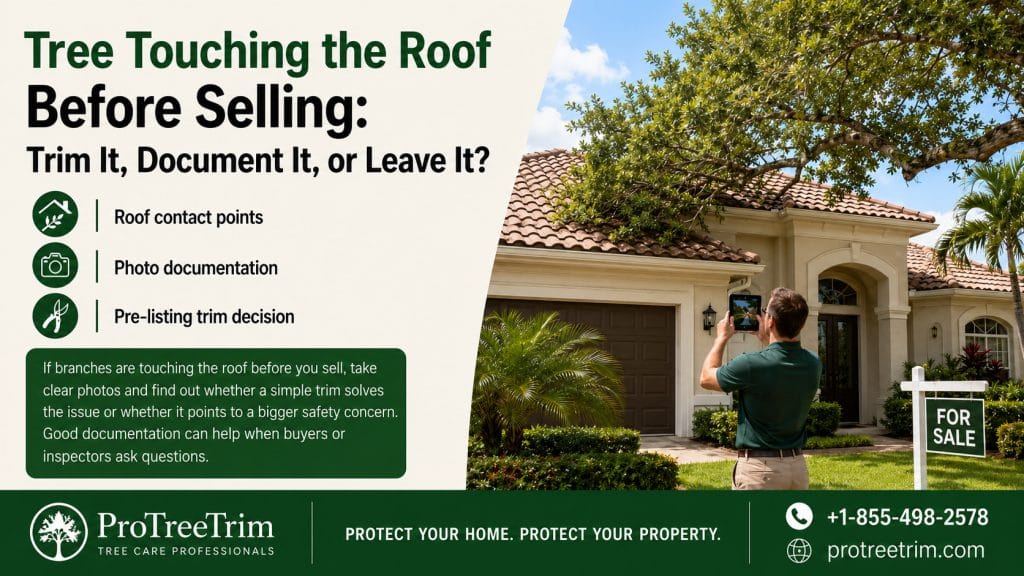
A tree touching the roof is one of those details buyers notice quickly. Even if the tree is healthy, branches rubbing shingles, gutters, soffits, or screens can raise questions about roof wear, moisture, pests, storm damage, and future maintenance. Before selling, homeowners should decide whether the issue needs simple clearance pruning, roof inspection, documentation, or a larger tree plan.
Start With Contact, Not Just Overhang
A branch hanging over the roof is not always the same as a branch touching the roof. Overhang may be acceptable in some yards if the limb is healthy, well-structured, and not dropping heavy debris. Direct contact is different.
If branches scrape shingles, rest on gutters, rub soffits, or touch a screened enclosure, the issue becomes easier for buyers to question. They may wonder whether the roof has been damaged, whether pests can access the home, or whether the tree was allowed to grow too close for too long.
Look at the contact point from the ground if you can do so safely. Do not climb onto the roof to inspect branches. Take wide photos from the yard and note where the branch touches the home.
| What you see | What it may raise during a sale |
|---|---|
| Small twigs brushing gutters | Maintenance question |
| Heavy limb resting on roof | Roof damage or removal concern |
| Branches rubbing shingles | Wear, moisture, or storm-risk concern |
| Palm fronds touching roofline | Debris and access concern |
| Leaves packed in gutters | Drainage and maintenance concern |
| Limb over bedroom or garage | Safety and buyer confidence concern |
| Tree also leaning toward house | Bigger tree-risk question |
Trim for Clearance, Not for Cosmetic Overkill
The goal is not to cut the tree hard before listing. The goal is to solve the visible conflict without creating a new problem.
A careful trimming job may remove small branches touching the roof, improve clearance around gutters, or reduce a limb that is rubbing the structure. That is different from topping the tree, stripping the canopy, or cutting large limbs without a plan.
Heavy trimming right before listing can backfire. Buyers may notice fresh large cuts and wonder whether the seller was hiding a bigger issue. A harsh cut can also leave the tree looking stressed or unbalanced in listing photos.
A better pruning decision sounds specific:
- remove branches physically touching shingles or gutters
- clear palm fronds or seed pods from roof and pool screen areas
- remove deadwood over the roofline
- avoid large live cuts unless there is a clear reason
- protect pavers, pool cage, landscaping, and gutters during work
- save before-and-after photos and the invoice
Check the Roof Side of the Problem Too
Tree work may solve the branch contact, but it does not automatically answer whether the roof, gutters, soffit, or screen enclosure were affected.
If branches have been rubbing the roof for a long time, consider whether the roof area should be checked before listing. Buyers may ask about shingle wear, clogged gutters, damaged fascia, water stains, or debris buildup. If you already know there was contact, documentation helps.
Useful records include:
| Record to keep | Why it helps |
|---|---|
| Before photos | Shows what the contact looked like |
| Tree trimming invoice | Shows the issue was addressed |
| After photos | Shows roofline clearance |
| Roof or gutter repair receipt | Documents related maintenance |
| Debris cleanup notes | Shows whether branches and leaves were removed |
| Any inspection or service note | Reduces vague buyer concern |
Do not promise that the roof is fine unless it has been checked by the right professional. It is safer to say what was done: the branch was trimmed back, debris was cleared, gutters were serviced, or a roof area was inspected.
When the Tree May Need More Than Trimming
Some roofline tree problems are not just clearance issues.
If a large limb is cracked, dead, hollow, or stretched heavily over the house, trimming a few smaller branches may not solve the real concern. If the trunk is leaning toward the roof, roots are lifting soil, or the tree has mushrooms at the base, the sale-related question becomes bigger: is this tree a future risk for the buyer?
Also watch for repeated debris. A palm that drops fronds onto a roof or pool cage every few weeks may be a maintenance issue even if it is not structurally dangerous. A live oak with heavy limbs over a roof may need a more careful pruning plan than a simple roofline clearance cut.
If the tree is close to utility lines, stop and call the utility first. Tree trimming near wires is not normal homeowner maintenance.
Should You Handle It Before Listing?
Usually, visible roof contact is worth addressing before listing photos. It is one of the easiest things for buyers to notice and one of the simplest issues to document if handled properly.
Leaving it may be reasonable if the branches are not touching the home, the tree is healthy, and there is no visible roof or gutter concern. But if the branch is physically rubbing the roof, sitting on the gutter, or dropping debris onto a visible area, waiting may invite inspection questions later.
If you are unsure whether a roofline limb, palm frond, dead branch, or overhanging tree should be trimmed before listing, ProTreeTrim can help connect homeowners with local tree service support. Call +1-855-498-2578 or visit protreetrim.com.
FAQs
Should I trim branches touching the roof before selling?
Often, yes. Direct roof contact is easy for buyers and inspectors to notice, and it may raise questions about roof wear, gutters, pests, or deferred maintenance.
Does every branch over the roof need to be removed?
No. Overhang and contact are different. A healthy branch high above the roof may not be urgent, while a limb rubbing shingles or gutters deserves attention.
Should I inspect the roof after trimming?
If branches were touching or rubbing the roof for a while, a roof or gutter check may be wise before listing.
Can heavy trimming hurt buyer perception?
Yes. Fresh, aggressive cuts can make buyers wonder whether the tree had a bigger problem. Selective, documented clearance work usually looks more responsible.
ProTreeTrim™ can help you take the next step.
If you are dealing with a damaged tree, fallen branch, stump, root issue, palm concern, or storm cleanup question in Florida, call ProTreeTrim for tree service support.