
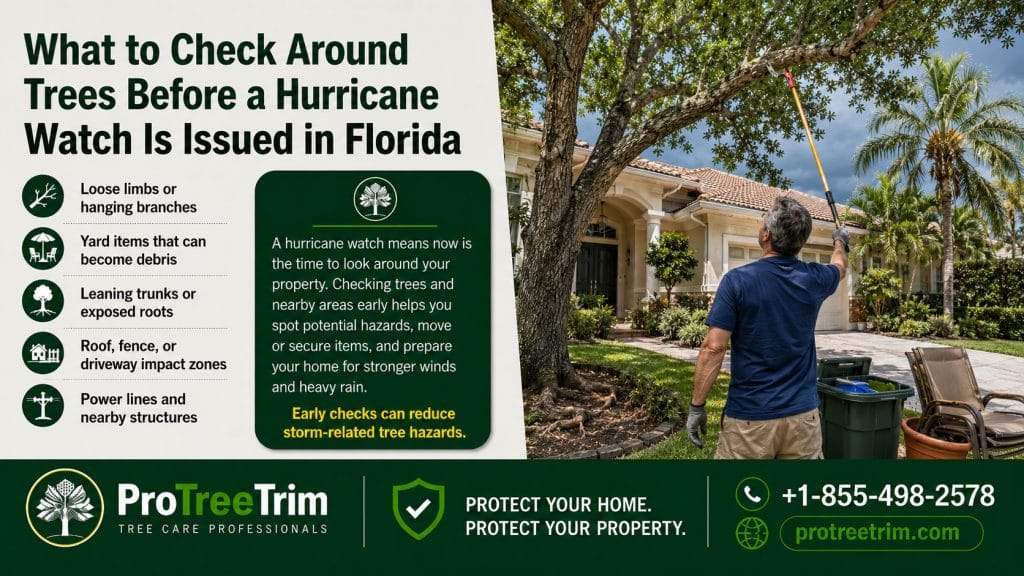
Before a hurricane watch is issued, Florida homeowners should already have checked the trees closest to the house, driveway, pool cage, fence, and main access points. Once a watch is active, there may be limited time for safe tree work. Focus on documenting risks, clearing loose items, and avoiding last-minute trimming that could create more danger.
Do the Tree Walk Before the Forecast Gets Serious
The National Hurricane Center says a hurricane watch means hurricane conditions are possible, and it is issued 48 hours before tropical-storm-force winds are expected to begin in the area. That window can close quickly once rain bands, wind, and local advisories start affecting normal schedules.
Start with the trees that could hit something valuable. Look at limbs over the roof, garage, driveway, screened pool enclosure, fence, shed, or neighbor’s property. Check palms with heavy fronds, seed pods, or crowns leaning toward the house. Look near the base of large trees for lifted soil, exposed roots, trunk cracks, mushrooms, or a new lean after rain.
Do not make risky cuts because a storm is suddenly in the forecast. Large limbs, overhead branches, roof-adjacent palms, and anything near power lines should not become a rushed DIY job.
| Area to check | What to look for |
|---|---|
| Roofline and gutters | Branches touching shingles, soffits, or gutters |
| Pool cage or lanai | Limbs, palm fronds, or debris above screen panels |
| Driveway and entrance | Hanging limbs or trees that could block access |
| Root area | Lifted soil, exposed roots, soft ground, new lean |
| Pavers and walkways | Raised edges, cracked areas, trip hazards |
| Power line area | Trees or limbs close to service lines |
Clear What Wind Can Move
Tree risk is not only about falling trunks. Loose yard items can become a problem too. FEMA advises bringing trash cans, bikes, patio furniture, and other wind-movable outdoor items inside before a hurricane.
Around trees, move planters, hoses, garden tools, pool toys, grills, umbrellas, loose décor, and anything sitting under large limbs. If a branch falls, those items can make cleanup harder or create more damage.
Miami-Dade’s hurricane tree preparation guidance also reminds homeowners to watch for downed power lines, keep a safe distance, and clear trees or branches blocking access for emergency vehicles and utility crews when it is safe and appropriate.
Take photos before the storm, especially of trees that worry you. Include the full tree, trunk base, limbs near structures, and any existing damage. Those photos may help later with cleanup planning, HOA communication, property management, or insurance questions.
If you are unsure whether a tree, palm, stump, or root issue should be handled before hurricane conditions threaten your area, ProTreeTrim can help connect Florida homeowners with local tree service support. Call +1-855-498-2578 or visit protreetrim.com.
FAQs
Should I trim trees after a hurricane watch is issued?
Avoid rushed trimming. Large, overhead, or utility-adjacent work should be handled before storm conditions are close.
What tree problems should not wait?
A new lean, lifted roots, split trunk, large hanging limb, or branches over a roof, driveway, or pool cage deserve attention sooner.
Should I take photos before a storm?
Yes. Photos of trees, roots, limbs, rooflines, fences, and pool cages can help document the property before conditions change.
ProTreeTrim™ can help you take the next step.
If you are dealing with a damaged tree, fallen branch, stump, root issue, palm concern, or storm cleanup question in Florida, call ProTreeTrim for tree service support.