
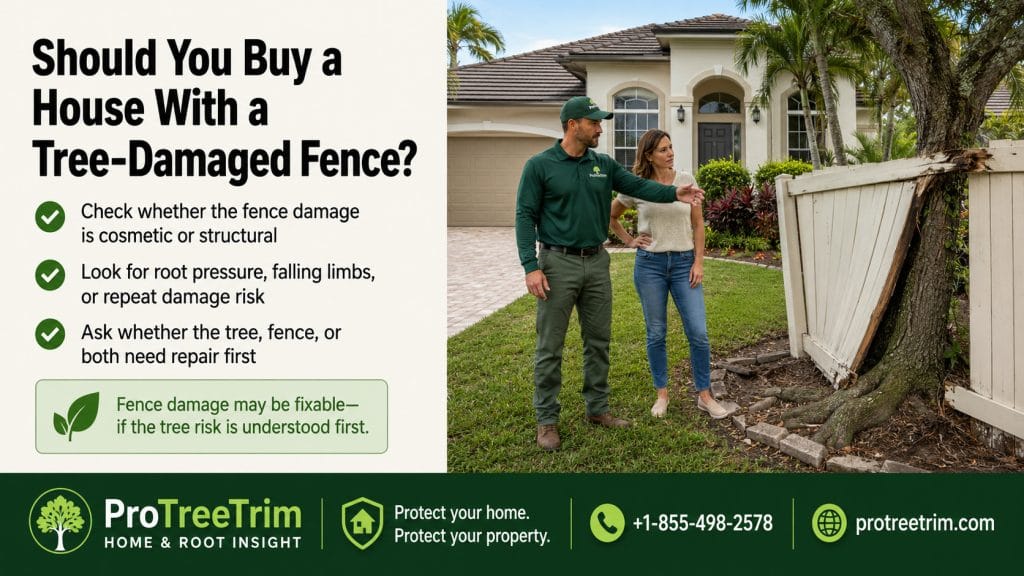
A tree-damaged fence does not automatically mean you should avoid buying the house. But it should make you ask what caused the damage, whether the tree issue is still active, and whether the fence repair will actually hold after closing. A broken panel is one problem. A leaning tree, shifting roots, or repeated limb drop is another.
Start With the Cause, Not the Fence Panel
A damaged fence can be repaired. The bigger question is whether the same tree will damage it again.
During a showing or inspection, look at the fence and the tree together. Is a branch resting on the fence? Did a limb fall and break one section? Are roots pushing posts out of line? Is the trunk leaning into the fence? Is the fence damage near a neighbor’s property line?
| What you see | Why it matters as a buyer |
|---|---|
| One broken panel under a tree | May be old storm or limb damage |
| Fence posts pushed out of line | Roots or soil movement may be active |
| Branches resting on the fence | Ongoing rubbing or weight issue |
| Tree leaning into fence line | Tree condition should be checked |
| Fresh fence repair near a large tree | Ask what caused the original damage |
| Dead limbs above the fence | Future breakage may still be possible |
| Roots lifting near posts | Repair may fail if the root issue remains |
A fence repair can make the yard look better, but if the tree is still leaning, dropping limbs, or shifting the posts, the buyer may inherit the real problem.
Ask Whether the Damage Was One-Time or Repeating
A single storm-damaged branch is usually easier to understand than repeated fence damage. If the seller says a limb came down during a storm and the tree was later trimmed, ask for records if available. If the same fence section has been repaired more than once, that is a different conversation.
Useful buyer questions include:
- When did the fence damage happen?
- Was it caused by a fallen limb, roots, trunk contact, or storm cleanup?
- Has the tree been trimmed since the damage?
- Are there dead limbs still over the fence?
- Has the neighbor raised any concerns?
- Was the fence repaired, or only temporarily patched?
- Are there invoices, photos, or estimates?
You are not trying to make a fence issue dramatic. You are trying to understand whether it is finished.
Check the Neighbor Side Carefully
Tree-damaged fences often sit on a boundary. That can make the issue more sensitive after closing.
If branches hang over the neighbor’s yard, roots push toward the fence line, or a tree leans across the boundary, the future problem may involve more than repair cost. It may involve timing, access, communication, and who needs permission for work.
Do not assume the neighbor is fine with the tree just because the seller says it has never been a problem. Also do not assume there is a dispute. Ask calmly, look for records, and avoid making legal conclusions without proper local guidance.
Signs worth noticing:
- branches over the neighbor’s roof, shed, or pool cage
- fence panels pushed toward the neighbor’s side
- fresh cuts along the property line
- dead limbs over the boundary
- roots lifting both sides of the fence base
- storm debris still visible near the fence
If the tree is close to utility lines, treat that as a separate safety issue. Utility coordination may be needed before trimming or removal.
Think About Repair Order After Closing
If you buy the house, the order of work matters. Repairing the fence before tree work may be a mistake if a crew later needs access or if a branch could damage the new panel during removal.
A better sequence may be:
- Identify whether the tree issue is still active.
- Handle dead limbs, leaning trunks, or removal if needed.
- Grind or manage the stump if removal happens.
- Repair or replace fence panels after tree work is done.
- Level soil, remove debris, and document the finished area.
This matters even more in tight side yards, pool areas, and fenced backyards where access is limited.
When the Issue May Be Manageable
A tree-damaged fence may be manageable if the tree is otherwise healthy, the damaged section is small, the cause was a one-time limb failure, and the seller has already completed tree work and fence repair.
It may also be manageable if the fence is old and the tree is not the main problem. Sometimes a tree gets blamed for a fence that was already weak, rotted, leaning, or poorly installed.
When to Slow Down Before Buying
Take it more seriously if the tree is dead, leaning, split, pushing the fence, repeatedly dropping limbs, or located where future removal would be difficult. Also slow down if the fence damage affects pets, pool safety, privacy, neighbor boundaries, or access to the yard.
The fence itself may be inexpensive compared with the tree work behind it. A buyer should understand both before closing.
If you are unsure whether a tree-damaged fence, boundary limb, stump, or root issue should be handled before or after buying a home, ProTreeTrim can help connect homeowners with local tree service support. Call +1-855-498-2578 or visit protreetrim.com.
FAQs
Is a tree-damaged fence a dealbreaker when buying a home?
Usually no. But buyers should check whether the tree issue is still active or whether the damage was already fully repaired.
Should I ask the seller to repair the fence before closing?
If the damage affects security, pets, privacy, pool safety, or buyer access, it is reasonable to discuss repair, credit, or documentation during the inspection period.
Should the tree be handled before the fence?
Often, yes. If limbs, roots, leaning, or stump work are involved, tree work may need to happen before final fence repair.
What should I photograph during inspection?
Photograph the full tree, damaged fence section, trunk base, roots, overhanging limbs, neighbor-facing side, access route, and any dead or cracked branches above the fence.
ProTreeTrim™ can help you take the next step.
If you are dealing with a damaged tree, fallen branch, stump, root issue, palm concern, or storm cleanup question in Florida, call ProTreeTrim for tree service support.