
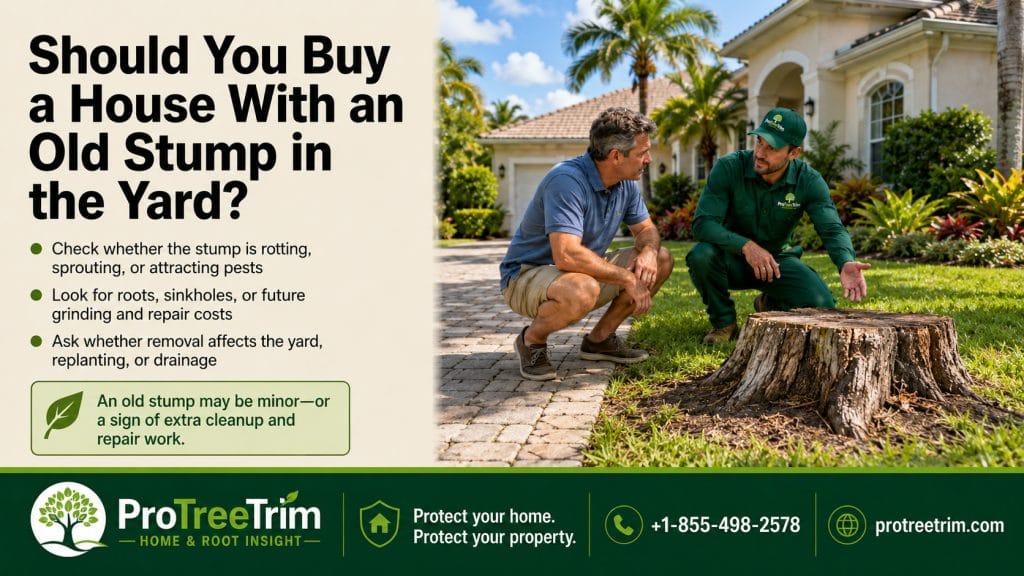
An old stump in the yard is usually not a reason to walk away from a house. But it can be a clue. It may point to a past tree removal, storm damage, decay, root problems, pest activity, or unfinished yard work. Before buying, look at where the stump sits, what surrounds it, and whether removing it later will be simple or annoying.
Start With the Stump’s Location
A stump hidden in the back corner of a large yard may be little more than a future cleanup project. A stump near the front walkway, driveway, patio, pool cage, fence, or children’s play area deserves more attention.
The location tells you how much the stump may affect daily use.
| Where the stump is | Why it matters |
|---|---|
| Near the front entry | Curb appeal and trip concerns |
| Beside the driveway | Parking, mowing, and root issues |
| Near a patio or pool area | Outdoor living space may feel unfinished |
| Close to a fence | Access and root cleanup may be harder |
| Near the house | Pest, moisture, and old root concerns may come up |
| In a far back corner | May be less urgent unless decaying or unstable |
A stump is not only what you see above ground. The old root system may still be under the lawn, driveway edge, walkway, or planting bed. That matters if you plan to repair hardscape, plant a new tree, install sod, or reshape the yard after closing.
Ask Why the Tree Was Removed
The stump tells you a tree used to be there. It does not tell you why.
Maybe the tree was removed because it was too close to the house. Maybe it died after a storm. Maybe roots were lifting the driveway. Maybe the seller removed the tree but skipped stump grinding to save time. Maybe the stump is from a healthy tree removed years ago during a landscape change.
As a buyer, you do not need a perfect story. But you should ask practical questions:
- When was the tree removed?
- Was it removed after storm damage?
- Was stump grinding included?
- Were roots causing driveway, walkway, fence, or plumbing concerns?
- Did the seller keep the invoice?
- Were the chips removed or left in place?
- Has the area settled since removal?
If the seller has tree service records, those can help you understand whether the stump is simply unfinished cleanup or part of a larger yard issue.
Look for Pests, Soft Wood, and Settling
An old stump slowly breaks down. That is normal. The question is whether the decay is creating problems where it sits.
Check for soft, crumbly wood, sawdust-like material, ants, termites, mushrooms, hollow sections, or soil sinking around the stump. None of these automatically means the house is affected. But if the stump is close to the home, deck, garage, fence, or wood-to-soil contact, pest and moisture questions become more important.
Also look at the ground around it. Is the lawn sinking? Are pavers uneven? Is the stump surrounded by old chips? Does water collect there after rain? A stump can leave a low spot as old roots and wood decay underground.
This is especially relevant if the stump is near a walkway, driveway, pool deck, or patio. What looks like a small yard blemish during a showing may become a leveling, grinding, or replanting project after closing.
Think About the Real Cleanup Cost
Stump grinding is usually a separate job from tree removal. Many buyers discover this later. A seller may say, “The tree was removed,” but the remaining stump, roots, chips, and uneven ground still need attention.
Before closing, think about what you would want the area to become.
| Your future plan | What to consider |
|---|---|
| Leave it alone | Is it safe, stable, and out of the way? |
| Grind the stump | Can equipment access it without damaging the yard? |
| Install sod | Chips and old roots may need cleanup first |
| Replant nearby | Old roots and decay may affect the spot |
| Repair pavers | Root removal and settling may matter |
| Add a patio or fence | Underground roots and access may complicate work |
Access is often overlooked. A stump in a wide front yard is easier to handle than one behind a narrow gate, beside a pool cage, against a fence, or near irrigation lines.
When an Old Stump Is Mostly Cosmetic
A stump may be a minor issue if it is small, dry, stable, away from structures, away from walking paths, and not surrounded by pest activity or sinking soil. In that case, you can budget for grinding later or leave it until you decide how to use the yard.
It may still affect curb appeal, but it does not have to change the purchase decision.
When the Stump Deserves More Attention
Take it more seriously if the stump is close to the house, full of insects, surrounded by soft soil, linked to lifted pavers, near a fence line, or sitting where people walk. Also pay attention if the tree was removed because it was dead, storm-damaged, leaning, or interfering with hardscape.
The stump itself may be manageable. The story around it may matter more.
If you are unsure whether an old stump, root issue, or post-removal yard area should be handled before or after buying a home, ProTreeTrim can help connect homeowners with local tree service support. Call +1-855-498-2578 or visit protreetrim.com.
FAQs
Is an old stump a dealbreaker when buying a house?
Usually no. But location, pests, root issues, settling, and future cleanup cost should be considered.
Should I ask the seller to grind the stump before closing?
If the stump is visible, unsafe, close to the home, or interfering with walkways, patios, driveways, or fences, it is reasonable to discuss.
Can an old stump attract termites or ants?
Decaying wood can attract insects. That does not automatically mean the house is affected, but a stump close to the structure deserves a closer look.
Can I plant a new tree where the stump was?
Not always immediately. Old roots, chips, decay, and soil settling can make replanting in the exact same spot more difficult.
ProTreeTrim™ can help you take the next step.
If you are dealing with a damaged tree, fallen branch, stump, root issue, palm concern, or storm cleanup question in Florida, call ProTreeTrim for tree service support.