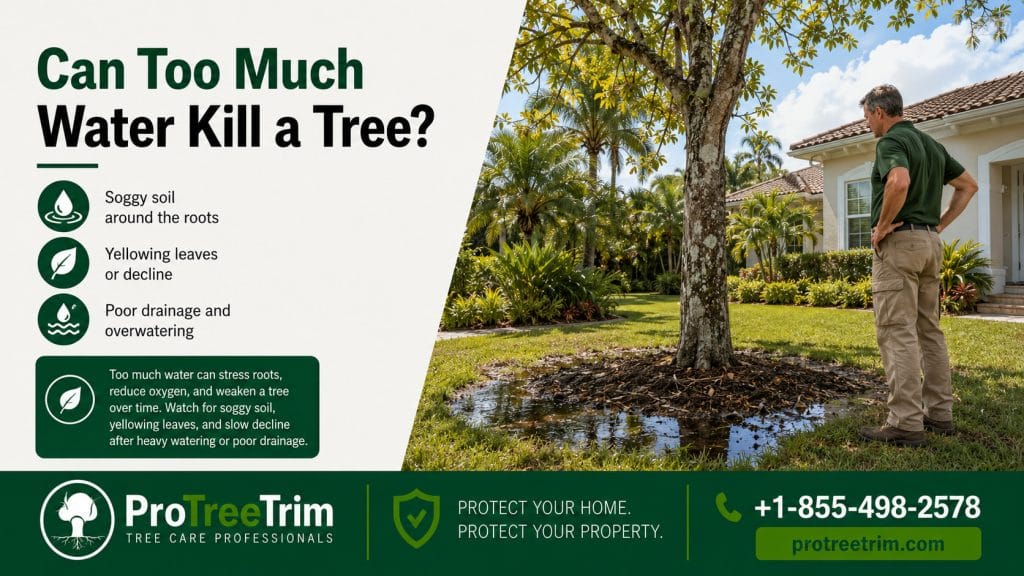
Too much water can weaken or eventually kill a tree, especially when the root zone stays saturated for too long. A struggling tree may wilt, yellow, drop leaves, or thin out even though the soil looks wet. Before watering more, homeowners should check drainage, irrigation, mulch, soil compaction, and root health.
Wet Soil Can Still Leave Roots “Thirsty”
It sounds backward, but a tree in wet soil can act like it needs water. Leaves may wilt on sunny afternoons. The canopy may thin. New growth may look weak. Homeowners see those symptoms and turn the irrigation up, which can make the root problem worse.
Tree roots need oxygen to function. Colorado State University Extension explains that roots require oxygen for respiration, and when oxygen is inadequate in the soil, root growth slows and water and nutrient movement inside the plant can be reduced.
That is the problem with constantly wet soil. Water fills the spaces where air should be. If the condition lasts, fine roots may be damaged, and the tree has a harder time taking up what it needs. Missouri Botanical Garden also notes that roots in waterlogged soil may die because they cannot absorb enough oxygen to function normally.
| What you see | What it may mean |
|---|---|
| Yellowing leaves after repeated watering | Root stress or poor drainage may be involved |
| Wilting even though soil is wet | Roots may not be functioning well |
| Leaves dropping early | Water stress, root injury, or decline |
| Mushrooms near the base | Moisture and organic breakdown may be present |
| Soft soil around trunk | Drainage or irrigation issue may be active |
| Mulch stays wet against bark | Trunk-base problems can be hidden |
| One side of tree declines | Water flow, root damage, or site conditions may be uneven |
Check the Yard Before Blaming the Tree
Overwatering is not always caused by a homeowner standing with a hose. It may come from irrigation zones running too often, broken sprinkler heads, roof runoff, poor grading, compacted soil, or a low spot that holds rainwater.
In Florida yards, the signs can be easy to miss because sandy soil may drain in one area while another bed stays wet under mulch. A palm beside a pool deck, an oak near pavers, or a tree in a narrow side yard may sit in a pocket where water collects after storms or irrigation.
Before changing the watering schedule, look at the site:
- Does the soil stay wet several inches down?
- Is irrigation spraying the trunk or one side of the tree?
- Is mulch piled against the bark?
- Does water run from the roof, driveway, patio, or pool deck into the bed?
- Is the root flare buried?
- Has recent grading, paver work, or construction changed drainage?
- Does water puddle after rain while nearby areas dry?
University of Maryland Extension notes that excess water can reduce oxygen in soil and damage fine roots, leaving plants unable to take up water properly. Although its guidance focuses on indoor plants, the root-zone principle is useful for understanding why “more water” is not always the answer.
Do Not Fertilize or Prune Your Way Out of Wet Roots
A tree with wet-root stress may look hungry or overgrown in the wrong places. That can tempt homeowners to fertilize, prune heavily, or add more mulch. Those moves can complicate the problem.
Fertilizer will not fix oxygen-starved roots. Heavy pruning may remove live canopy the tree still needs. More mulch may trap moisture against the trunk if it is piled too deep.
Start with water movement. Adjust irrigation if one zone is soaking the bed. Pull mulch back from the trunk. Keep the root flare visible. Watch whether the soil dries between rain or watering cycles. If the area stays wet no matter what, the issue may be drainage, grade, compaction, or a hidden leak.
Wet-root problems deserve faster attention when they appear with structural warning signs: trunk cracks, mushrooms at the base, soft wood, a new lean, lifted soil, exposed roots, or large dead limbs over a roof, driveway, pool cage, walkway, or fence.
If you are unsure whether too much water, drainage trouble, root stress, or tree decline needs professional attention, ProTreeTrim can help connect homeowners with local tree service support. Call +1-855-498-2578 or visit protreetrim.com.
FAQs
Can overwatering make a tree look dry?
Yes. If roots are damaged by saturated soil, the tree may wilt, yellow, or drop leaves because it cannot take up water properly.
How do I know if I am watering too much?
Check the soil a few inches down. If it stays wet, smells sour, or puddles after irrigation, reduce watering and look for drainage problems.
Can too much rain cause the same issue?
Yes. Repeated rain, poor drainage, compacted soil, or runoff into a tree bed can keep roots too wet even without extra irrigation.
Should I stop watering a stressed tree completely?
Not always. The goal is balanced moisture, not drought. Check the soil first, then adjust based on whether the root zone is dry, damp, or saturated.
ProTreeTrim™ can help you take the next step.
If you are dealing with a damaged tree, fallen branch, stump, root issue, palm concern, or storm cleanup question in Florida, call ProTreeTrim for tree service support.