
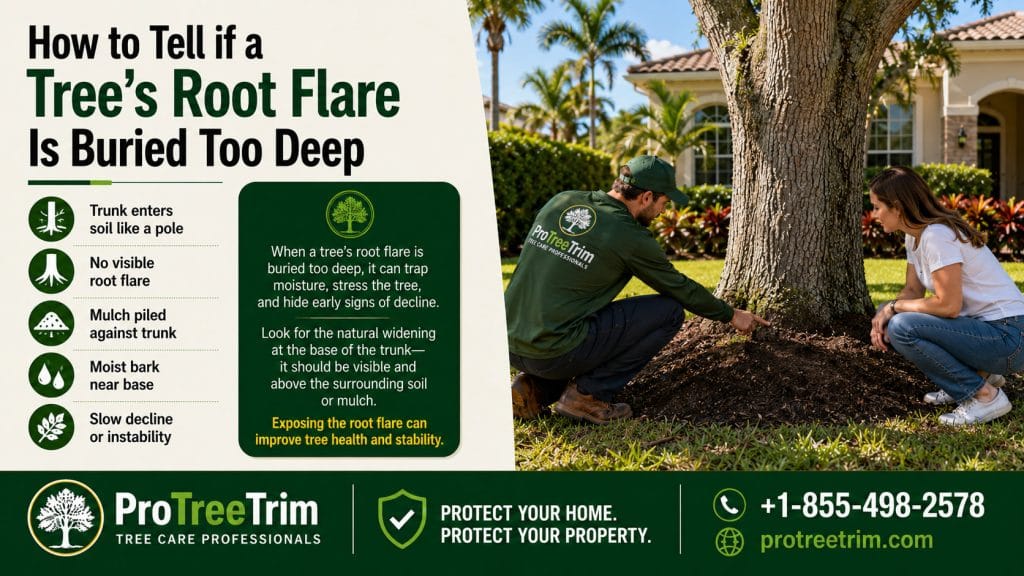
A tree’s root flare is the area where the trunk widens and transitions into the major roots. If that flare is buried under soil, mulch, sod, or landscape rock, the tree may look neat but still have hidden problems. In Florida yards, buried root flares can trap moisture, hide decay, and make root issues harder to spot.
What a Healthy Root Flare Should Look Like
At the base of many trees, you should see the trunk gently spread outward before the roots enter the soil. It should not look like a telephone pole going straight into the ground. If the trunk disappears into a mound of mulch, thick sod, or raised soil, the flare may be buried.
This often happens after landscaping work. A crew may add mulch year after year, install a raised bed, level the yard, or pile soil around the trunk to make the area look cleaner. Around Florida homes, it can also happen near pavers, irrigation zones, driveway edges, and tight front-yard beds where everything is designed for curb appeal.
| What you notice | Why it matters |
|---|---|
| Trunk goes straight into mulch | Root flare may be hidden |
| Mulch piled against bark | Moisture can stay trapped |
| Soil mound around trunk | Roots and decay may be harder to see |
| Mushrooms near the base | Could point to excess moisture or organic breakdown |
| Circling roots at surface | May affect long-term growth |
| Soft bark near ground level | Needs closer attention |
Why Buried Root Flares Matter in Florida
A buried root flare does not mean the tree will fail tomorrow. But it can create conditions that make future problems harder to notice. Moisture may stay against the bark. Roots may grow in awkward patterns. Decay, insects, or fungal activity may be hidden until the tree shows stress elsewhere.
Florida weather makes this more important. Heavy rain, irrigation overspray, humid mulch beds, and sandy soil movement can all change conditions around the base of a tree. If the tree is near a roof, driveway, pool cage, fence, walkway, or septic area, hidden base problems deserve more attention before storm season.
Do not dig aggressively around the trunk with a shovel. You can gently pull mulch back from the bark and photograph what you see, but deeper soil or root work should be handled carefully. Cutting or damaging major roots can create a bigger issue than the buried flare.
If you are unsure whether a buried root flare, root issue, stump area, or tree base problem needs professional attention, ProTreeTrim can help connect Florida homeowners with local tree service support. Call +1-855-498-2578 or visit protreetrim.com.
FAQs
Should mulch touch the tree trunk?
No. Mulch should be pulled back from the trunk so moisture does not stay trapped against the bark.
Does a buried root flare mean the tree is dying?
Not always. But it can hide moisture, decay, circling roots, or base problems that should be checked.
Can I uncover the root flare myself?
You can gently pull mulch back, but avoid cutting roots or digging deeply without guidance.
ProTreeTrim™ can help you take the next step.
If you are dealing with a damaged tree, fallen branch, stump, root issue, palm concern, or storm cleanup question in Florida, call ProTreeTrim for tree service support.