
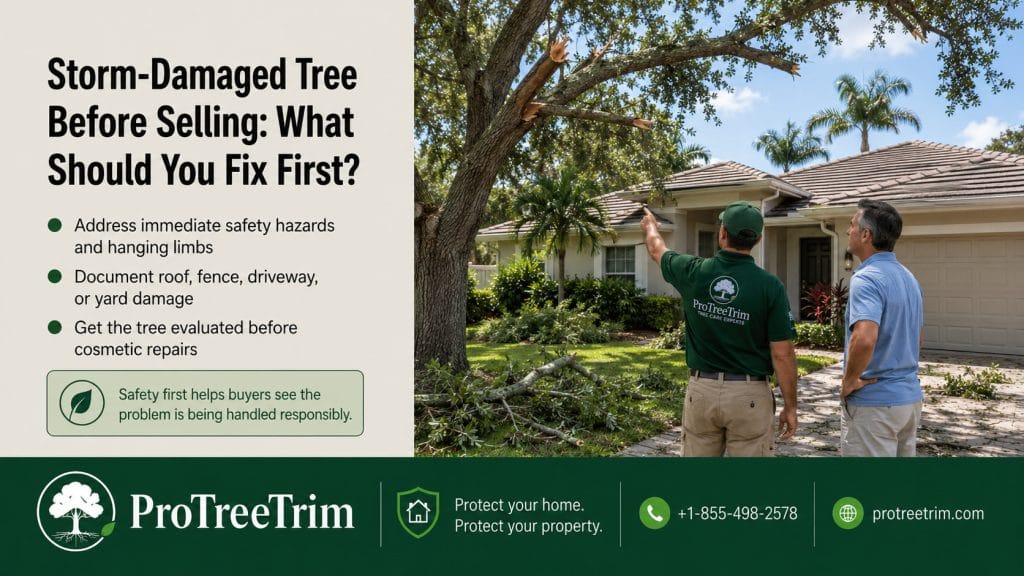
A storm-damaged tree can make a property feel risky, even if the house itself is in good shape. Buyers may see broken limbs, a leaning trunk, roofline debris, fence damage, or a rough stump area and wonder whether more problems are waiting. Before listing, focus on what is still active, what is visible, and what could affect safety, access, or buyer confidence.
Start With What Is Still Dangerous
Not all storm damage has the same urgency. Small branches scattered across the lawn are usually cleanup. A cracked limb hanging over the driveway is not. A stump left after removal may look messy, but a split trunk still standing near the house deserves attention first.
Walk the property slowly and look for anything that could still move, fall, block access, or raise an obvious inspection question.
| Storm damage you see | What to handle first |
|---|---|
| Hanging limb over driveway or walkway | Treat as a priority before showings |
| Split trunk still standing | Get it checked before cosmetic cleanup |
| Tree leaning after storm | Check roots, soil, and direction of lean |
| Branches touching roof or gutters | Clear contact and check related damage |
| Fence or pool cage damage | Address tree cause before repair if active |
| Old stump and chips in visible area | Finish the cleanup before listing photos |
| Small twigs and scattered leaves | Routine cleanup once larger risks are handled |
A buyer does not need to understand tree structure to notice a hazard. If they have to walk under a dead limb to reach the front door, the issue has already become part of the sale.
Clean Up the Yard, but Keep the Evidence First
Before removing major storm debris, take photos. This is especially important if the tree damaged a fence, roof edge, gutter, pool screen, pavers, irrigation, driveway, or neighbor-facing area.
Once debris is hauled away, the story becomes harder to explain. A few wide photos before cleanup can show what happened, what was damaged, and what work was completed afterward.
Useful photos include:
| Photo to take | Why it helps |
|---|---|
| Full tree and surrounding yard | Shows location and scale |
| Broken limb or trunk split | Shows original storm damage |
| Roof, fence, pool cage, or driveway impact | Documents related property damage |
| Stump or root area | Shows what remains after removal |
| Before-and-after cleanup | Shows the issue was handled |
| Repair area after completion | Supports a cleaner buyer conversation |
Do not climb a roof, stand under a cracked limb, or walk near downed wires just to get a better photo. Documentation is useful only if it is safe.
Repair in the Right Order
Storm-damaged tree work often affects other repairs. If a branch crushed a fence, repairing the fence before removing the unstable limb may be backward. If a palm damaged a pool screen but still drops heavy fronds over the enclosure, the screen repair may not be the whole solution.
A practical order usually looks like this:
- Make sure there are no utility-line hazards.
- Remove or stabilize dangerous limbs or trees.
- Clear debris from access areas, rooflines, driveways, and walkways.
- Handle stump grinding or root cleanup if the area is visible or unsafe.
- Repair fence, gutter, screen, paver, or driveway damage.
- Take after photos and save invoices.
This keeps the property from looking patched instead of actually handled.
Do Not Hide a Tree Problem With Cosmetic Cleanup
A clean yard helps, but buyers can still spot active tree concerns. A freshly raked lawn will not solve a leaning tree. New mulch will not fix a cracked trunk. A repaired fence panel will not calm buyers if the same heavy limb is still hanging above it.
Before listing, look for signs that storm damage may still be unresolved:
- large hanging limbs
- fresh trunk cracks
- bark torn down the trunk
- new leaning after rain or wind
- lifted soil or exposed roots
- dead branches over the roof, driveway, or pool cage
- branches near service lines or utility equipment
- stump hole, loose chips, or settling near a walkway
If the tree still looks risky, deal with that before spending too much effort on cosmetic finishing.
Keep the Records Simple and Factual
Buyers do not need a dramatic storm story. They need clear records if the issue comes up.
Save tree service invoices, debris hauling receipts, stump grinding notes, fence or screen repair receipts, roof or gutter repair records, and before-and-after photos. If the scope changed during the job, ask the contractor’s invoice to reflect what was actually done.
Avoid saying the tree is “safe now” unless you have the right professional assessment supporting that statement. A better seller response is factual: “The storm-damaged limb over the driveway was removed, the debris was hauled away, and the fence panel was repaired.”
If you are unsure whether a storm-damaged tree, stump, root issue, roofline branch, or cleanup area should be handled before listing your home, ProTreeTrim can help connect homeowners with local tree service support. Call +1-855-498-2578 or visit protreetrim.com.
FAQs
Should I remove storm-damaged branches before listing?
Yes, especially if they are large, hanging, visible in listing photos, or located over the driveway, walkway, roof, pool cage, fence, or patio.
Should I repair the fence or remove the damaged tree first?
Usually handle the active tree issue first. Otherwise, the same limb, trunk, or stump work may damage the repaired area or require access through it.
Should I keep photos of storm damage after cleanup?
Yes. Before-and-after photos, invoices, and repair receipts can help explain what happened and what was fixed.
Does every storm-damaged tree need removal before selling?
No. Some trees only need selective pruning or cleanup. Removal becomes more likely if the tree is split, dead, leaning, uprooted, or still threatening the house or access areas.
ProTreeTrim™ can help you take the next step.
If you are dealing with a damaged tree, fallen branch, stump, root issue, palm concern, or storm cleanup question in Florida, call ProTreeTrim for tree service support.