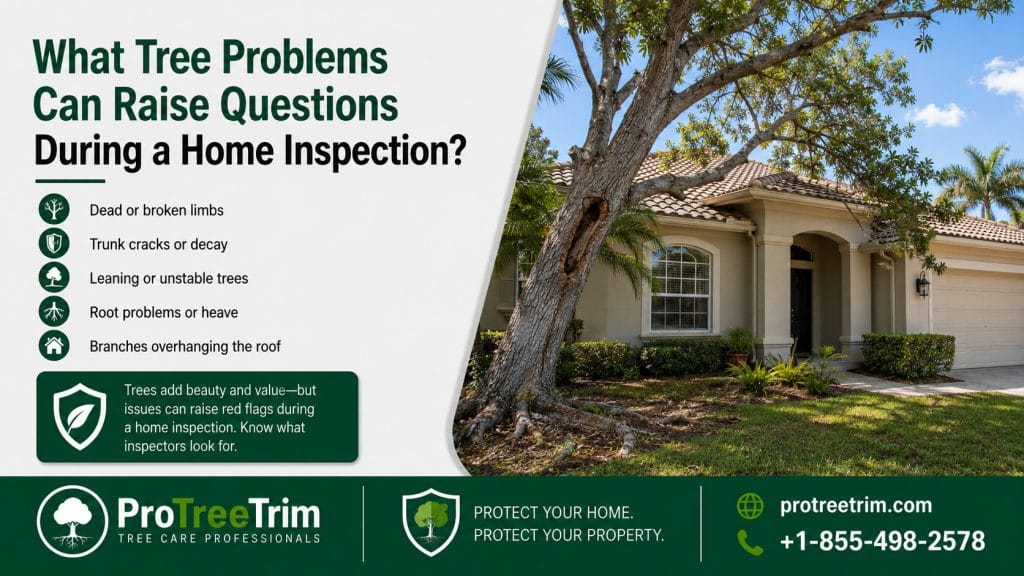
Tree problems do not have to stop a home sale, but they can create questions during inspection. A large limb over the roof, roots lifting a walkway, poor drainage near the foundation, or vegetation touching the house may lead a buyer to ask for more information, repairs, or a specialist’s opinion.
Inspectors May Notice What You Stopped Seeing
A homeowner can live with the same tree for years and stop noticing small changes. A buyer, inspector, or insurance reviewer sees the property with fresh eyes.
ASHI’s Standard of Practice says inspectors look at readily accessible, visually observable systems and components. In the exterior section, ASHI includes vegetation, grading, surface drainage, and retaining walls that are likely to affect the building adversely, along with adjacent walkways, patios, and driveways.
That does not mean a general home inspection is a full tree-risk assessment. InterNACHI’s tree inspection course reminds home inspectors that they are responsible for a general visual inspection of the home and should defer to a specialist for items outside their expertise; for trees, it names a certified arborist as that specialist.
| What may get noticed | Why it can raise questions |
|---|---|
| Branches touching roof, siding, or gutters | Possible wear, moisture, or maintenance concern |
| Dead limbs over driveway or entry | Safety and cleanup concern |
| Tree leaning toward the house | Buyer may ask whether it has changed |
| Roots lifting sidewalk or pavers | Trip hazard or repair concern |
| Drainage flowing toward tree and foundation | Water management concern |
| Vegetation blocking access or visibility | Inspection and maintenance concern |
| Tree near utility line | Safety and utility coordination concern |
Fix the Obvious Issues Before They Become Negotiation Points
You do not need to remove every imperfect tree before listing. That can be expensive, unnecessary, and sometimes harmful to the yard’s appeal. The smarter move is to address visible, practical concerns that a buyer is likely to notice.
Start with the house itself. Are branches rubbing shingles, gutters, soffits, siding, or windows? Does the tree drop heavy debris onto the roof or pool cage? Are roots lifting the front walkway where buyers will enter? Is a stump sitting beside the driveway, making the yard look unfinished?
Then check the risk areas. A dead branch over the driveway matters more than dead twigs in the back corner. A leaning palm over open grass is not the same as a leaning palm over a bedroom, fence, or screened enclosure. A tree near a power line should not be treated as routine pruning.
Before listing, take photos of any work you complete. Save invoices, estimates, stump grinding notes, and before-and-after images. If a buyer asks what was done, clear records sound better than “we had someone clean it up.”
Know What Not to Promise
Avoid telling buyers that a tree is “safe,” “healthy,” or “not a problem” unless you have the right professional documentation. A better answer is factual: what you observed, what was corrected, and what records you have.
For example: “The limb touching the gutter was trimmed back in April, and the invoice is available.” That is stronger than a vague reassurance.
If a tree has a split trunk, mushrooms near the base, large dead limbs, significant root movement, or a new lean, do not wait for the inspection to make it an issue. Get it checked before the buyer finds it first.
If you are unsure whether a tree, stump, root problem, or roofline limb could raise concerns before a home inspection, ProTreeTrim can help connect homeowners with local tree service support. Call +1-855-498-2578 or visit protreetrim.com.
FAQs
Can a home inspector fail a house because of a tree?
A home inspection is usually a report on visible conditions, not a pass-or-fail test. But tree-related concerns can lead to buyer questions, repair requests, or recommendations for further evaluation.
Should I remove branches touching the roof before inspection?
Often, yes. Roof contact is easy to notice and may raise questions about shingles, gutters, moisture, pests, or deferred maintenance.
Do inspectors evaluate whether a tree is dangerous?
General inspectors may note visible concerns, but a full tree-risk or health evaluation is usually outside a standard home inspection.
What tree records should I keep before selling?
Save invoices, estimates, photos, stump grinding details, debris hauling notes, and any written recommendations related to pruning, removal, or cleanup.
ProTreeTrim™ can help you take the next step.
If you are dealing with a damaged tree, fallen branch, stump, root issue, palm concern, or storm cleanup question in Florida, call ProTreeTrim for tree service support.