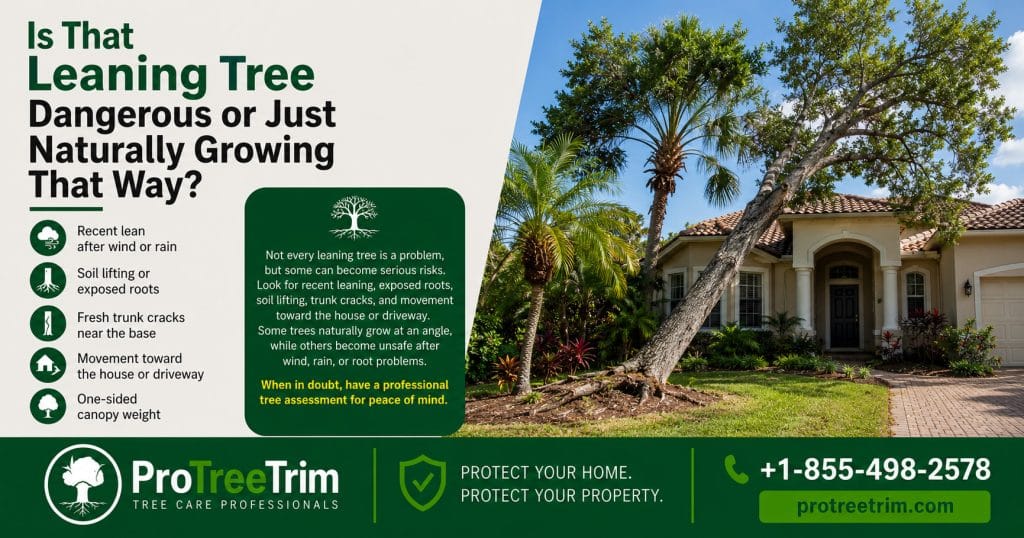
A leaning tree is not always an emergency. Some trees grow at an angle for years, especially in coastal yards, sandy soil, or crowded landscapes. The concern starts when the lean is new, worsening, or paired with cracked soil, exposed roots, trunk damage, or heavy limbs pulling toward a house, driveway, fence, or pool cage.
Look for Changes, Not Just the Angle
The first question is simple: has the tree always looked this way? A live oak that has leaned over a wide Florida yard for a decade may be less concerning than a palm that suddenly tilts after days of heavy rain. Older photos can help. Check real estate listing images, vacation rental photos, security camera footage, or even old family pictures taken from the driveway.
Fresh movement usually leaves clues. Look near the base for raised soil, new cracks in mulch, torn roots, or a gap opening on one side of the trunk. In sandy areas, saturated ground can make the root zone look disturbed before the tree fully shifts. Around pavers or irrigation lines, you may notice lifting, settling, or a new soft spot where the soil no longer feels firm.
Do not judge by the canopy alone. A tree can still have green leaves and be structurally stressed. A palm can look clean at the crown but still be leaning from root movement. On the other hand, an angled trunk with stable soil and no recent change may simply reflect how the tree grew toward light.
When a Lean Deserves a Closer Look
Pay attention when the tree leans toward something valuable or hard to repair: the roofline, a screened pool enclosure, a neighbor’s fence, a parked vehicle area, septic components, or a narrow side yard. Even a moderate lean can become more serious if the canopy is heavy on one side or the roots are confined by a driveway, retaining edge, or construction fill.
After storm season weather, avoid standing under a leaning tree to inspect it. Take photos from a safe distance instead. If branches are cracked, hanging, or pressing against another tree, do not try to “relieve weight” with a quick cut. That can change the balance suddenly.
If you are unsure whether a leaning tree, palm, stump, or root issue needs professional attention, ProTreeTrim can help connect Florida homeowners with local tree service support. Call +1-855-498-2578 or visit protreetrim.com.
FAQs
Is every leaning tree dangerous?
No. Some trees grow with a natural lean and remain stable for years. New movement is the bigger concern.
What is the clearest warning sign near the roots?
Fresh soil lifting, exposed roots, cracking ground, or a widening gap near the trunk can suggest recent movement.
Should I remove a leaning tree before hurricane season?
Not automatically. The better step is to have the risk evaluated, especially if the lean is new or aimed at a structure.
ProTreeTrim™ can help you take the next step.
If you are dealing with a damaged tree, fallen branch, stump, root issue, palm concern, or storm cleanup question in Florida, call ProTreeTrim for tree service support.