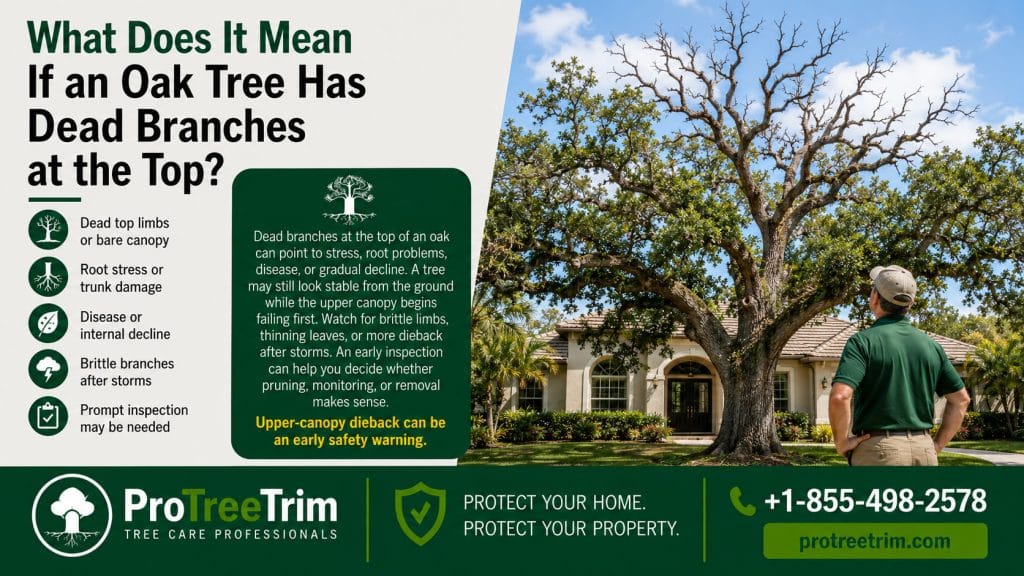
Dead branches at the top of an oak tree can be a sign of stress, but the cause is not always obvious from the ground. In Florida yards, canopy dieback may be connected to root problems, drought stress, drainage changes, construction damage, decay, pests, or old storm injury. The key is to notice whether the problem is spreading.
Top Dieback Often Starts Below Ground
When the upper canopy begins to thin or die back, many homeowners focus only on the branches. That is understandable. The dead wood is what you can see.
But the cause may be lower in the tree or underground. Roots can be affected by trenching, driveway work, paver installation, irrigation changes, soil compaction, or repeated water pooling near the base. A mature oak may not show stress immediately. Months later, the top of the canopy may begin to thin, drop smaller branches, or look uneven.
Florida weather can add to the confusion. A dry stretch may stress the tree, then heavy rain may soften the soil around the roots. Mulch piled too high can hide moisture or decay near the trunk. A tree can still have green leaves in one part of the canopy while another section declines.
| What you notice | Why it matters |
|---|---|
| Dead branches only at the very top | May point to root or water stress |
| One side of canopy thinning | Could suggest localized root damage or limb issue |
| Large dead limb over roof or driveway | Creates a property risk |
| Mushrooms near trunk base | May indicate moisture or decay nearby |
| Soil lifting or roots exposed | Root movement or erosion may be involved |
| Recent construction near tree | Root disturbance may show up later |
When Dead Oak Branches Become a Safety Concern
Small dead twigs are one thing. Large dead oak limbs are another. Oak wood is heavy, and dead branches can break during wind, rain, or even calm weather if they have been weakening for a while.
Pay extra attention if dead limbs hang over the roof, driveway, pool cage, walkway, fence, septic area, or parked vehicle space. Also look for repeated branch drop after storms, cracks near limb connections, cavities, or bark peeling around larger branches.
Do not try to knock dead limbs down with a pole or cut overhead branches yourself. Dead wood can break unpredictably, and a limb that looks manageable from the ground may be much heavier than expected.
Take photos from the same spot every few weeks. If the dead area is growing, the canopy is thinning quickly, or large limbs are involved, it is time to get the tree looked at before storm season adds more pressure.
If you are unsure whether dead oak branches, canopy thinning, stump issues, or root stress need professional attention, ProTreeTrim can help connect Florida homeowners with local tree service support. Call +1-855-498-2578 or visit protreetrim.com.
FAQs
Do dead branches at the top mean an oak is dying?
Not always. The tree may be stressed, but the cause and severity need to be checked before assuming the whole oak is dying.
Should dead oak limbs be removed before storm season?
Large dead limbs over roofs, driveways, pool cages, or walkways should be addressed sooner rather than ignored.
Can root damage cause dead branches at the top?
Yes. Root stress or damage can show up later as canopy thinning, dead branches, or reduced growth.
ProTreeTrim™ can help you take the next step.
If you are dealing with a damaged tree, fallen branch, stump, root issue, palm concern, or storm cleanup question in Florida, call ProTreeTrim for tree service support.