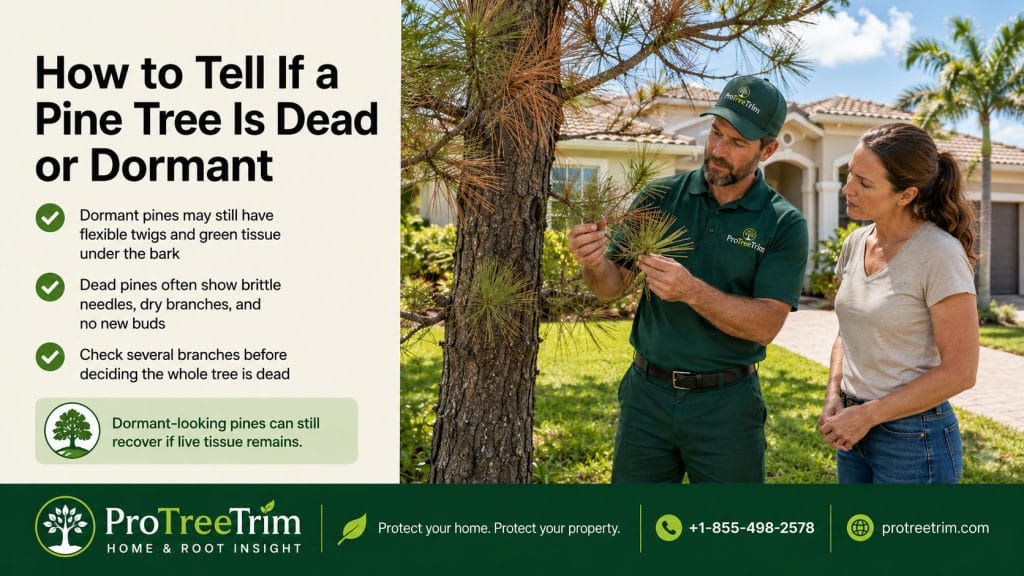
A pine tree that turns brown, drops needles, or looks thin can make homeowners wonder whether it is dead or just going through a normal seasonal change. Pines are evergreens, so they do not go fully bare like many deciduous trees. But they can slow growth, shed older needles, and look stressed during certain seasons.
The key is to look at where the browning is, whether branch tips are alive, whether the trunk and roots show damage, and whether the tree is near anything important if it fails.
Pine Trees Do Not Go Dormant Like Leafless Trees
A maple, oak, or elm may lose all its leaves and still be perfectly alive during dormancy. A pine is different. Pines keep needles through the year, even though older needles naturally age out and drop.
That means a completely brown pine is more concerning than a leafless deciduous tree in winter.
| What you see | What it may mean |
|---|---|
| Brown older needles inside canopy | Often normal needle shedding |
| Green outer branch tips | Tree may still be alive |
| One brown branch | Local branch injury or dieback may be possible |
| Top turning brown | More serious concern |
| Whole pine brown and brittle | Tree may be dead or near death |
| Bark falling with dry branches | Serious decline likely |
| Mushrooms, lean, or root movement | Safety concern deserves attention |
A pine can shed needles and still be alive. But a pine that is brown from top to bottom needs a closer look.
Start With the Needle Pattern
Needles are the first clue. Pines naturally shed older interior needles. This can make the inside of the tree look brown while the branch tips remain green.
That is usually different from a tree dying.
Normal needle drop is more likely when:
- browning is mostly inside the canopy
- outer tips are green
- the tree still looks alive from the outside
- nearby pines show similar seasonal shedding
- branches remain flexible
- no major dead limbs are present
- the trunk and root area look stable
If the newest growth is still green, the pine may not be dead.
Brown Branch Tips Are More Serious
If the outer tips are brown, the concern increases. Pine branch tips represent active growth. When tips die, that part of the branch may not recover the way homeowners hope.
Brown tips may point to:
- drought stress
- overwatering or poor drainage
- pest activity
- disease pressure
- root damage
- storm damage
- construction stress
- branch injury
- top decline
If only one small branch has brown tips, the problem may be limited. If many tips across the tree are brown, the pine may be under serious stress.
Check Whether Branches Are Flexible or Brittle
A living branch usually has some flexibility. A dead branch often snaps easily and feels dry throughout. You do not need to break large branches to test this. If a small reachable twig is already dead-looking, you can check gently from the ground.
Be cautious:
- do not climb the tree
- do not cut high branches just to test them
- do not pull on branches over your head
- do not test anything near utility lines
- do not stand under large dead limbs
A few brittle twigs do not mean the whole pine is dead. Many brittle branches across the canopy are more concerning.
Look for Green Tissue Carefully
On some trees, a light scratch test can reveal green tissue under the bark. With pines, this can be harder and should be done carefully. Scraping too much bark can injure a stressed tree.
If you check a small twig, living tissue may appear moist or greenish underneath. Dead tissue is usually dry and brown.
Do not scrape the trunk or large branches repeatedly. If the tree is valuable or near a structure, get help rather than damaging it while trying to diagnose it.
One Dead Branch Does Not Mean the Pine Is Dead
A pine may have one dead branch and still be alive. Branches can die from shade, storm damage, pests, breakage, animal damage, or localized disease.
The location of the dead branch matters.
A dead branch over open lawn may be less urgent. A dead branch over a driveway, walkway, roof, fence, patio, or pool cage should be handled more seriously.
Check whether the dead branch has:
- cracks
- bark peeling
- sawdust-like material
- holes
- resin or pitch
- broken hanging tips
- dead needles still attached
- a weak connection to the trunk
A single dead branch may need pruning. A whole dead tree may need removal.
A Brown Top Is a Warning Sign
If the top of a pine turns brown, pay attention. Top decline can be linked to root stress, pests, drought, disease, lightning, storm injury, or severe internal decline.
A dead top can also become a breakage concern, especially on a tall pine.
Be more cautious when the dead top is above:
- the house
- driveway
- sidewalk
- patio
- parked vehicles
- utility lines
- fence
- neighbor property
- children’s play area
A pine with a dead top may not be fully dead yet, but it deserves a closer look.
Check the Trunk
A pine’s trunk can reveal serious problems. A pine with brown needles and a damaged trunk is more concerning than a pine with normal interior needle drop.
Look from the ground for:
| Trunk sign | Why it matters |
|---|---|
| Bark peeling off in large sections | Tree may be dead or severely stressed |
| Holes in bark | Pest activity may be possible |
| Sawdust-like material | Boring insects or decay may be involved |
| Resin or pitch flow | Tree may be reacting to injury or pests |
| Cracks in trunk | Structural concern may exist |
| Soft or hollow areas | Decay may be present |
| Lightning marks | Sudden decline may follow |
| Fungal growth | Decay or moisture issue may be possible |
A trunk problem plus canopy browning should not be ignored.
Check the Base and Roots
Root problems can kill or destabilize a pine. Sometimes the first visible sign is browning needles. Other times, the tree leans, soil lifts, or roots become exposed after heavy rain or wind.
Walk around the base and check:
- Is the tree leaning more than before?
- Is soil lifting on one side?
- Are roots exposed?
- Are roots cut or damaged?
- Is water standing around the base?
- Is mulch piled against the trunk?
- Are mushrooms growing near the base?
- Did construction happen nearby?
- Did heavy equipment drive over the root zone?
A pine that is brown and leaning is much more urgent than a pine with normal needle shed.
Recent Yard Work Can Explain Sudden Decline
Pine decline often shows up after root-zone disturbance. The tree may not turn brown immediately. It can take weeks or months for damage below ground to appear in the canopy.
Think about recent work:
- driveway repair
- paver installation
- sidewalk replacement
- trenching for utilities
- irrigation work
- fence installation
- grading or soil fill
- heavy equipment traffic
- stump grinding nearby
- parking under the tree
If browning started after work near the roots, the pine may be reacting to hidden root damage.
Water Stress Can Look Like Death
A pine may brown from drought, but it can also brown from too much water. Poor drainage can stress roots by limiting oxygen. The tree may look dry above ground even when roots are struggling in wet soil.
Check soil conditions before watering more.
Ask:
- Is soil dry several inches down?
- Does water sit after rain?
- Is irrigation reaching the root zone?
- Is the tree in a low spot?
- Did a downspout change water flow?
- Is the root flare buried?
- Is mulch too deep?
- Is nearby pavement affecting heat and runoff?
Watering mistakes can push a stressed pine closer to decline.
Pests Can Be Part of the Story
Pests may attack stressed pines or contribute to decline. Homeowners may notice holes, sawdust-like material, pitch tubes, webbing, or branch-tip dieback.
Look for:
- small holes in bark
- sawdust-like material at the base
- resin spots
- bark flaking off
- insects under loose bark
- dying branch tips
- webbing on foliage
- rapid browning in warm weather
Do not spray randomly. The pest needs to be identified, and the tree’s overall condition matters.
Is the Pine Dead If All Needles Are Brown?
A pine with all brown needles is in serious trouble. If every branch is brown, brittle, and dry, the tree may already be dead. Unlike deciduous trees, a pine does not normally drop all green foliage and return fresh the same way in spring.
That said, homeowners should still check carefully before making a final decision, especially if the tree is valuable.
More serious signs include:
- all needles brown
- branches brittle throughout
- bark falling off
- no green tips anywhere
- trunk cracks
- mushrooms near base
- sawdust-like material
- new lean
- no signs of new growth over time
If the pine is also near a structure, removal planning may be safer than waiting.
Can a Half-Brown Pine Recover?
Sometimes, but it depends on what is still alive. If only the interior needles are brown and the tips are green, the tree may be fine. If entire branches are brown, those branches may not recover. If half the tree is brown from roots, pests, or trunk damage, recovery is less certain.
Ask:
- Are any branch tips still green?
- Is browning spreading?
- Is the top dead?
- Is one side affected?
- Are roots damaged?
- Are pests present?
- Is the tree near a target?
- Is the trunk stable?
A half-brown pine may need monitoring, pruning, or removal depending on the cause and location.
Do Not Top a Dying Pine
Topping a pine is not a good solution for decline. Cutting the top off a pine can damage structure, create decay points, and leave an ugly or unstable tree. It also does not fix root damage, pests, drought stress, or trunk decay.
Pruning may be appropriate for:
- dead branches
- broken limbs
- cracked limbs
- branches over a driveway
- storm-damaged branches
- branches touching structures
- hazardous hanging material
But topping is not a recovery plan.
When to Remove a Dead Pine
A dead pine should usually be removed sooner when it is near people, homes, vehicles, utilities, or property features. Dead trees become more brittle over time, and removal can become more difficult and risky as wood weakens.
Removal should be considered when the pine is dead or nearly dead and near:
- rooflines
- driveways
- sidewalks
- patios
- fences
- pool cages
- parked vehicles
- power lines
- neighbor property
- play areas
A dead pine in open woods may be a different decision. A dead pine in a residential yard is usually a property-risk concern.
What Homeowners Should Photograph
Take clear photos before deciding what to do.
Photograph:
- full tree from several sides
- brown versus green areas
- branch tips
- top of the tree
- trunk bark
- holes, pitch, or sawdust-like material
- root flare and base
- any lean or soil lifting
- nearby structures or targets
- recent construction or hardscape near roots
Photos help track whether the problem is stable, improving, or worsening.
What to Do First
A practical first checklist:
- Check whether browning is interior or outer-tip browning.
- Look for green branch tips.
- Gently check small reachable twigs for flexibility.
- Inspect trunk bark for holes, pitch, cracks, or peeling.
- Check the base for mushrooms, lean, or soil movement.
- Think about recent construction or root disturbance.
- Avoid topping or heavy pruning.
- Get help if the pine is mostly brown, leaning, pest-damaged, or near structures.
This helps separate normal needle drop from a dead or hazardous tree.
Final Homeowner Takeaway
A pine tree with brown interior needles may simply be shedding older growth. A pine with brown tips, a dead top, brittle branches, bark loss, root movement, or full-tree browning is much more concerning.
Pines do not go leafless and return the way many deciduous trees do. If the entire tree is brown and dry, it may be dead or close to it. If the tree is near a house, driveway, walkway, fence, utility line, or pool area, do not wait too long to evaluate it.
If you are unsure whether your pine tree is alive, dormant, declining, or already dead, ProTreeTrim can help connect homeowners with local tree service support. Call +1-855-498-2578 or visit protreetrim.com.
FAQs
Can a pine tree be dormant and look dead?
Pines can slow growth and shed older needles, but they usually keep some green foliage. A fully brown, brittle pine is more concerning than a leafless deciduous tree in winter.
How can I tell if a pine branch is dead?
Dead pine branches are often brittle, brown throughout, and may have dry needles, peeling bark, or no green tissue beneath small twigs.
Will brown pine needles turn green again?
No. Brown needles do not turn green again. The question is whether the branch still has living green growth elsewhere.
Should I remove a dead pine tree?
If the pine is dead and near a house, driveway, walkway, fence, utility line, or other target, removal should be considered before the tree becomes more brittle.
ProTreeTrim™ can help you take the next step.
If you are dealing with a damaged tree, fallen branch, stump, root issue, palm concern, or storm cleanup question in Florida, call ProTreeTrim for tree service support.