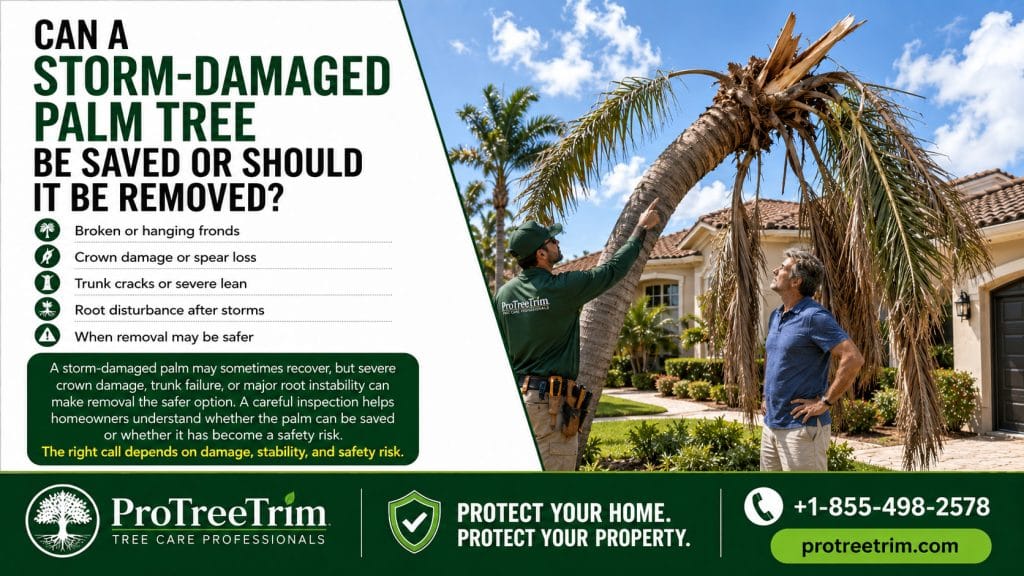
A storm-damaged palm tree does not always need removal, but some damage is more serious than it looks from the ground. Florida homeowners should check the crown, trunk, lean, root area, and potential impacts if the palm fails later. A palm with minor frond loss is very different from one with a cracked trunk or damaged growing point.
Start With the Crown and Trunk
After a storm, many palms look messy. Brown fronds may hang lower, seed pods may drop, and the yard may be covered in debris. That alone does not mean the palm is dying or unsafe.
The crown is more important. If the center spear leaf is still firm and upright, and the palm is only missing older fronds, the tree may have a better chance of recovery. If the crown looks collapsed, twisted, hollow, or badly damaged, the situation deserves closer attention. Do not climb the palm or pull on the spear to test it.
The trunk matters too. Look for fresh cracks, splitting, deep wounds, or a section that appears bent after wind. A palm trunk does not repair itself like a normal branch might. If the trunk has snapped, folded, or developed a serious structural crack, removal may be more likely.
| What you notice | What it may mean |
|---|---|
| Only older fronds are torn | May be mostly cleanup |
| Spear leaf looks damaged or collapsed | Crown health may be a concern |
| Trunk has a fresh crack or bend | Structural risk may be higher |
| Palm has a new lean after storm | Roots or soil may have shifted |
| Soil lifted near the base | Possible root movement |
| Palm leans toward roof or pool cage | Higher property risk |
Location Can Decide the Urgency
A damaged palm in an open corner of the yard may be watched more calmly than one leaning toward a roof, driveway, pool cage, fence, or power service line. In tight Florida yards, a falling palm can damage more than one thing at once: screen panels, pavers, gutters, irrigation, or neighboring property.
Check the base from a safe distance. Heavy rain can soften sandy soil and expose movement around the roots. If the ground has cracked, lifted, or pulled away from the trunk, do not ignore it just because the palm still has green fronds.
Take photos before cleanup begins. Include the full palm, crown, trunk, base, fallen fronds, and anything nearby that could be damaged. If the palm is near utility lines, stay away and contact the utility or proper emergency support first.
If you are unsure whether a storm-damaged palm, stump, or root issue can be saved or needs removal, ProTreeTrim can help connect Florida homeowners with local tree service support. Call +1-855-498-2578 or visit protreetrim.com.
FAQs
Can a palm tree recover after storm damage?
Sometimes. Minor frond loss may be manageable, but crown damage, trunk cracks, or root movement can make the situation more serious.
Should I cut all damaged palm fronds after a storm?
Remove clearly dead, broken, or hazardous material carefully, but avoid aggressive over-pruning or cutting healthy green fronds unnecessarily.
When should a storm-damaged palm be removed?
Removal may be needed if the trunk is cracked or snapped, the crown is badly damaged, roots have shifted, or the palm threatens a structure or access area.
ProTreeTrim™ can help you take the next step.
If you are dealing with a damaged tree, fallen branch, stump, root issue, palm concern, or storm cleanup question in Florida, call ProTreeTrim for tree service support.