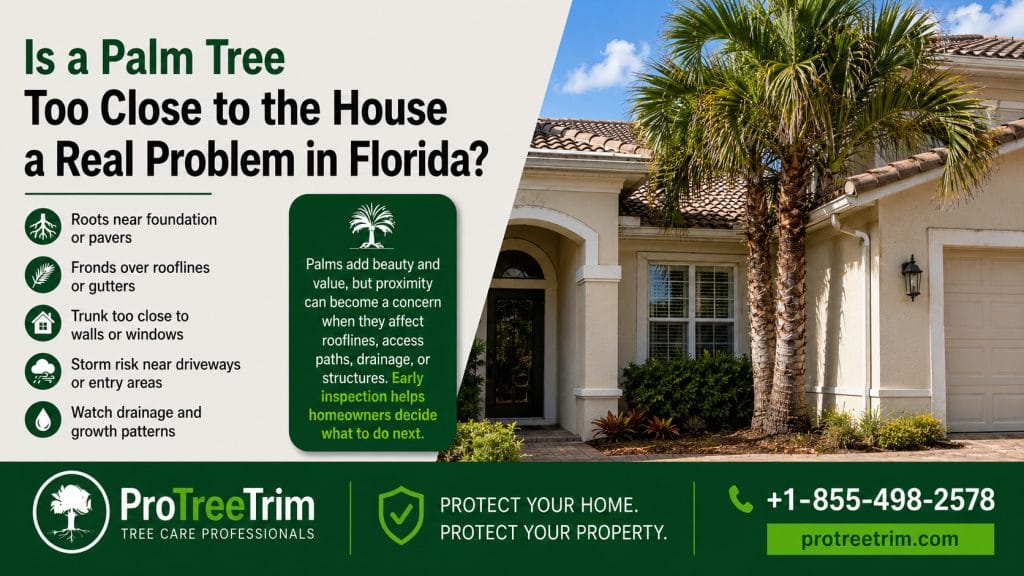
A palm tree close to the house is not automatically a problem, but it can become one depending on the palm’s size, lean, crown position, and what it touches. Florida homeowners should pay attention to fronds over the roof, trunks near walls, falling debris, tight access, pool cages, gutters, and whether the palm could create trouble during storm season.
What “Too Close” Really Means
Distance alone does not answer the question. A small ornamental palm beside a walkway is different from a tall palm leaning over the roofline or dropping heavy fronds near a screened pool enclosure. The issue is less about a single number and more about clearance, access, and risk.
Look up first. Are fronds brushing the roof, hanging into gutters, scraping fascia, or dropping debris into valleys where leaves already collect? A palm may not have broad limbs like an oak, but dead fronds, seed pods, and crown debris can still create maintenance problems. If the crown sits over the roof, a driveway, pool cage, or patio seating area, the location deserves attention.
Then check the trunk and base. Is the palm leaning toward the house? Has the soil shifted around the base after heavy rain? Are roots lifting nearby pavers, edging, or irrigation lines? Palms have different root systems than shade trees, but a poorly placed palm can still interfere with hardscape, drainage, and yard access.
Why Florida Homes Make This More Complicated
Many Florida homes have palms planted for curb appeal before anyone thinks about mature size or service access. A palm that looked perfect in a front bed may later crowd windows, block a side yard, or make roof and gutter maintenance harder. Around pool homes, the problem can be even more practical: there may be very little room between the palm, screen enclosure, fence, and pavers.
Before trimming or removing a palm close to the house, take photos from several angles. Show the trunk, crown, roofline, access path, and anything nearby such as irrigation, low-voltage lighting, pool equipment, or a narrow gate. Do not climb the palm or pull fronds from the roof yourself, especially after rain or wind.
If you are unsure whether a palm, stump, root issue, or roof-adjacent tree needs professional attention, ProTreeTrim can help connect Florida homeowners with local tree service support. Call +1-855-498-2578 or visit protreetrim.com.
FAQs
Does a palm near the house always need removal?
No. Some palms can be managed with proper trimming and monitoring, depending on lean, height, clearance, and location.
Are palm roots a foundation problem?
Not always. Still, roots can affect pavers, edging, irrigation, drainage, and tight landscape beds near the home.
Should I trim palm fronds touching the roof myself?
Avoid trimming roof-adjacent or overhead fronds yourself. Wet fronds, height, and shifting debris can make the job risky.
ProTreeTrim™ can help you take the next step.
If you are dealing with a damaged tree, fallen branch, stump, root issue, palm concern, or storm cleanup question in Florida, call ProTreeTrim for tree service support.