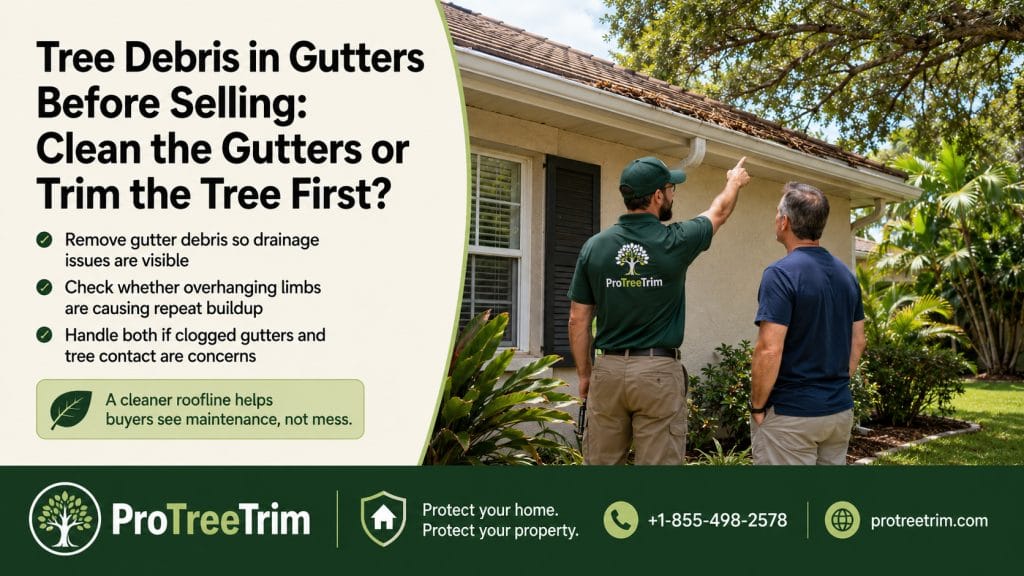
Tree debris in gutters can make a home look less maintained, even if the roof is otherwise in good shape. Before selling, homeowners should not only clean out the leaves, palm debris, twigs, or seed pods. They should also check whether the tree is still causing the problem and whether branches are touching the roofline.
Start With What the Debris Is Telling You
Gutter debris is not always a tree problem. Leaves fall. Palms shed. Oaks drop seasonal material. A one-time cleaning before listing may be enough if the tree has good clearance and the gutters simply have not been serviced recently.
The concern grows when debris comes from branches that are directly over the roof, touching shingles, scraping gutters, or dropping heavy material repeatedly. Buyers may see clogged gutters and wonder about roof wear, drainage, fascia damage, water stains, pests, or deferred maintenance.
| What you notice | What to check before listing |
|---|---|
| Leaves packed in one gutter section | Overhanging limb or roof valley may be collecting debris |
| Palm fronds near the roofline | Palm may need selective trimming |
| Twigs and deadwood in gutters | Check for dead branches above |
| Branches touching shingles | Clearance pruning may be needed |
| Gutter pulling away or sagging | Cleaning alone may not solve the issue |
| Water stains below gutter | Drainage or overflow may need repair |
| Debris returns soon after cleaning | Tree work may need to happen first |
Clean the Gutters, But Look Up Before You Stop
If you clean the gutters without looking at the tree, the same problem may return before photos, showings, inspection, or closing.
Walk the property from the ground and look at the roofline. Are branches resting on the roof? Are palm fronds hanging into gutters? Is there deadwood above the garage or front entry? Are leaves collecting where two roof slopes meet? Is a tree dropping debris directly over a downspout?
Do not climb onto the roof just to check tree contact. Use ground-level photos, binoculars, or ask the appropriate professional to inspect the roof and gutter area safely.
For sellers, the most practical sequence is often:
- Photograph the roofline and gutter debris before work.
- Trim branches that are touching the roof, gutters, or visible problem area.
- Remove deadwood or palm debris above the roofline if needed.
- Clean the gutters and downspouts.
- Repair any visible gutter, fascia, or screen damage.
- Take after photos and save invoices.
Do Not Over-Prune Just for Clean Gutters
A tree does not need to be stripped because it drops leaves. Mature trees shed material; that is part of owning a yard. The pre-sale question is whether the debris is creating a visible maintenance issue, not whether the tree can be made mess-free forever.
Selective trimming may help if branches are touching the roof, dropping heavy debris into gutters, or hanging over the main entry. Heavy cutbacks can make the tree look recently hacked, which may raise its own buyer questions.
A good scope sounds specific: clear roof contact, remove deadwood above the gutter line, trim palm fronds touching the structure, or reduce a problem limb with care. A vague “cut it way back” is not a smart listing strategy.
Check the Related Damage Before Photos
Clogged gutters can leave marks that buyers notice even after the leaves are gone. Look for water streaks on fascia, sagging sections, loose downspouts, soil washout below the roof edge, mulch displaced near the foundation, or pavers stained by overflow.
If the tree debris contributed to a repair, keep records. A clean paper trail can be useful if a buyer asks why the gutters, roof edge, or tree were recently serviced.
- gutter cleaning receipt
- tree trimming invoice
- before-and-after photos
- downspout or gutter repair receipt
- roof or fascia service note, if any
- debris hauling details if larger limbs were removed
Avoid saying the issue is permanently solved. A better answer is factual: the roofline branches were trimmed, gutters were cleaned, and repairs were completed where needed.
When Tree Work Should Come Before Gutter Cleaning
Tree work should usually come first if branches are still touching the roof, dead limbs hang above the gutter line, palm fronds rest on the roof edge, or a limb is likely to drop more material immediately after cleaning.
Gutter cleaning may come first if the tree has good clearance and the issue is simply accumulated seasonal debris.
If a limb is near a power line, stop and contact the utility before any tree work. Roofline trimming is not worth turning into a utility hazard.
If you are unsure whether roofline branches, palm debris, deadwood, or gutter-related tree issues should be handled before listing your home, ProTreeTrim can help connect homeowners with local tree service support. Call +1-855-498-2578 or visit protreetrim.com.
FAQs
Should I clean gutters before listing my home?
Yes, especially if leaves, twigs, palm debris, or seed pods are visible from the ground or likely to come up during inspection.
Should I trim the tree before cleaning the gutters?
If branches are touching the roof or dropping heavy debris directly into gutters, trimming first often makes more sense.
Does gutter debris mean the tree should be removed?
Usually no. Most gutter debris is a maintenance issue. Removal only becomes a discussion if the tree is poorly placed, damaged, leaning, or causing repeated property problems.
What records should I keep after gutter and tree work?
Save before-and-after photos, tree service invoices, gutter cleaning receipts, downspout or fascia repair records, and any related roof service notes.
ProTreeTrim™ can help you take the next step.
If you are dealing with a damaged tree, fallen branch, stump, root issue, palm concern, or storm cleanup question in Florida, call ProTreeTrim for tree service support.