
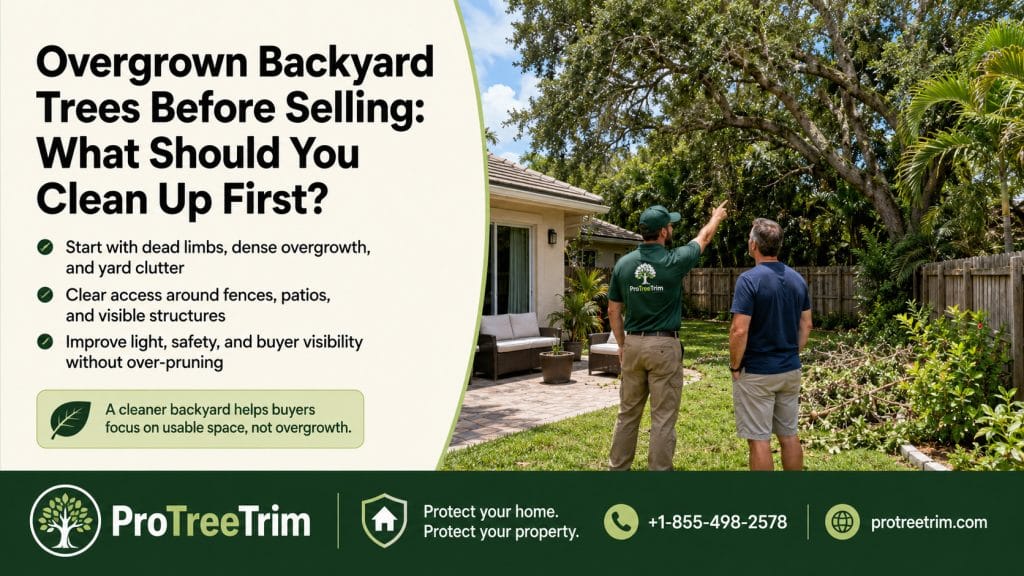
Overgrown backyard trees do not always need major trimming before a home sale. In fact, mature shade can help a yard feel private, established, and comfortable. The problem starts when buyers see blocked access, dead limbs, messy debris, fence damage, patio crowding, roof contact, or branches hanging over a pool cage, shed, or neighbor’s yard.
Start With Access and Usability
A backyard can look full and green but still feel hard to use. Buyers notice whether they can walk around the patio, open the side gate, reach the shed, use the pool area, or imagine children and pets in the space.
Before trimming anything, walk the backyard like a buyer. Do not start with the tallest tree. Start with the areas people actually use.
| Backyard area | What to check before listing |
|---|---|
| Patio or deck | Low limbs, debris, shade that feels too dark, branches rubbing structures |
| Pool cage or screen enclosure | Palm fronds, seed pods, limbs touching panels, debris buildup |
| Fence line | Branches pressing panels, roots shifting posts, neighbor-facing limbs |
| Side gate | Clearance for people, trash bins, equipment, or future tree work |
| Shed or outdoor storage | Limbs resting on roof, moisture, blocked access |
| Lawn play area | Dead limbs, exposed roots, uneven ground, stump hazards |
| Back corner trees | Deadwood, leaning trunks, storm damage hidden from the street |
A clean backyard does not have to look bare. It should look usable, safe to walk through, and maintained.
Do Not Turn Pre-Sale Cleanup Into Over-Pruning
The fastest way to make a backyard look suspicious is to cut everything harshly right before listing. Buyers may not know the term “over-pruning,” but they can tell when a tree looks hacked back, unbalanced, or recently stripped.
A better pre-sale cleanup is selective:
- remove large dead limbs over usable areas
- clear branches touching fences, roofs, sheds, or screens
- trim low branches that block walkways or gates
- clean up palm fronds, seed pods, and storm debris
- grind or finish visible stumps in active areas
- avoid cutting healthy canopy without a clear reason
The goal is not to make the backyard look empty. The goal is to remove distractions that make buyers think, “This yard needs work.”
Look for Hidden Problems Behind the Growth
Overgrowth can hide issues that become more obvious during inspection or buyer walk-throughs. Thick branches may cover a damaged fence panel. Vines and low limbs may hide a stump. Leaf piles may cover uneven pavers. A shaded corner may stay wet after rain because drainage is poor.
Before listing photos, pull the yard into focus. Clear debris first. Then look again.
Ask:
- Are roots lifting pavers, edging, or stepping stones?
- Is a tree leaning toward the fence or neighbor’s yard?
- Are dead branches hidden inside the canopy?
- Does the side yard allow access for future maintenance?
- Are branches touching the roof, gutter, shed, or pool screen?
- Is the tree bed wet, mushy, or full of old debris?
- Will this area look unfinished in listing photos?
Sometimes the cleanup reveals that trimming is enough. Other times, it shows a stump, root problem, broken fence, or storm-damaged limb that should be handled before showings.
Decide What Buyers Will Actually Care About
A buyer may not care about every wild-looking branch. They will care about anything that suggests cost, risk, or inconvenience.
High-priority issues before listing usually include:
| Higher priority | Lower priority |
|---|---|
| Dead limbs over patio, walkway, or play area | Small twigs in an unused corner |
| Branches touching structures | Healthy overhang with good clearance |
| Tree debris on pool cage or deck | Normal leaf drop in lawn |
| Stumps in walking areas | Hidden stump far from use areas |
| Roots creating trip hazards | Surface roots inside a mulch bed |
| Fence damage from limbs or roots | Cosmetic overgrowth away from property lines |
If time or budget is limited, handle what buyers will see, walk under, step over, or ask about first.
Keep Records for Visible Tree Work
If you prune, remove, grind, or repair anything before selling, keep the paperwork. It does not need to become part of the listing copy, but it can help if the buyer asks.
Save before-and-after photos, tree service invoices, stump grinding notes, debris hauling records, and fence, paver, pool screen, or shed repair receipts. A factual answer is stronger than a salesy reassurance.
For example: “The dead limb over the patio was removed, the stump near the walkway was ground, and the debris was hauled away.”
That tells a buyer the yard was maintained without pretending every future tree issue is impossible.
If you are unsure whether overgrown backyard trees, dead limbs, stumps, or fence-line branches should be handled before listing your home, ProTreeTrim can help connect homeowners with local tree service support. Call +1-855-498-2578 or visit protreetrim.com.
FAQs
Should I trim all backyard trees before selling?
No. Focus on dead limbs, blocked access, branches touching structures, visible debris, stump hazards, and areas buyers will actually use.
Can overgrown trees hurt backyard appeal?
Yes, especially if they make the yard feel dark, crowded, unsafe, hard to access, or poorly maintained.
Should I remove a backyard tree before listing?
Only if there is a clear reason, such as deadwood, leaning, storm damage, root conflicts, fence damage, or repeated debris problems.
What should I clean before listing photos?
Clear fallen branches, palm fronds, old stump chips, debris on patios or pool decks, blocked gates, and anything that makes the backyard look unfinished.
ProTreeTrim™ can help you take the next step.
If you are dealing with a damaged tree, fallen branch, stump, root issue, palm concern, or storm cleanup question in Florida, call ProTreeTrim for tree service support.