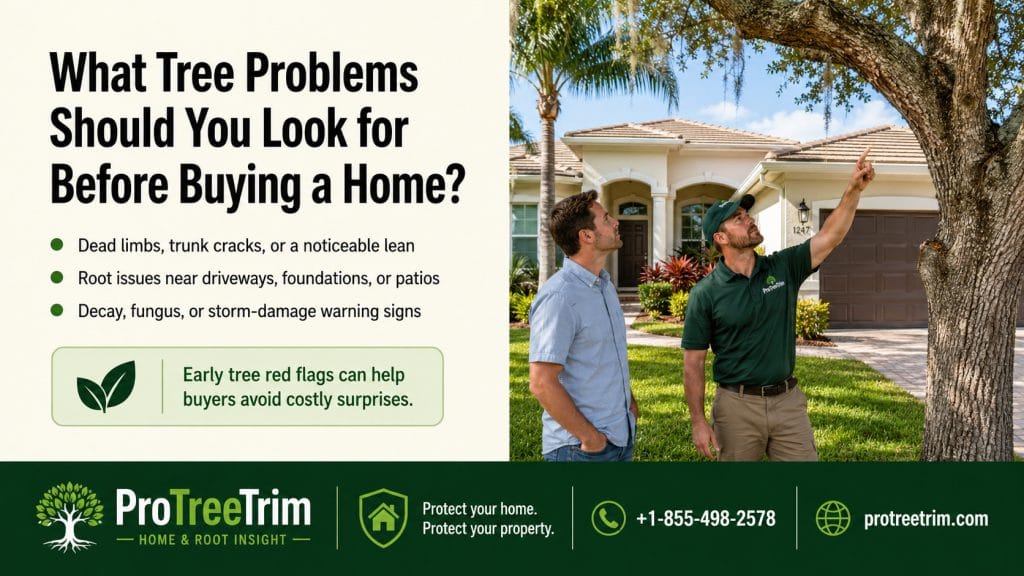
Trees can make a home feel established, shaded, and private. They can also hide repair costs that do not show up until after closing. Before buying a home, look at trees the same way you look at the roof, driveway, fence, and drainage: not with fear, but with a clear eye for what may need work soon.
Start With Trees Closest to the House
The trees that matter most are usually the ones closest to the home, driveway, pool cage, walkway, fence, garage, or utility area. A tree in the back corner of a large yard may be less urgent than a limb brushing the roof over the bedroom.
Stand at the street first. Then walk the driveway, front entry, side yard, patio, and backyard. You are not trying to diagnose the tree. You are looking for visible clues that may deserve follow-up before you buy.
| What you see | Why it matters |
|---|---|
| Branches touching the roof or gutters | May raise roof, gutter, pest, or maintenance questions |
| Large dead limbs | Can become a safety or cleanup concern |
| Tree leaning toward the house | Needs context: old lean or new movement? |
| Roots lifting pavers or driveway edges | May lead to repair costs or trip hazards |
| Old stump near walkway or patio | May need grinding, leveling, or pest review |
| Mushrooms near trunk base | Can point to moisture, decay, or old root issues |
| Tree near power lines | Utility coordination may be needed before trimming |
Look Down as Much as You Look Up
Buyers often look at the canopy first. The ground can tell a better story.
Check for lifted pavers, cracked walkways, exposed roots, soft soil, mulch piled against trunks, standing water, or soil washed away from the base. These signs do not automatically mean the tree is unsafe, but they can reveal future work.
A beautiful shade tree beside a driveway may still be valuable. The question is whether it is also lifting the driveway, blocking access, touching the garage, or dropping limbs where vehicles park. A palm near the pool area may look great in photos, but if fronds rest on the screen enclosure, that becomes a maintenance issue.
Do not assume every root means foundation damage. Also do not ignore obvious root conflicts. The practical buyer question is: What will this cost or require after I own the home?
Ask What Was Already Done
If the seller recently removed a tree, ground a stump, trimmed roofline branches, or repaired pavers, ask for records. Good records do not need to be complicated. An invoice, before-and-after photos, or a short scope of work can explain what happened.
Useful questions include:
- Was this tree recently trimmed?
- Was a tree removed from this area?
- Was stump grinding included?
- Were chips removed or left in place?
- Did roots affect the walkway, driveway, or fence?
- Was the roofline cleared because branches were touching?
- Were any storm-damaged trees cleaned up recently?
A freshly mulched area, new sod patch, or repaired fence panel may be perfectly normal. It may also hide a recent tree issue. You are not accusing anyone; you are trying to understand the property.
Separate Cosmetic Mess From Real Cost
Leaves in the yard are usually not a dealbreaker. A few small twigs are normal. Mature trees shed material.
The bigger concerns are problems that affect safety, access, structures, or repeated maintenance:
| Lower concern | Higher concern |
|---|---|
| Normal leaf drop | Large dead limb over driveway |
| Small surface roots in mulch bed | Roots lifting main walkway |
| Old stump in far corner | Stump beside front entry or patio |
| Healthy branch over lawn | Branch touching roof or gutter |
| Palm debris in open yard | Palm fronds resting on pool cage |
| Dense shade in backyard | Tree blocking access or damaging fence |
If you are serious about buying the home, visible tree concerns can be part of your inspection conversation. A general home inspector may note obvious exterior issues, but a tree-specific concern may need a tree professional’s opinion.
What to Do Before Closing
If a tree issue looks expensive, do not wait until after closing to think about it. Get clarity early.
Take photos during your visit if allowed. Note the tree’s location, what it could hit, and what repair area may be affected. If there is a large dead limb over the driveway, a leaning tree near the house, or roots lifting the main walkway, ask whether the seller has records or whether the issue can be addressed before closing.
Avoid relying on vague reassurance such as “that tree has always been fine.” Maybe it has. But if you are about to own the property, it is reasonable to ask for documentation or a closer look when visible signs suggest future work.
If you are unsure whether a tree, stump, root issue, or roofline branch on a property needs attention before or after buying a home, ProTreeTrim can help connect homeowners with local tree service support. Call +1-855-498-2578 or visit protreetrim.com.
FAQs
Should trees affect my home-buying decision?
They can. Healthy, well-placed trees can add value and comfort. Problem trees near roofs, driveways, pool cages, fences, or power lines can create future costs.
Can a home inspector tell me if a tree is dangerous?
A general inspector may note visible concerns, but a detailed tree-risk or tree-health opinion usually requires a tree professional or arborist.
Should I ask the seller for tree work records?
Yes, especially if you see recent pruning, stump grinding, tree removal, paver repair, roofline clearance, or storm cleanup.
What tree issue is most urgent before buying?
Large dead limbs, new leaning, trunk cracks, lifted roots, tree contact with the roof, and branches near utility lines deserve closer attention before closing.
ProTreeTrim™ can help you take the next step.
If you are dealing with a damaged tree, fallen branch, stump, root issue, palm concern, or storm cleanup question in Florida, call ProTreeTrim for tree service support.